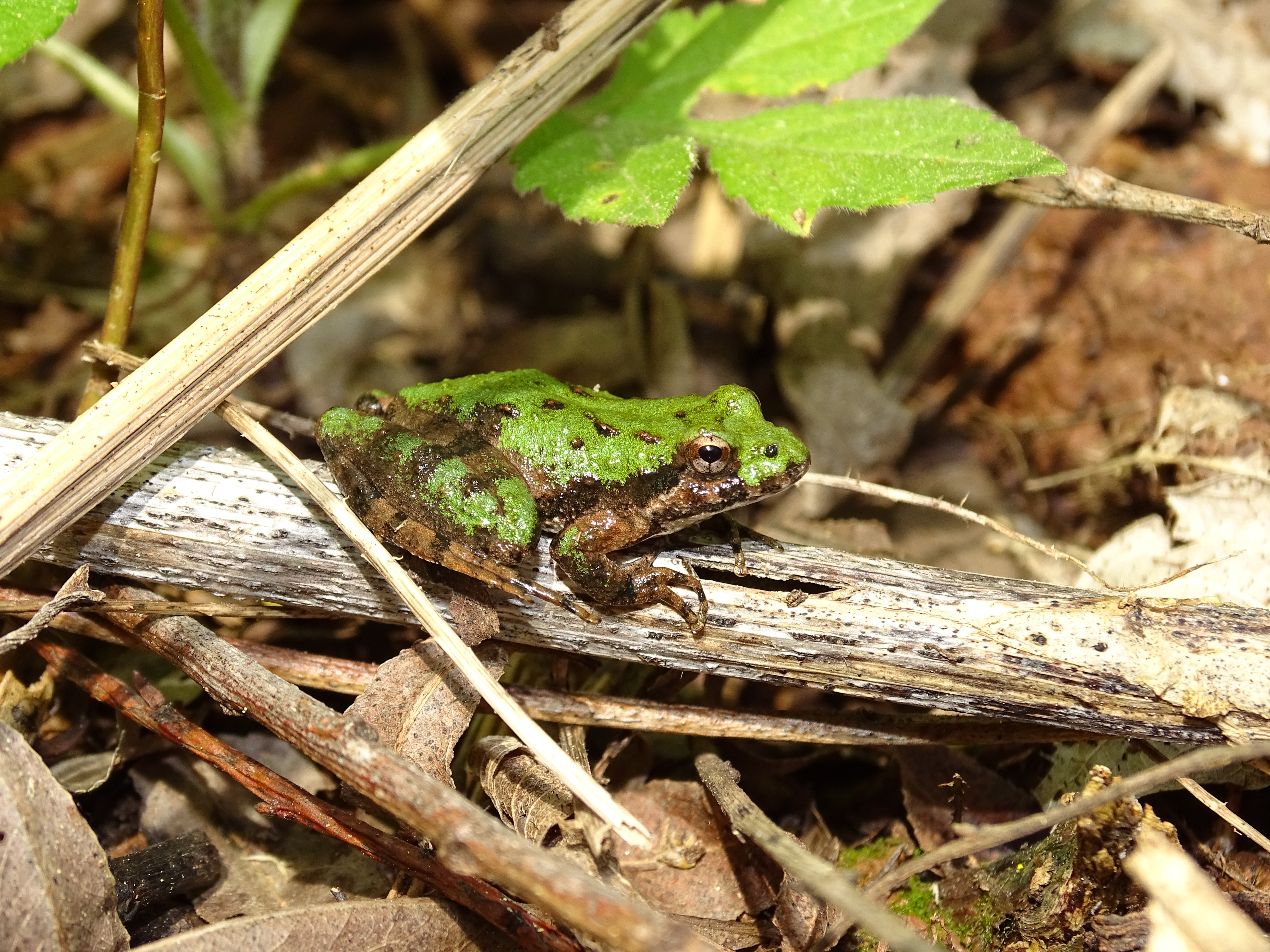

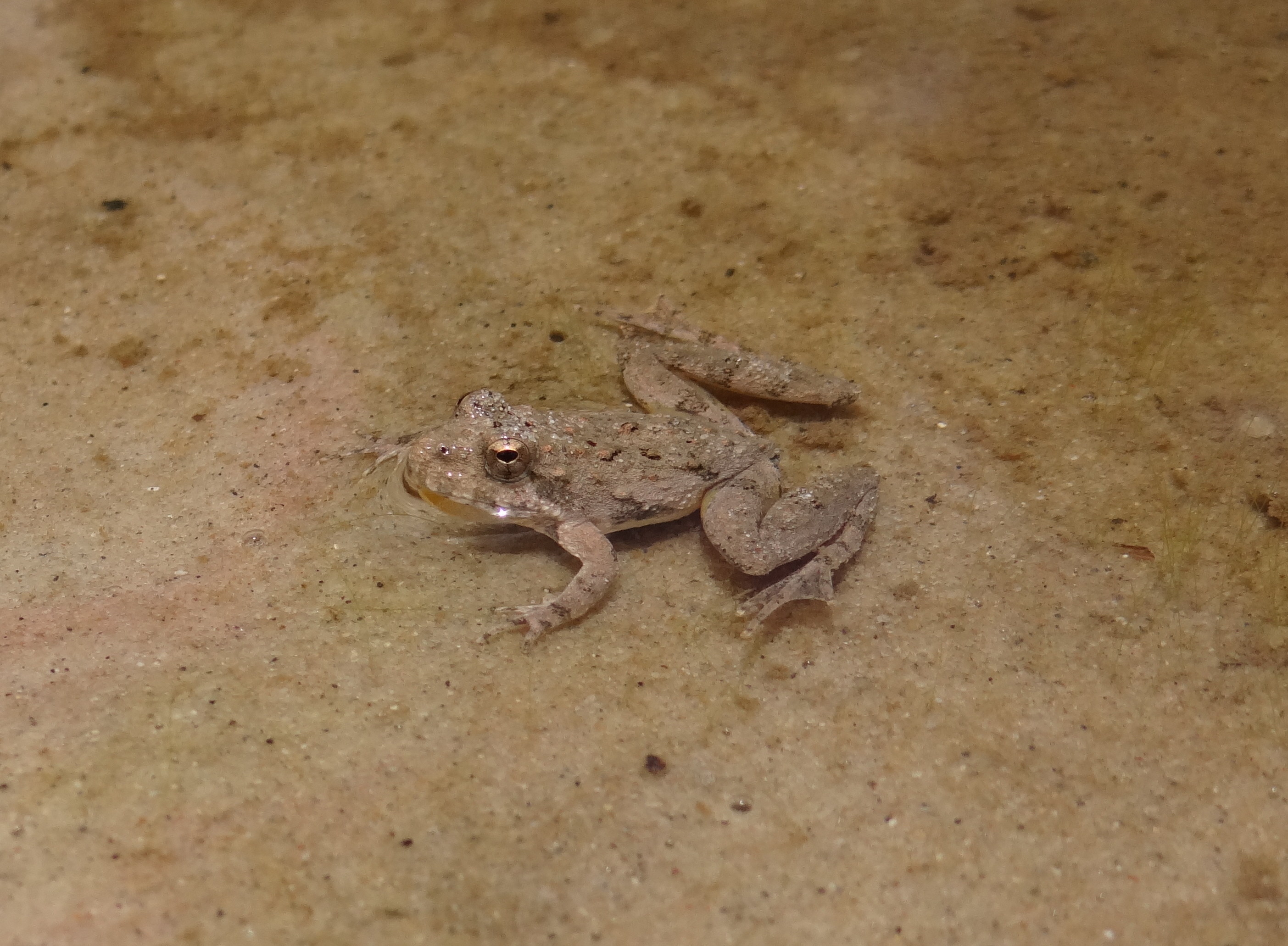
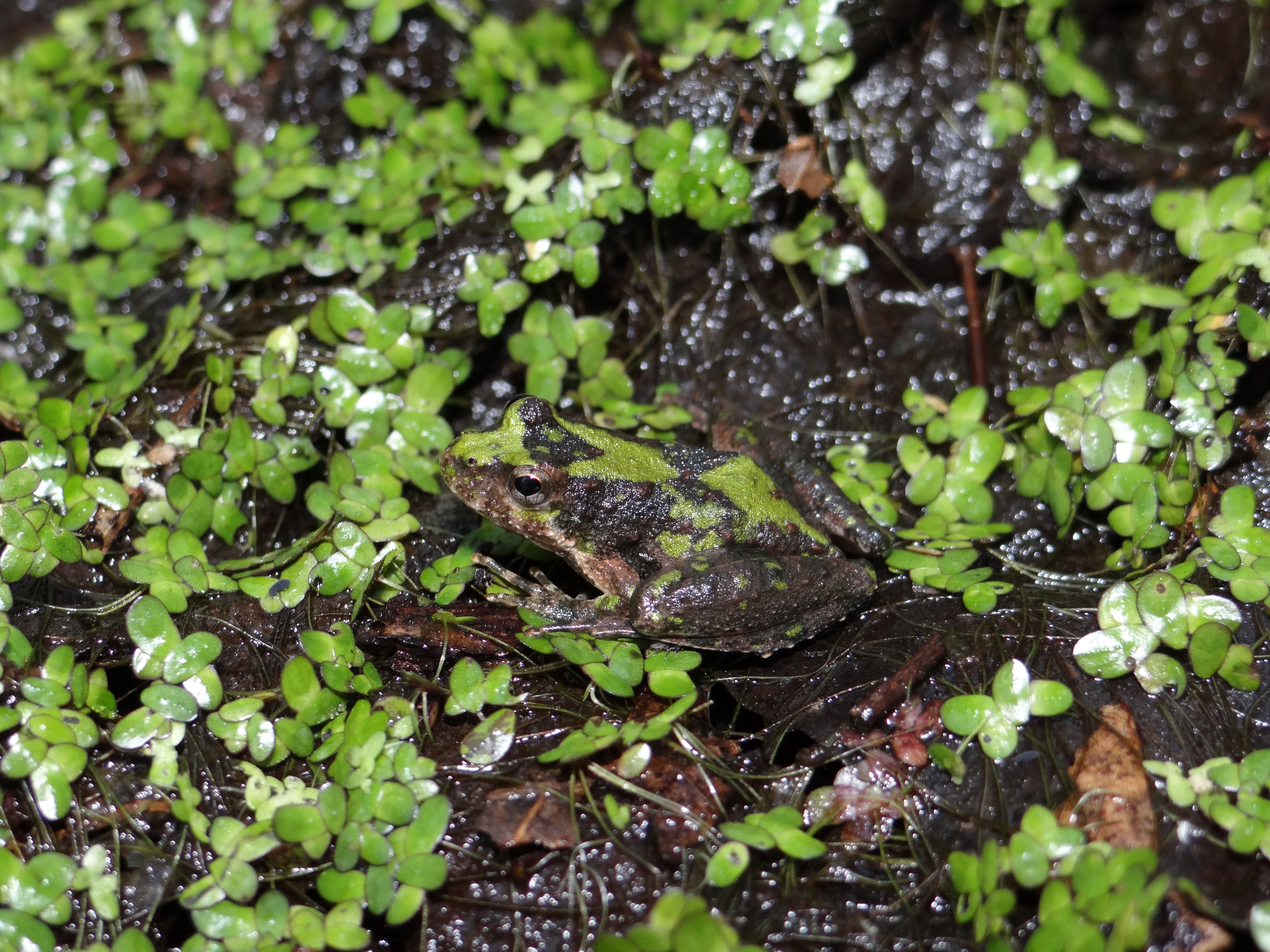
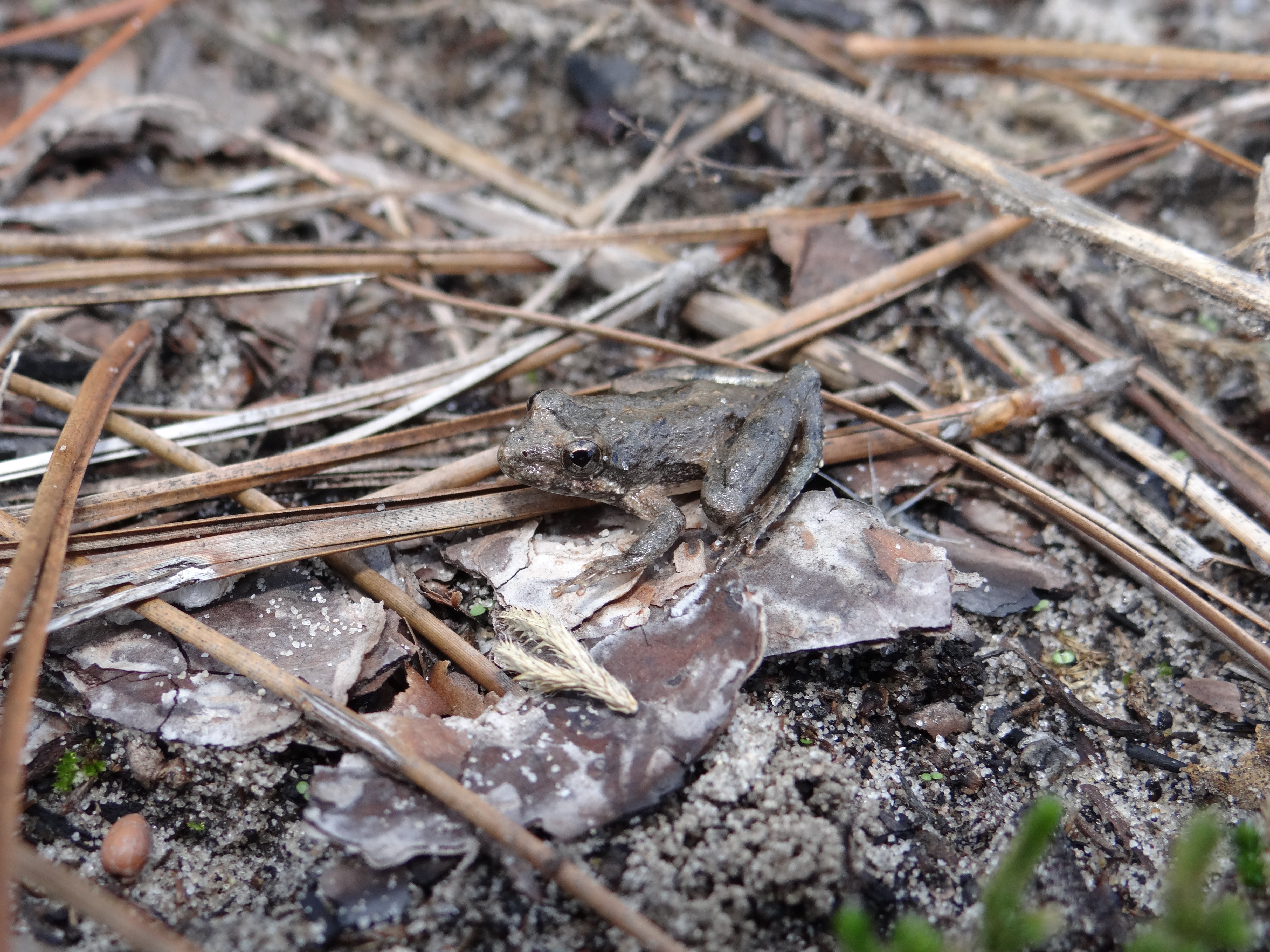
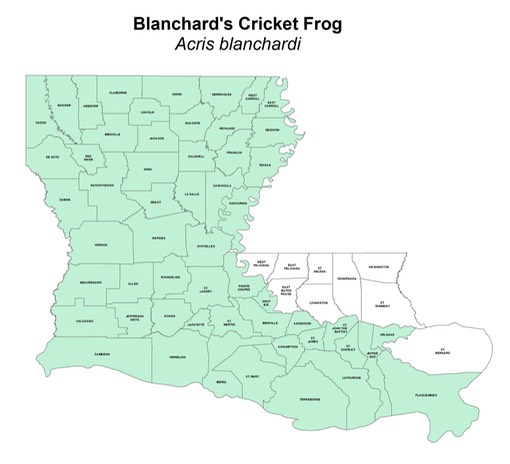
*The colored areas of the map above represent parishes with currently known records for the given species (Source: Jeff Boundy, LA Dept. of Wildlife and Fisheries). By no means does it represent the full range of the species in the state, nor does it necessarily mean that a species can be found throughout the parish with the record. This is provided as a guide to where you might be able to find these species in the state and to aid in identification. A descriptive explanation of the range of each species can be found in the text below.
Other Common Names:
Subspecies: No subspecies recognized.
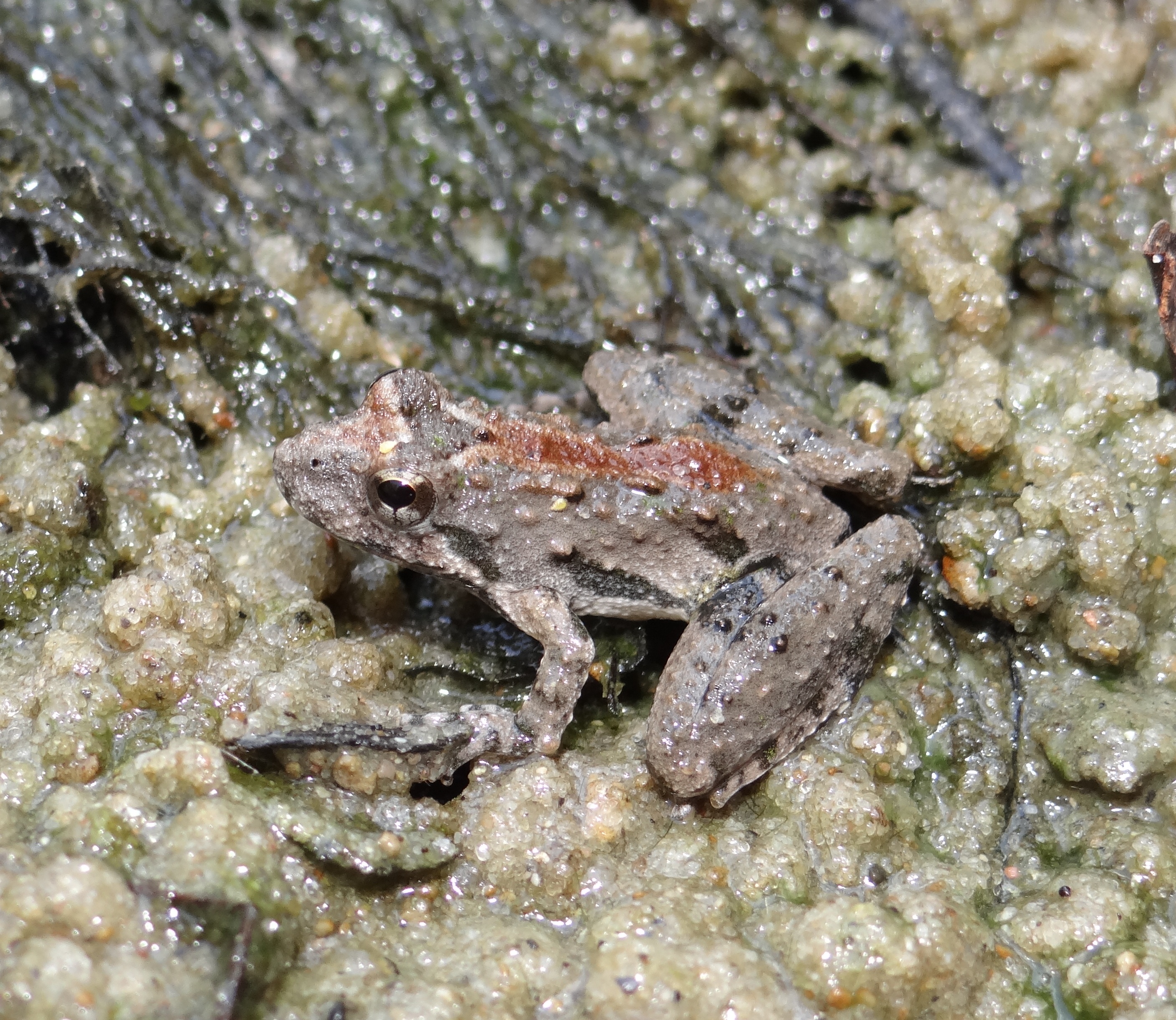
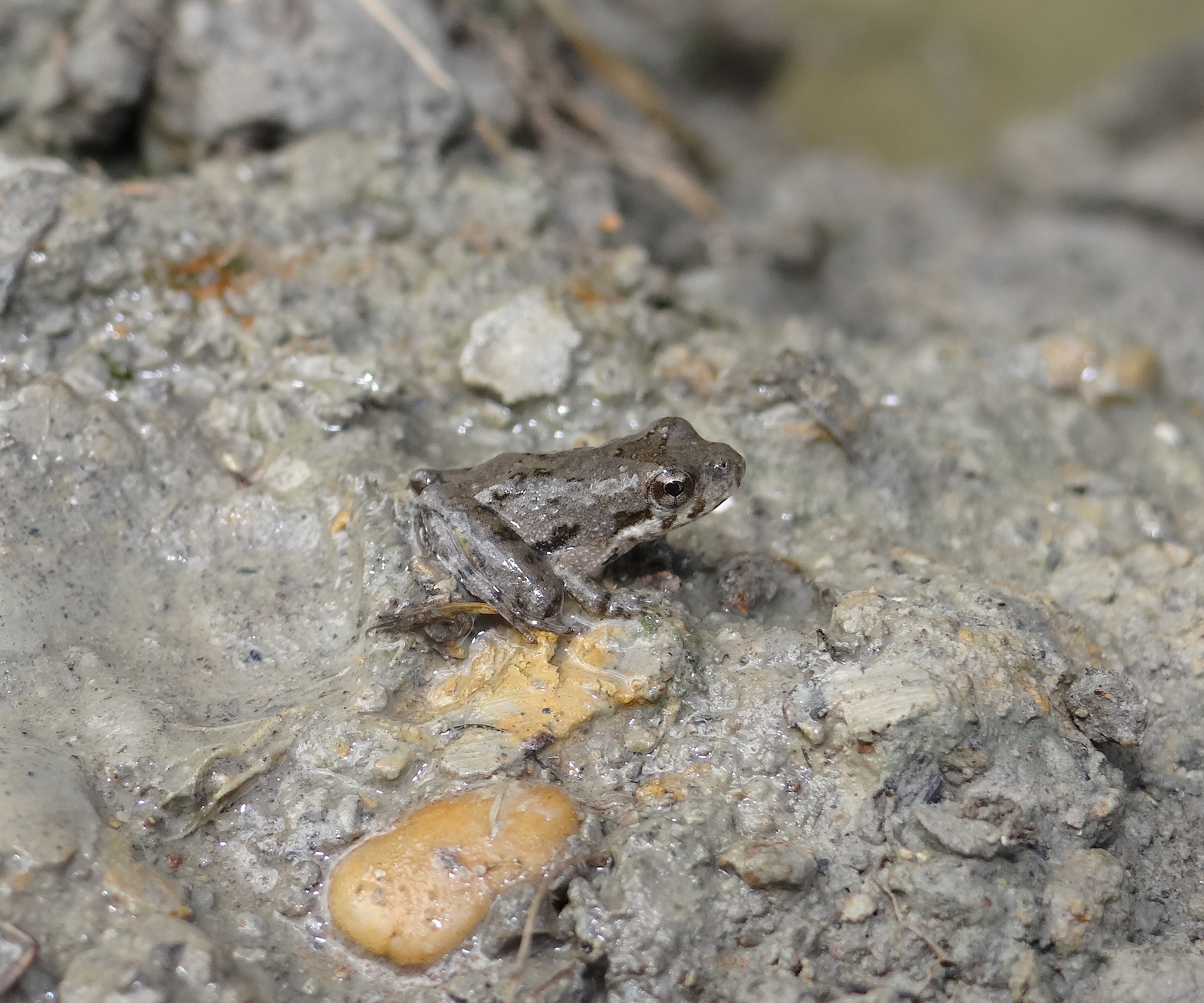
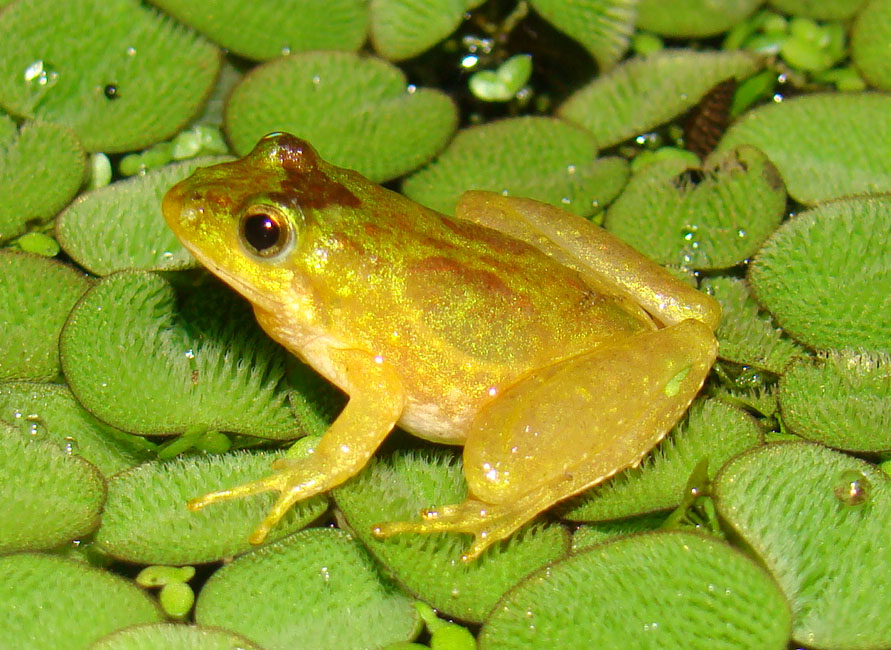
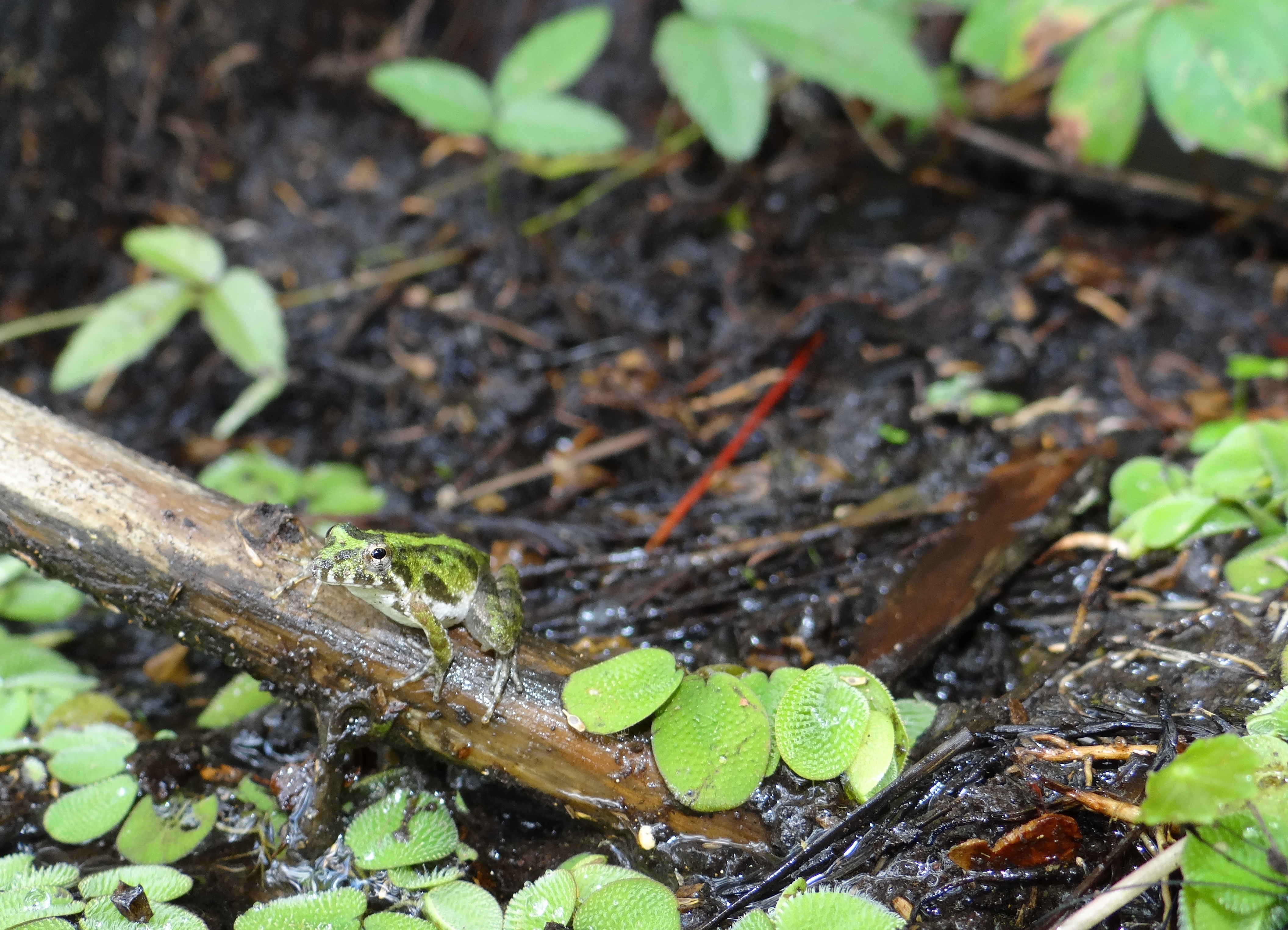
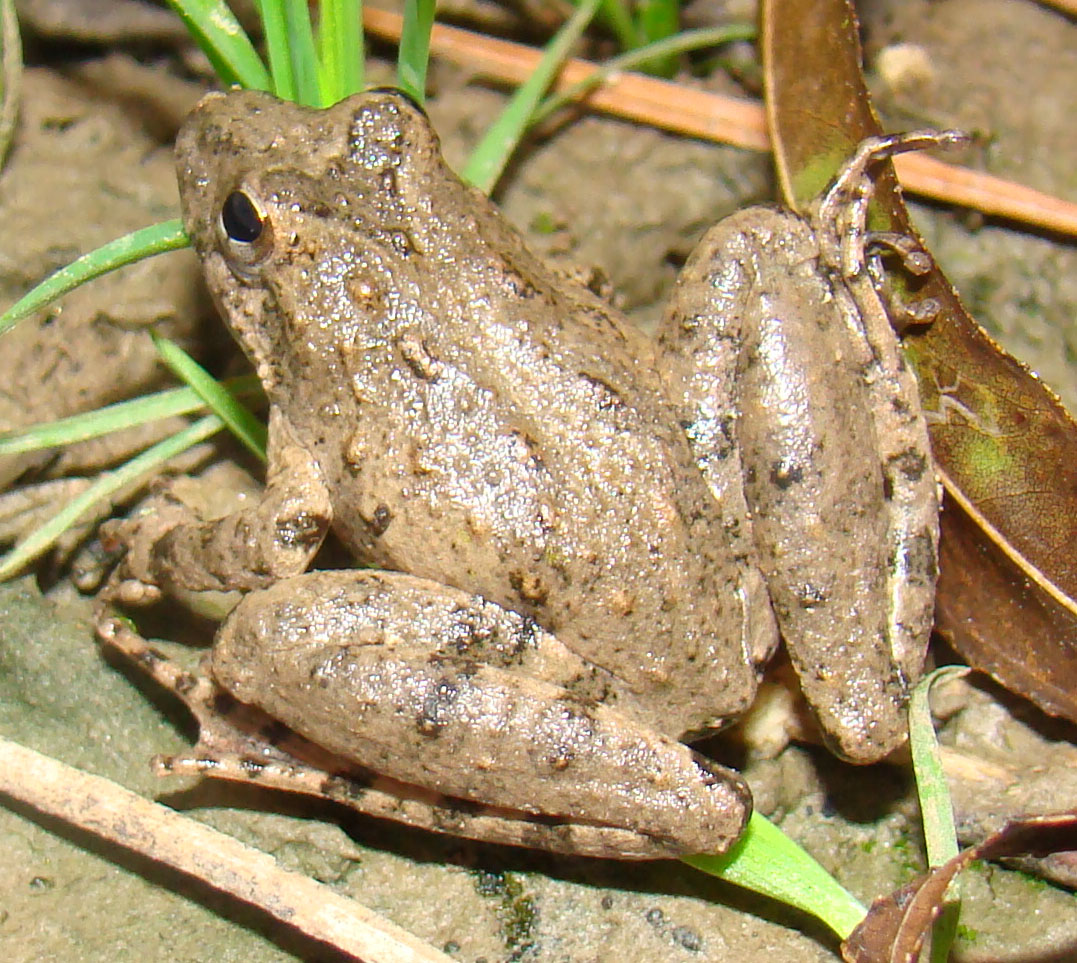
Adult Description: A small frog (maximum 1.6”) with extremely variable coloration. Their coloration may be primarily brown, gray, or green and may possess a reddish, tan, or green stripe down middle of back. A white stripe is usually present at an angle from eye to jaw. They typically possess dark bars along mouth, crossbands on limbs, and a dark patch behind eardrum. A consistent character of cricket frogs is a posterior-facing triangle between their eyes, but this can be pale in some individuals. They possess warts on dorsum and hindlimbs. They have a more rounded snout, a more jagged thigh stripe, and more webbing on hind feet than Southern Cricket Frogs. Belly is white.
Similar Species:
Species Range: Blanchard’s Cricket Frogs occur in Midwest and Great Plains from South Dakota south to west Texas and east to Mississippi River and north of Ohio River.
Louisiana Range: Statewide except brackish and salt marshes. Blanchard’s Cricket Frogs occur west of Mississippi River. East of Mississippi River may all be Blanchard’s Cricket Frogs or perhaps Eastern Cricket Frogs have their westernmost range in Louisiana. These two species can be discerned only through genetics and sparse sampling precludes a definitive answer at this time on their range in eastern Louisiana.
Adult Habitat: In a wide variety of habitats, but uncommon in pinelands of Florida Parishes where Southern Cricket Frogs are abundant.
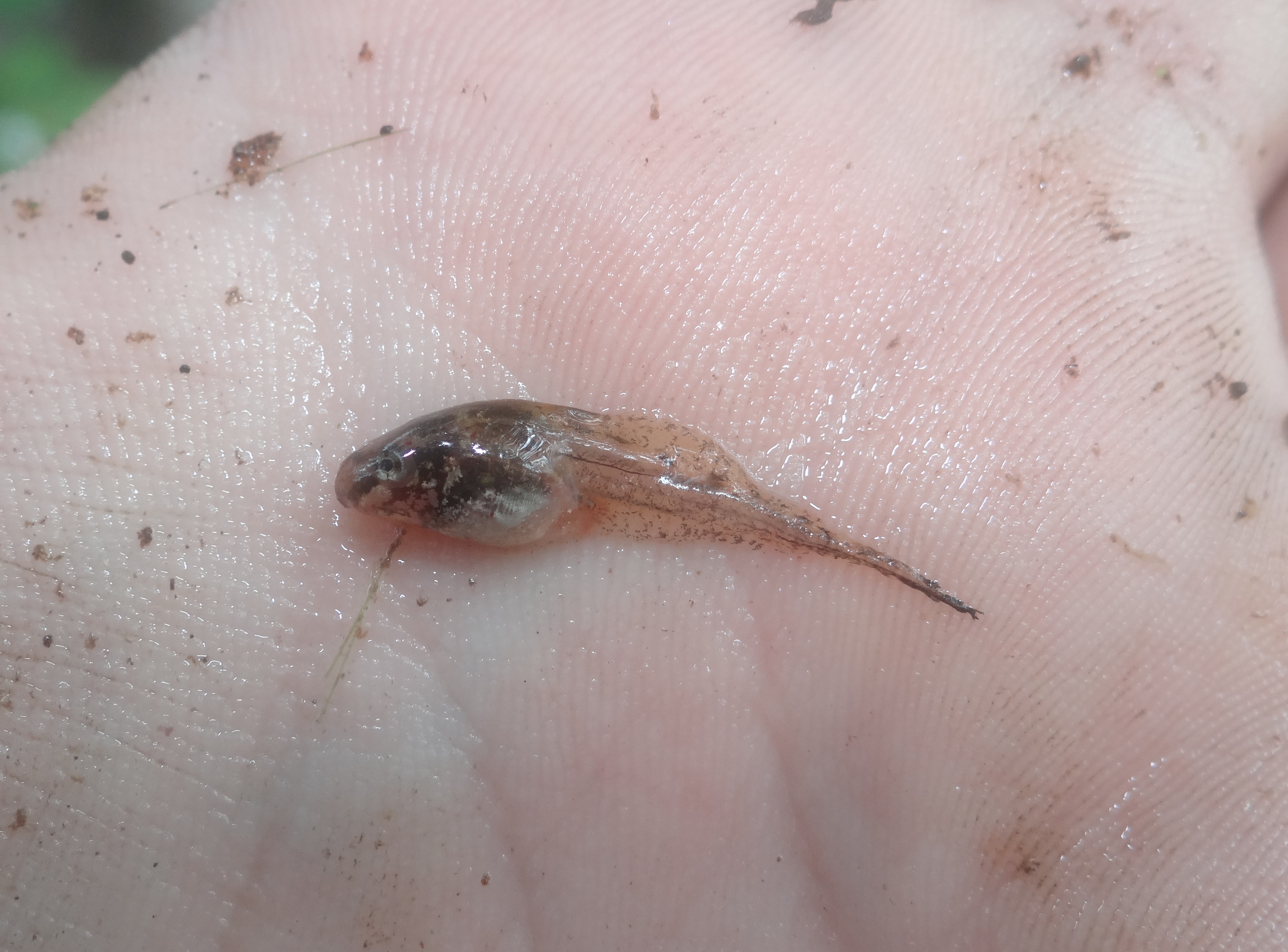
Natural History: Blanchard’s Cricket Frogs are active during warmer days in cooler months and may be active day and night in warmer months. They are indiscriminate feeders, taking many small invertebrates. Cricket frogs are preyed upon by some large invertebrates, particularly spiders, and by a whole host of vertebrate predators, including fish, other frogs, snakes, turtles, birds, and mammals. They are well known for their long jumps relative to their size combined with quick changes of direction which may disorient potential predators. They breed during warm weather primarily from March to October in nearly any body of water from ephemeral to permanent. Females may lay over 400 eggs in small loose clusters of 2–7 eggs held together by gelatinous envelopes. Eggs hatch in 3–4 days and tadpoles metamorphose in 1–2.5 months. Maturity is rapid and adult size may be obtained two months after metamorphosis. Blanchard’s Cricket Frogs are essentially an annual species, with very few frogs surviving two winters.
Call: Increasingly paced, rapid, high-pitched repetitious clicks likened to the sound of striking together two pebbles or marbles. Vocalizations are often heard during the day as well as night, and even outside of breeding window.
Best Time and Place to Observe: This abundant frog can be easily found near margins of freshwater ponds where they characteristically often hop into the water from the water’s edge only to swim straight back to the water’s edge. Alternatively, one can often find males during warmer months at night calling on floating vegetation, often far from shore.
Global Conservation Status: Blanchard’s Cricket Frogs are not assessed by IUCN, but the Eastern Cricket Frog, of which Blanchard’s Cricket Frogs were previously named, have a relatively wide distribution in eastern North America and Mexico, a presumed large population, and tolerate a broad range of habitats, and thus, are listed as Least Concern by the IUCN Red List. Blanchard’s Cricket Frog has a NatureServe Global Conservation Status Rank of G5 (Secure).
Federal Conservation Status: None.
Louisiana Conservation Status: Blanchard’s Cricket Frogs do not have any special status in Louisiana.
Author's Remarks: I have found this species to be common in nearly all permanent freshwater habitats in its range. It can also be found with regularity in or near semi-permanent or ephemeral water bodies.
