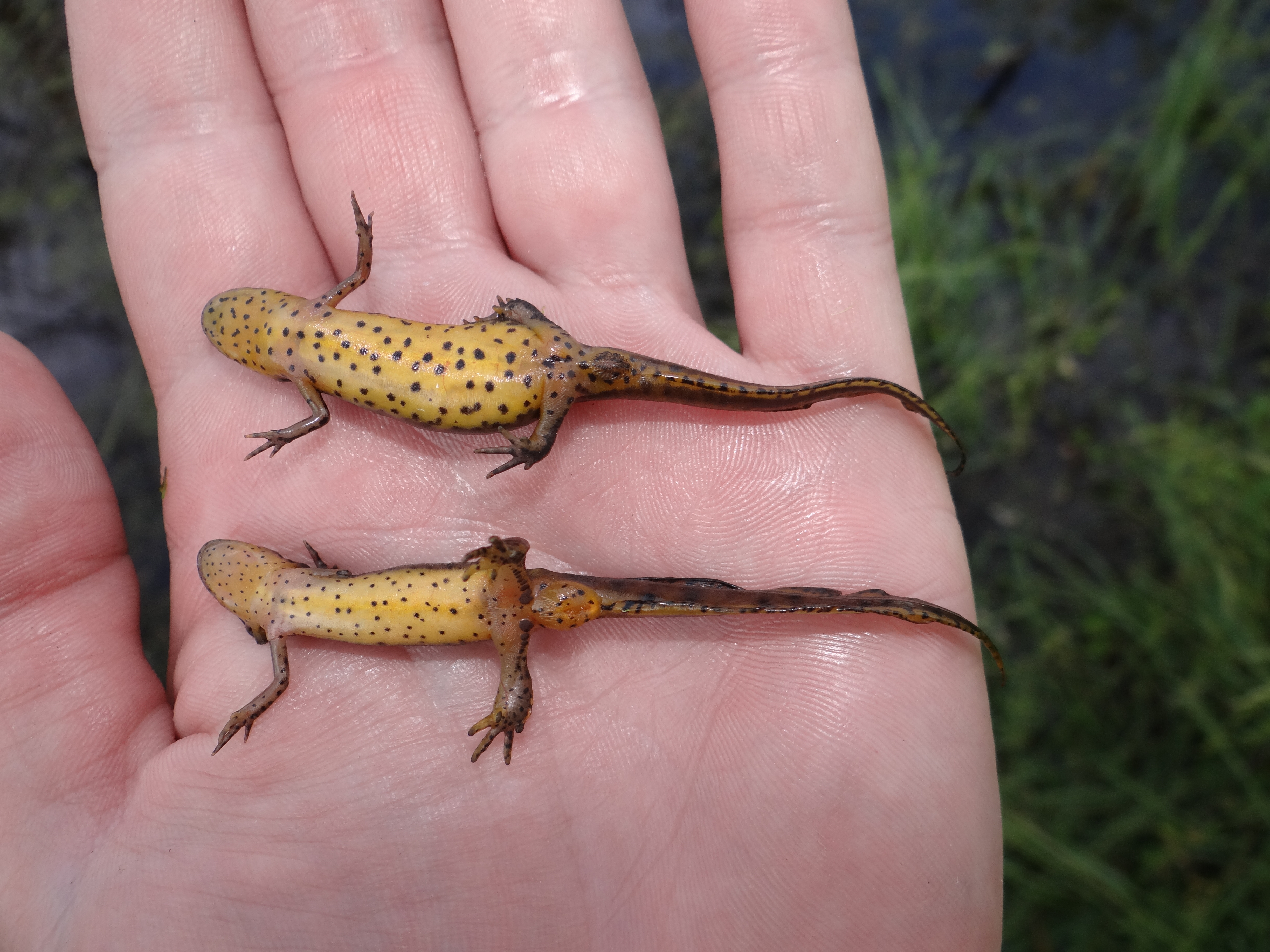
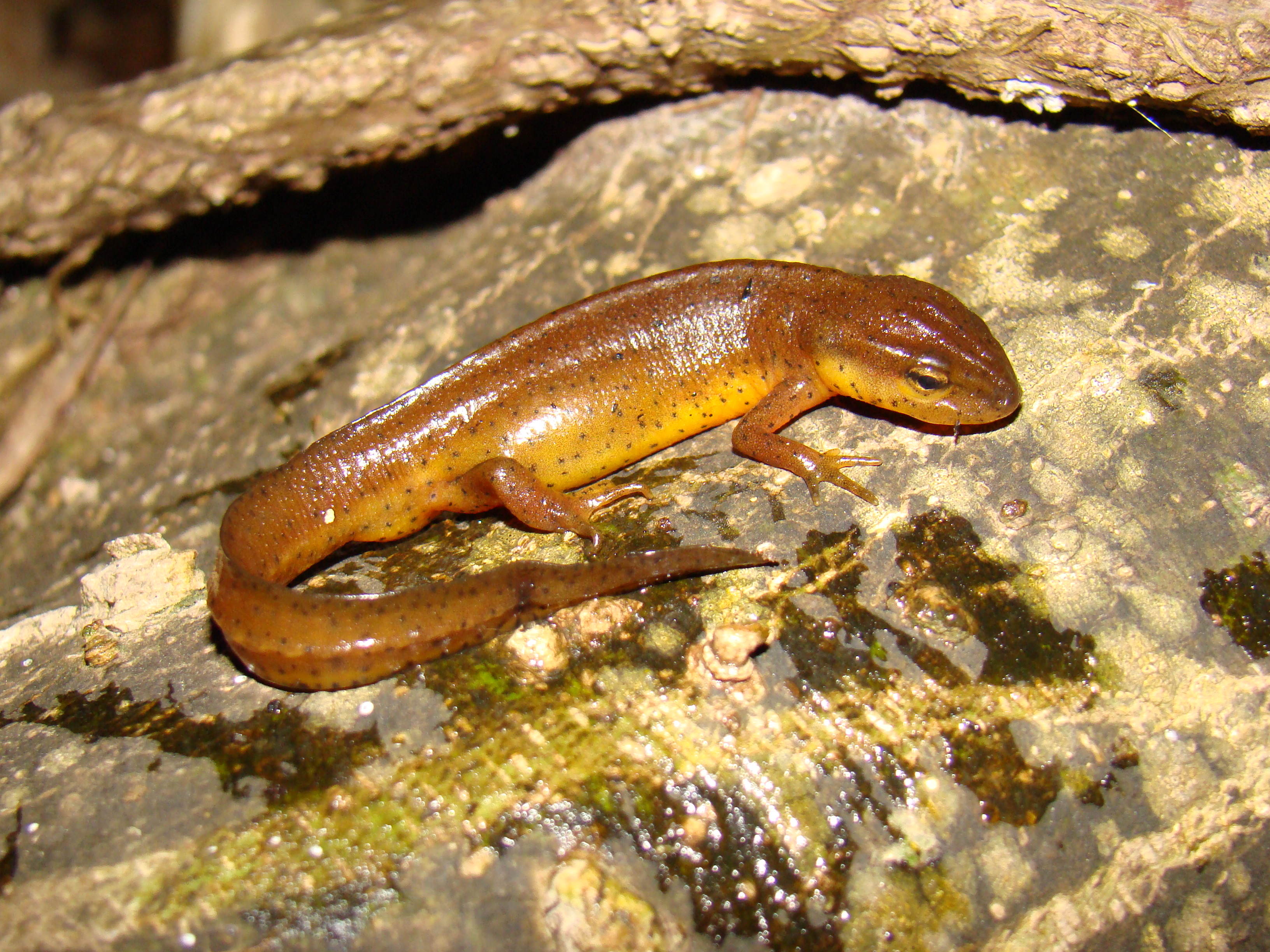
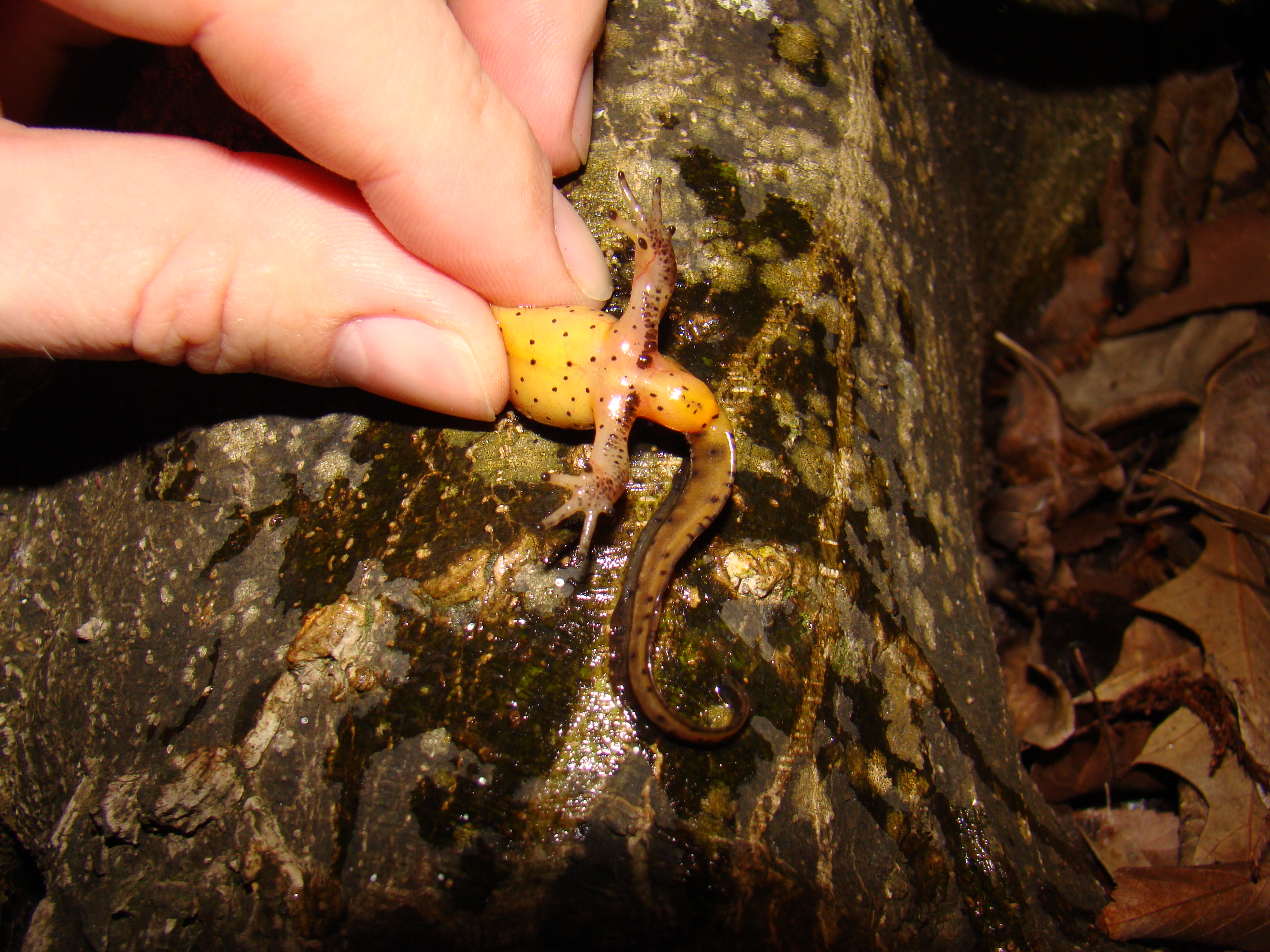
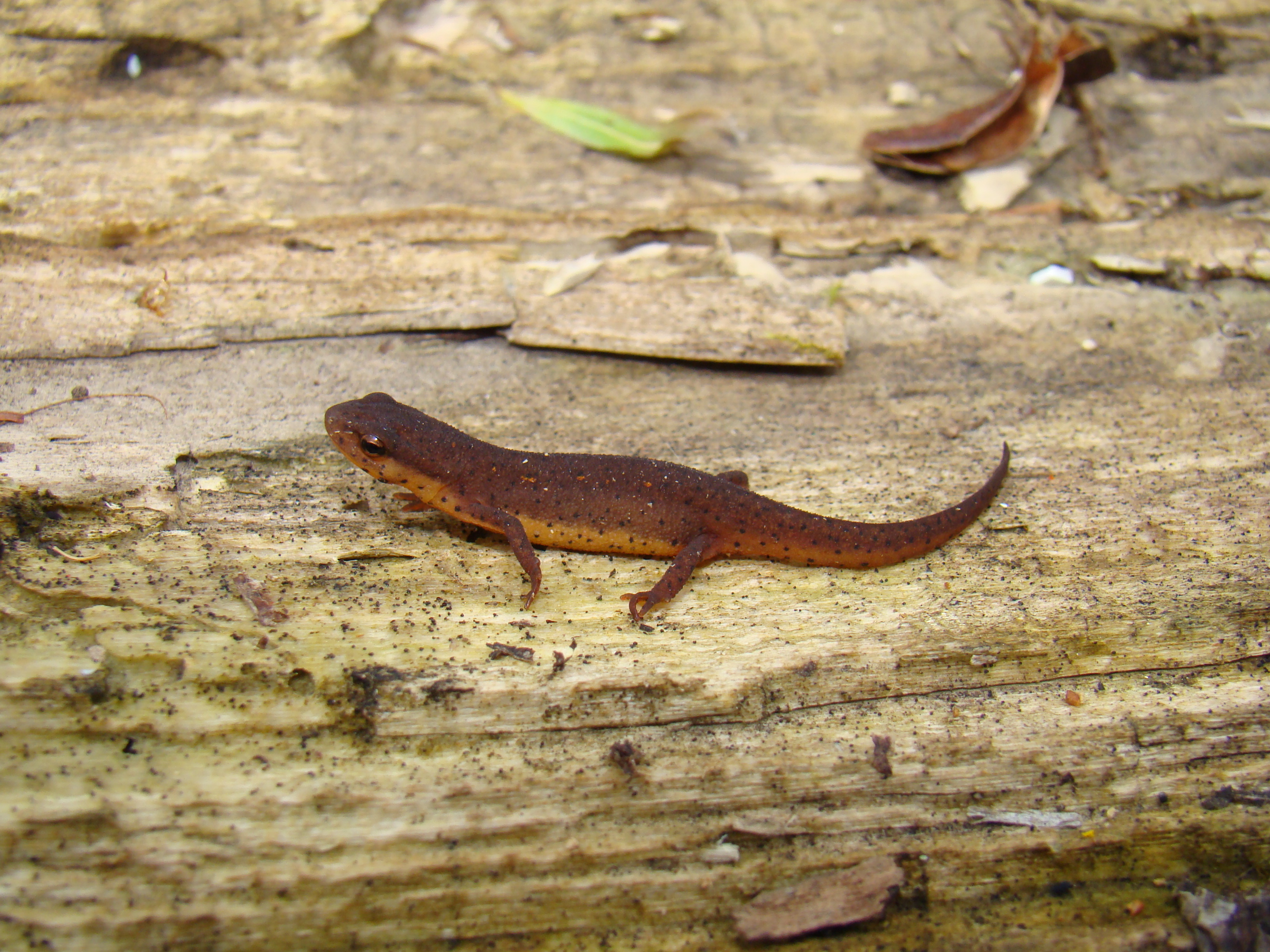
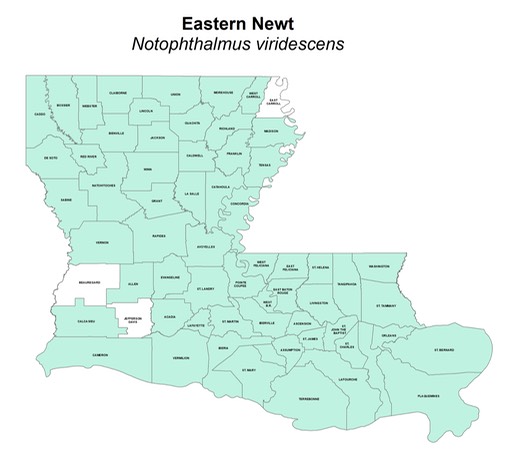
*The colored areas of the map above represent parishes with currently known records for the given species (Source: Jeff Boundy, LA Dept. of Wildlife and Fisheries). By no means does it represent the full range of the species in the state, nor does it necessarily mean that a species can be found throughout the parish with the record. This is provided as a guide to where you might be able to find these species in the state and to aid in identification. A descriptive explanation of the range of each species can be found in the text below.
Other Common Names:
Subspecies: Only the Central Newt, Notophthalmus viridescens louisianensis, occurs within Louisiana.
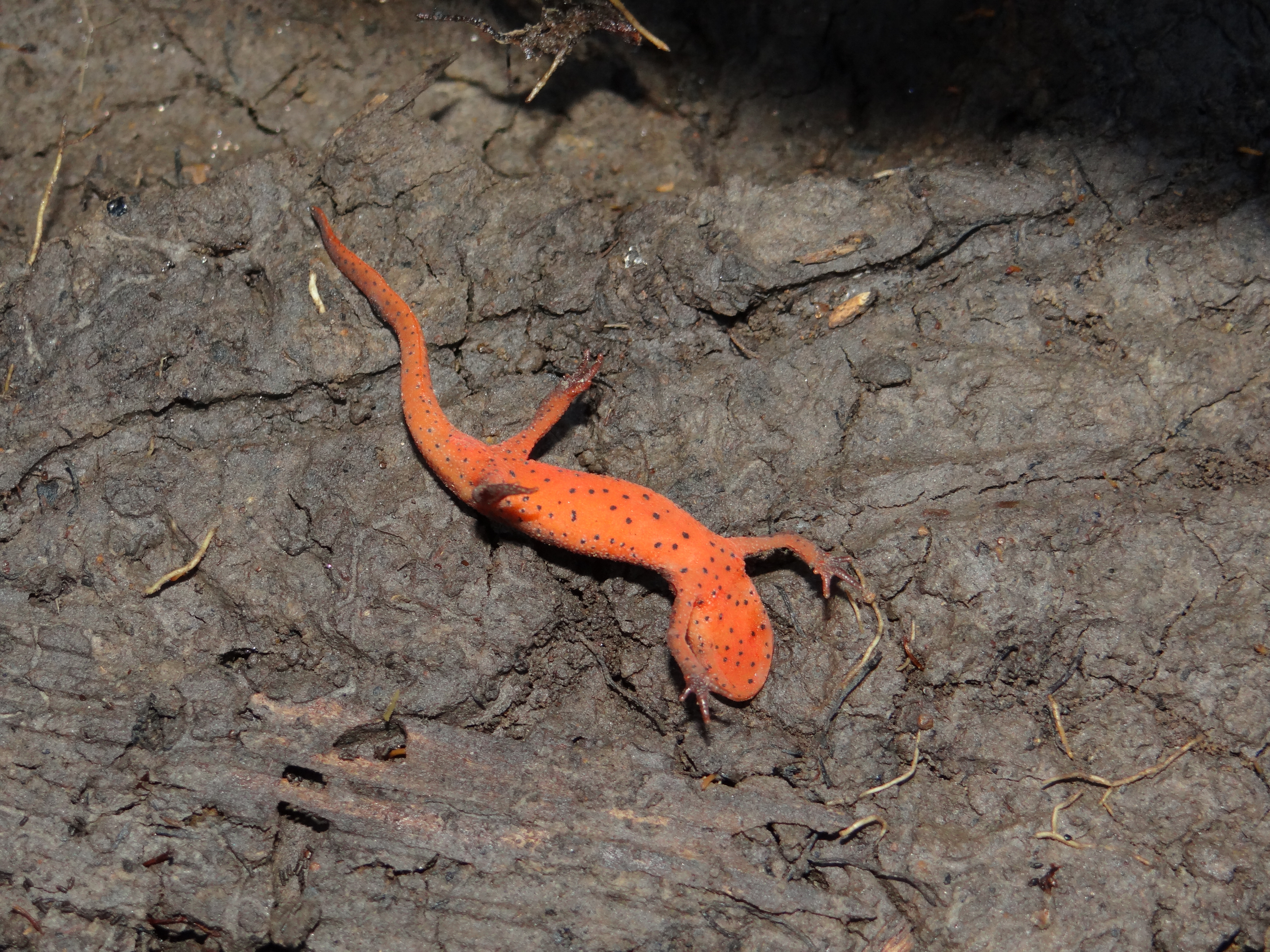
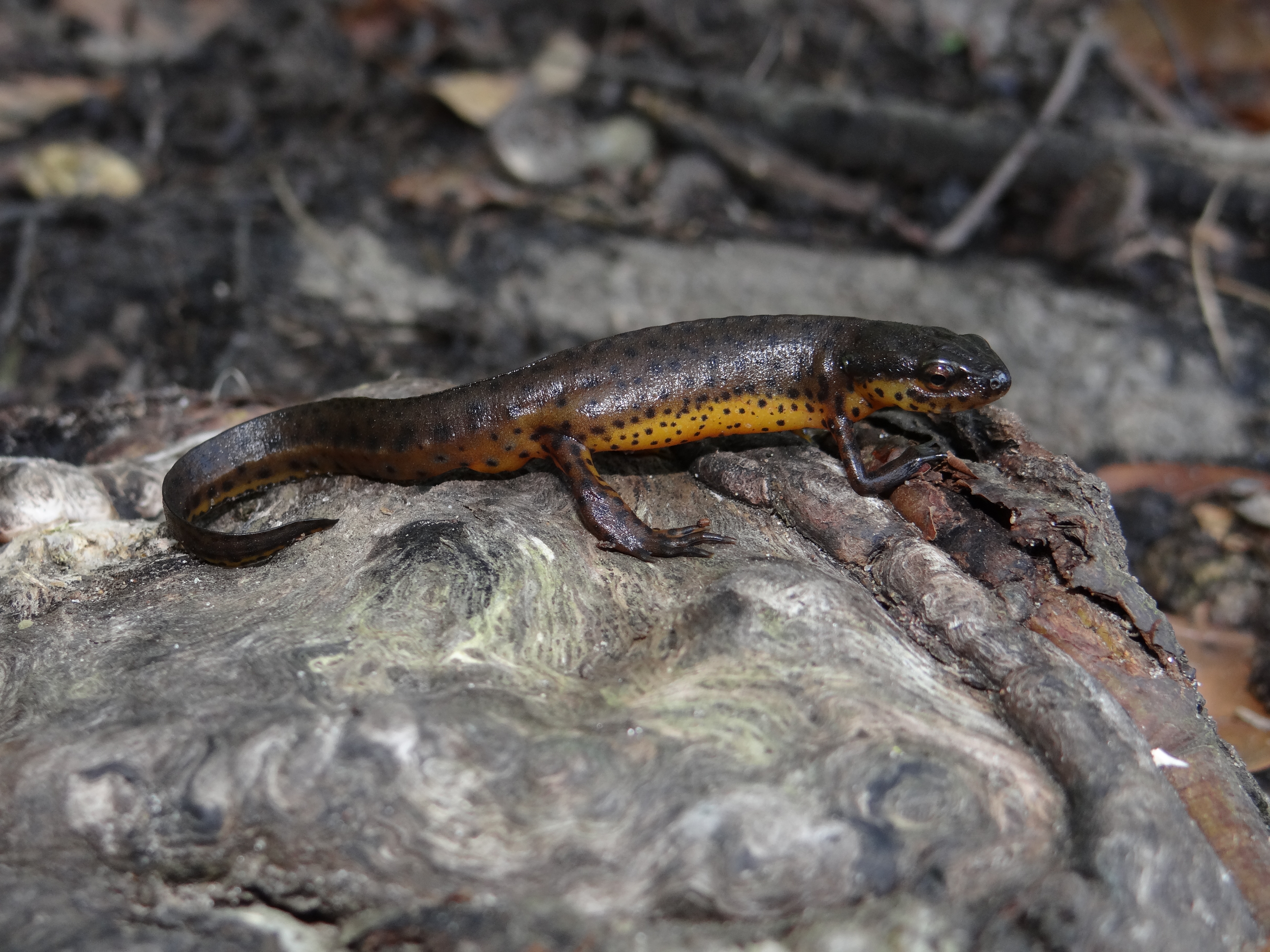
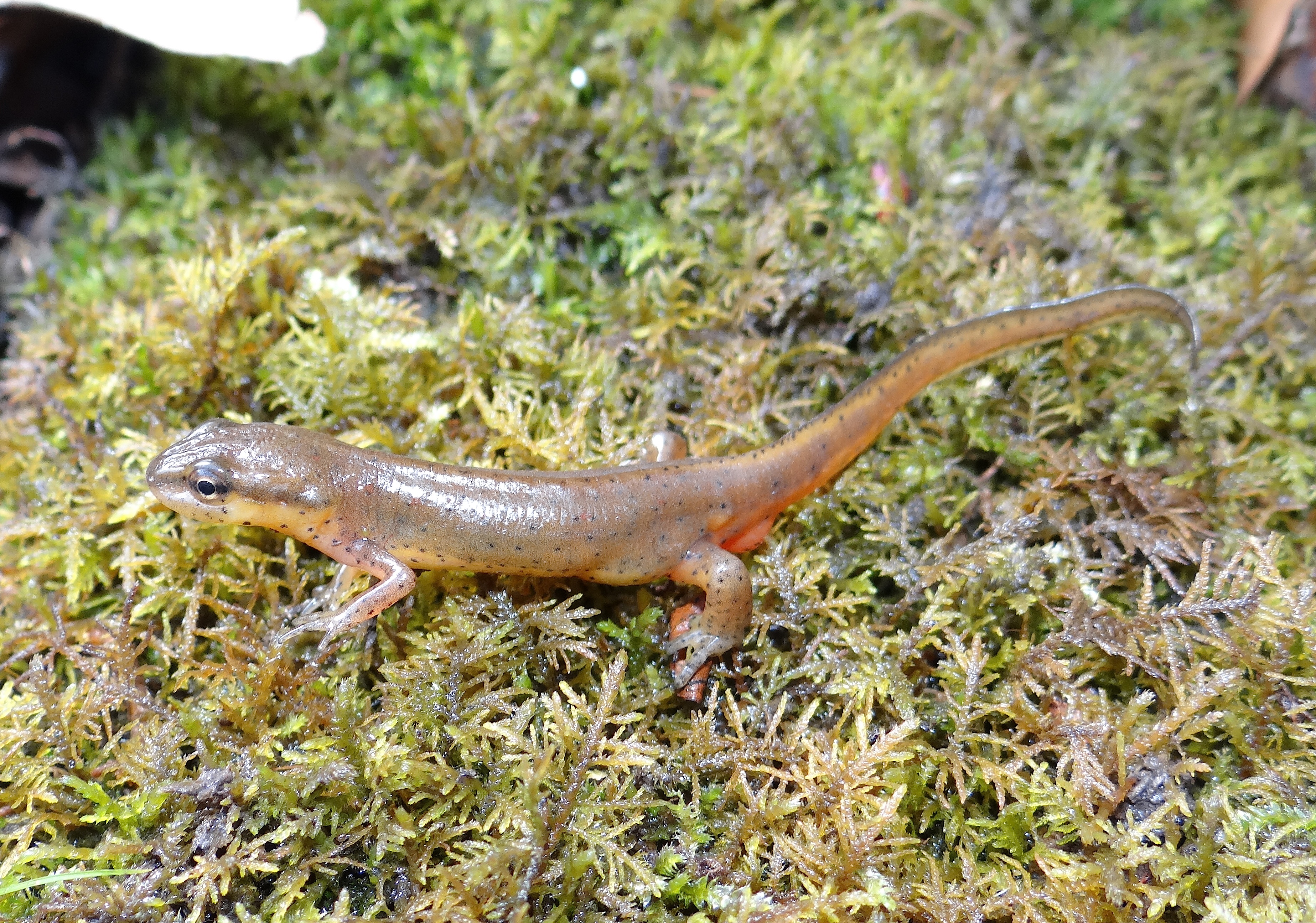
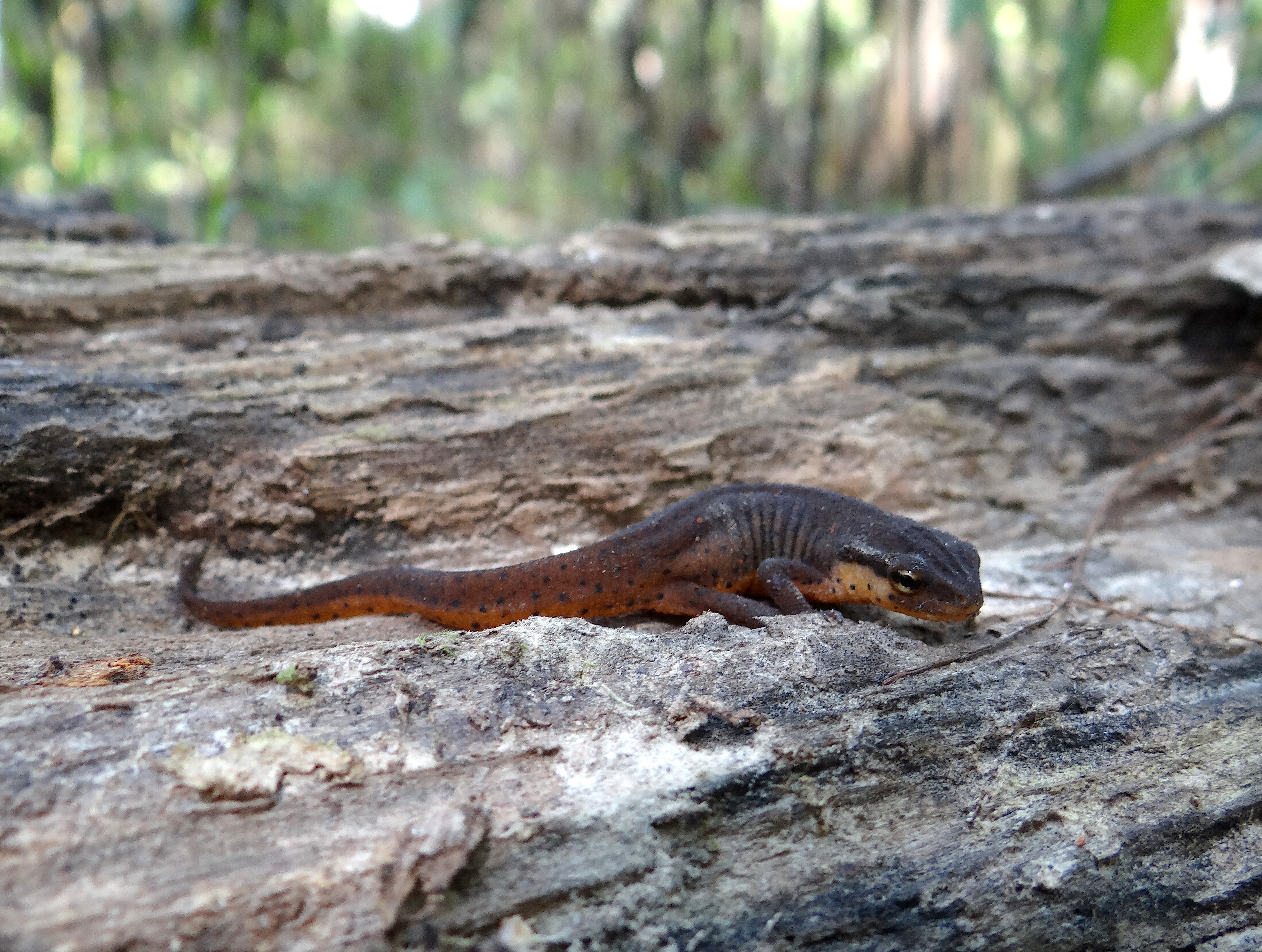
Adult Description: Small, slender salamander (maximum 4.9”) with granular skin and olive to tan coloration on top, and yellow to orange coloration on lower sides of head and body. Body and tail have many scattered small black spots. Upper sides may have row of small red spots outlined in black, but this is more apparent in terrestrial juveniles. Two distinct ridges on top of head between eyes. Tail is laterally compressed with thin fins extending above and below tail muscle. No costal grooves. Belly is yellow to light orange with scattered small black spots.
Similar Species:
Louisiana Range: Statewide, except in brackish and salt marshes.
Adult Habitat: Aquatic adults occur in a variety of temporary and permanent wetlands including ponds, marshes, sloughs, swamps, and lakes, especially those with abundant submerged and floating vegetation. Terrestrial adults occur in forested habitats, both hardwoods and pinelands, near their breeding location.
Natural History: Eastern Newts in wetlands can be active throughout the day, but terrestrial juveniles and adults are primarily nocturnal. They prey upon a wide variety of invertebrates. The skin of Eastern Newts contains neurotoxins that make them distasteful to many would-be predators. Despite this anti-predator defense, several salamander, fish, snake, and turtle species, as well as raccoons, have been documented to attack them. Many potential predators learn to avoid them altogether or at least try to avoid their toxic skin, especially on their back where the toxins are most concentrated. Eastern Newts breed in winter and females may take weeks to lay 200–400 eggs, which they attach singly to submerged vegetation. Eggs typically hatch in 3–5 weeks. In drying water bodies larvae likely metamorphose into the juvenile terrestrial stage, called an eft, in 2–3 months. It may take 2 years for an eft to mature and return to the water to breed. In permanent wetlands, larvae may mature within a year and breed the following season. Maximum wild longevity is unknown, but a captive lived 15 years.
Best Time and Place to Observe: Eastern Newts can be abundant where they occur and if the water is relatively clear with no floating vegetation, they can often be observed active in the shallows at night with the aid of a flashlight, especially during their winter breeding season. In heavily vegetated permanent water aquatic adults and larvae can be dipnetted year-round. Terrestrial efts and adults can be found most easily in cooler weather by uncovering logs or leaf litter, usually near their breeding habitat.
Global Conservation Status: Eastern Newts have a relatively wide distribution in eastern North America, a presumed large population, and tolerate a degree of habitat modification, and thus, are listed as Least Concern by the IUCN Red List. Their NatureServe Global Conservation Status Rank is G5 (Secure).
Federal Conservation Status: None.
Louisiana Conservation Status: Eastern Newts do not have any special status in Louisiana.
Author's Remarks: I have found this species in most areas I have spent any considerable time.
