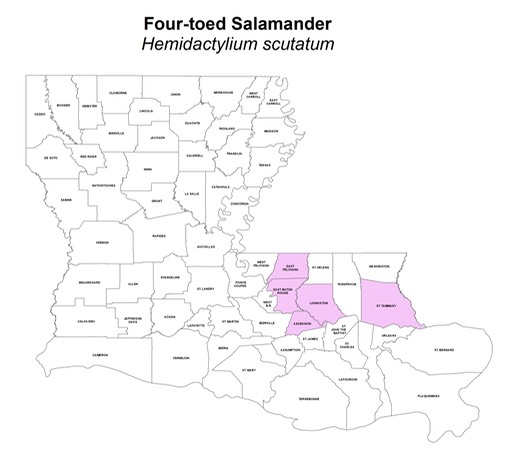
*The colored areas of the map above represent parishes with currently known records for the given species (Source: Jeff Boundy, LA Dept. of Wildlife and Fisheries). By no means does it represent the full range of the species in the state, nor does it necessarily mean that a species can be found throughout the parish with the record. This is provided as a guide to where you might be able to find these species in the state and to aid in identification. A descriptive explanation of the range of each species can be found in the text below.
Other Common Names:
Subspecies: No subspecies recognized.
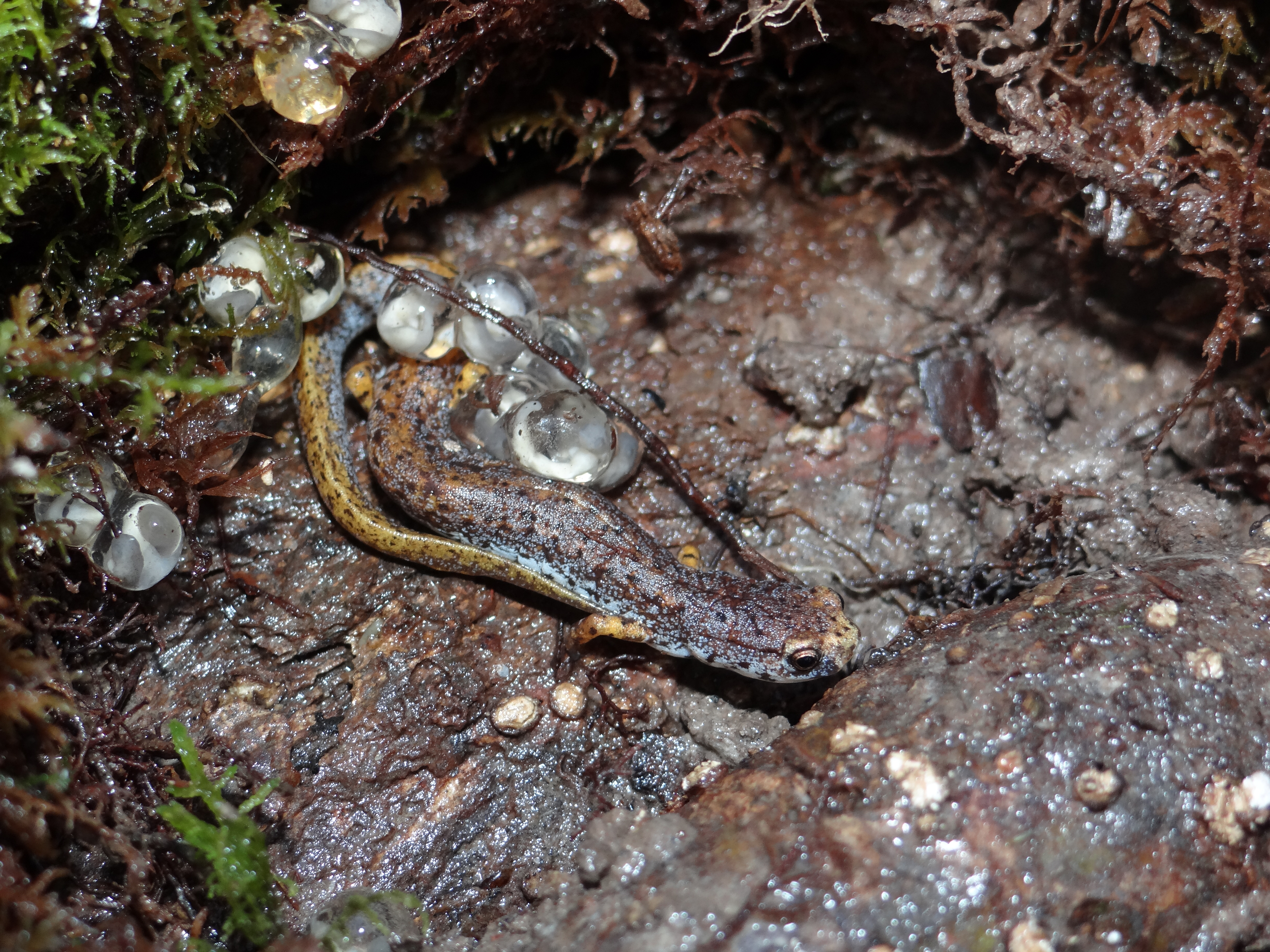
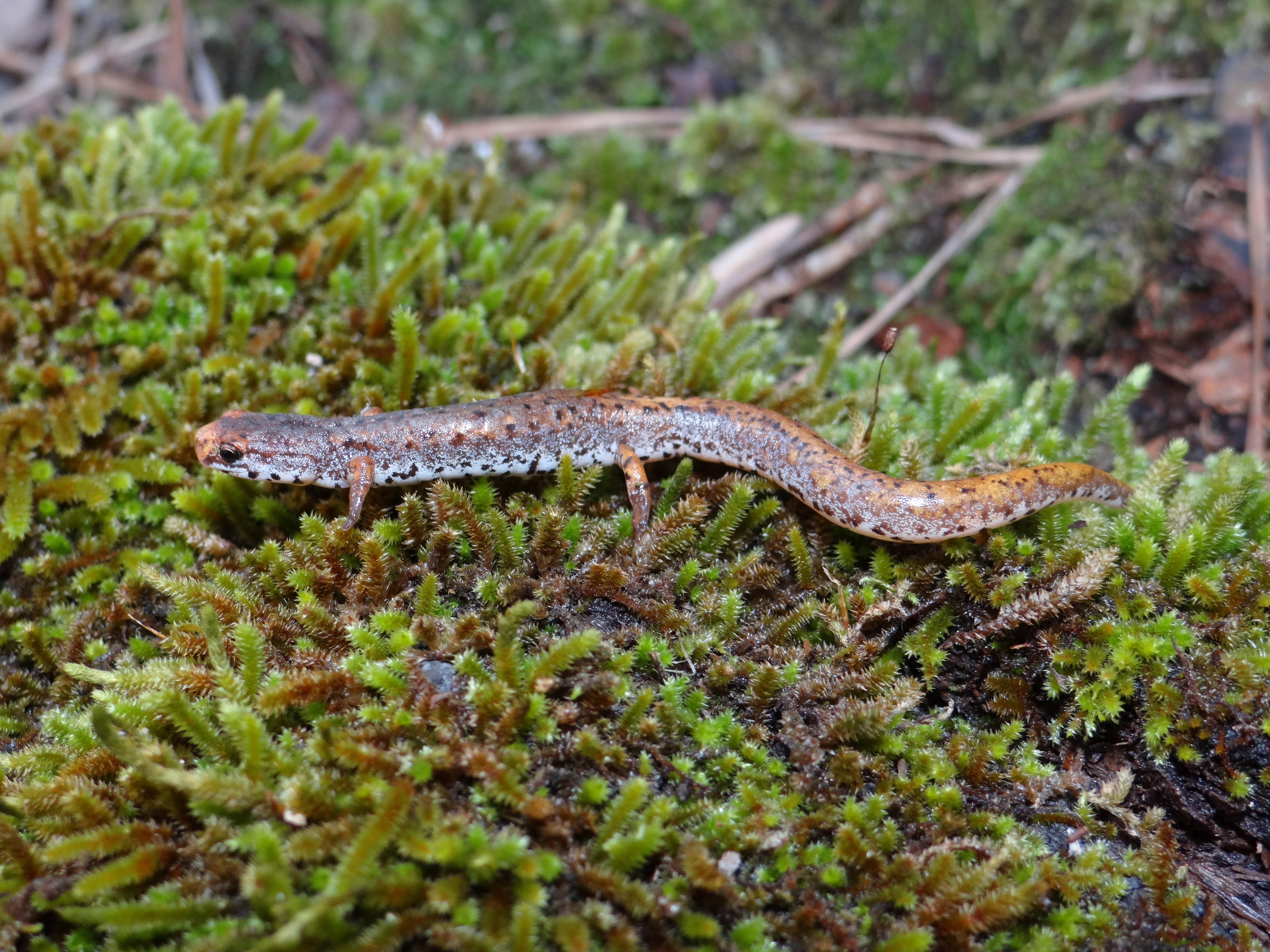
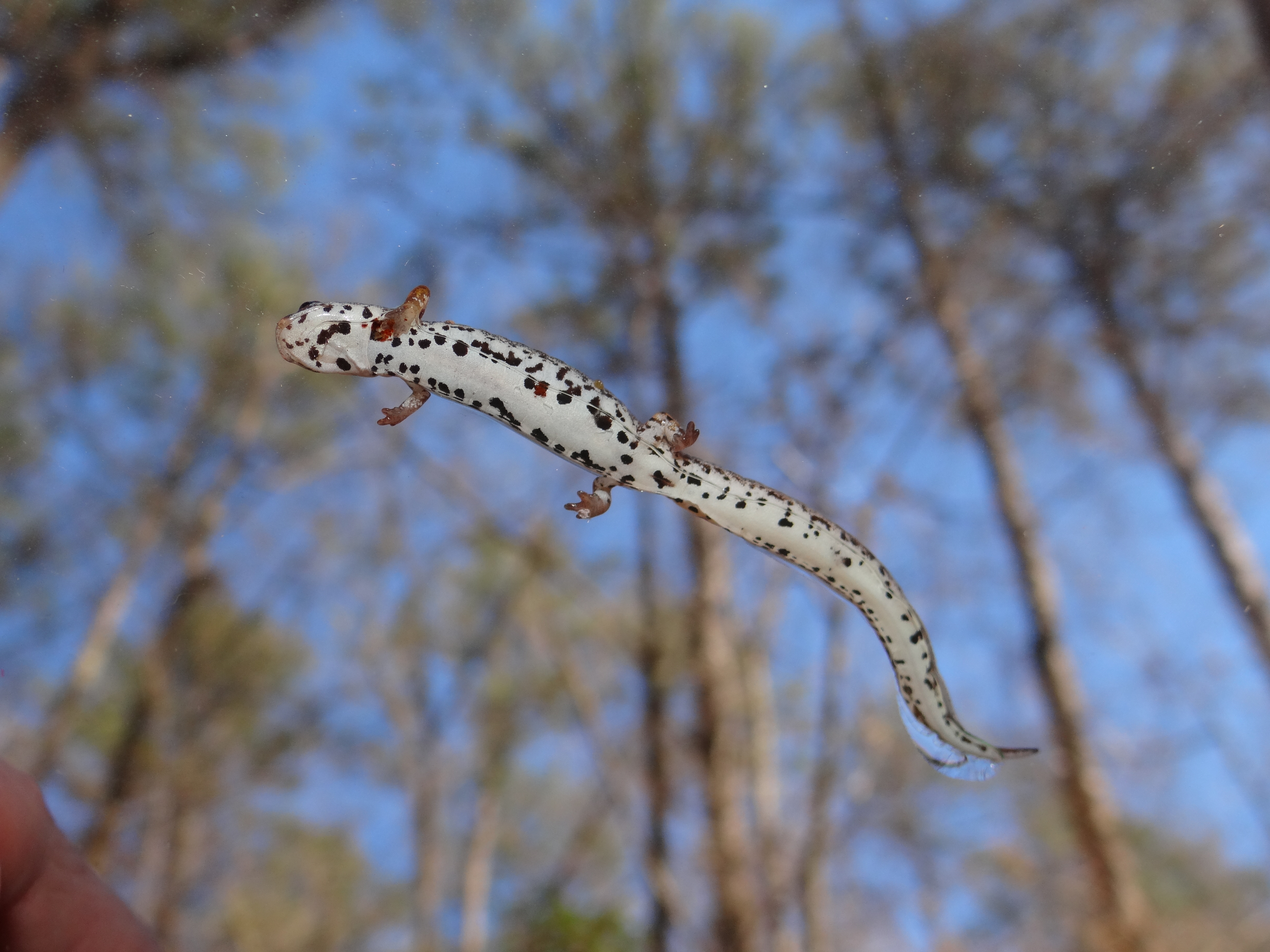
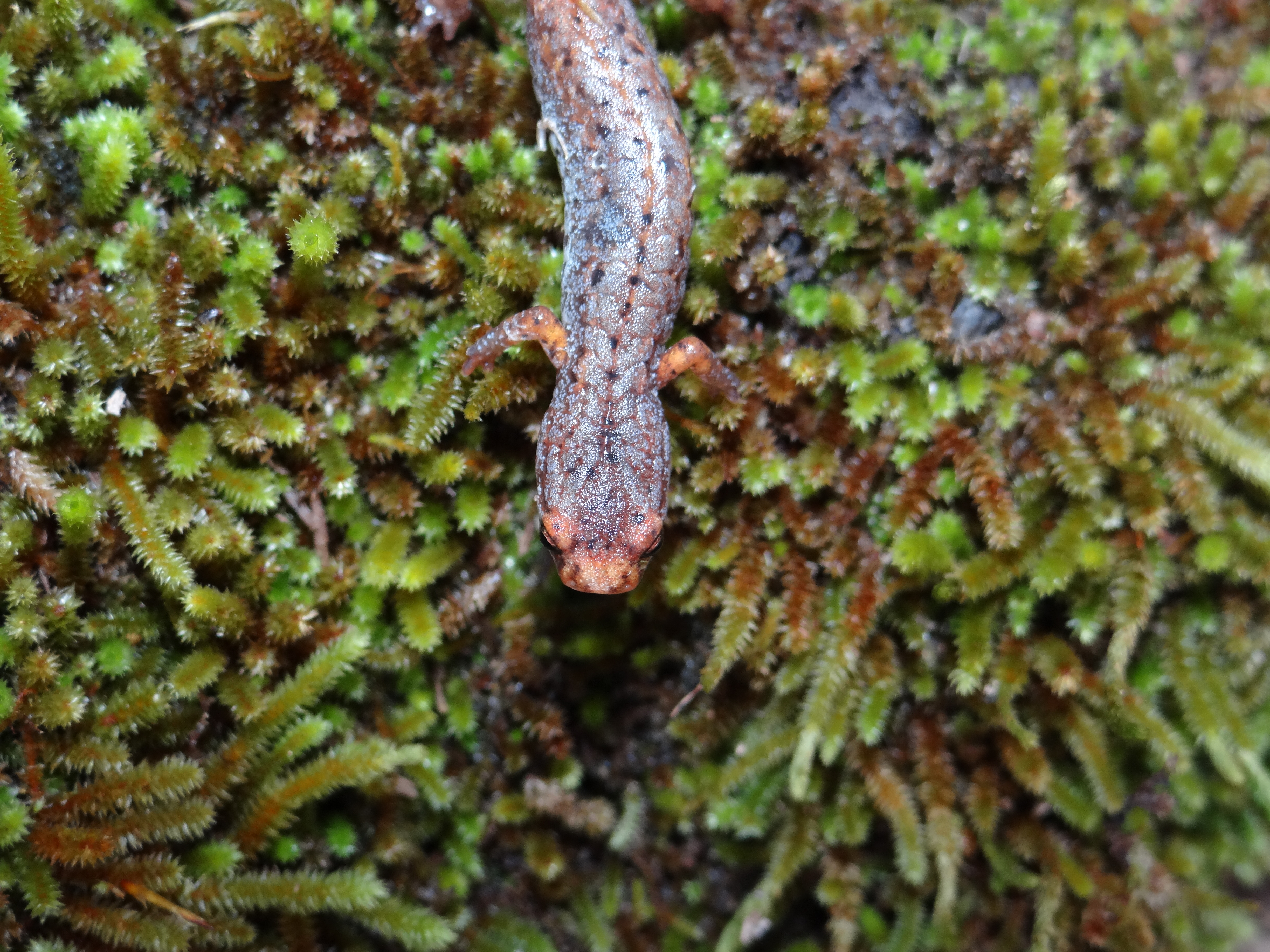
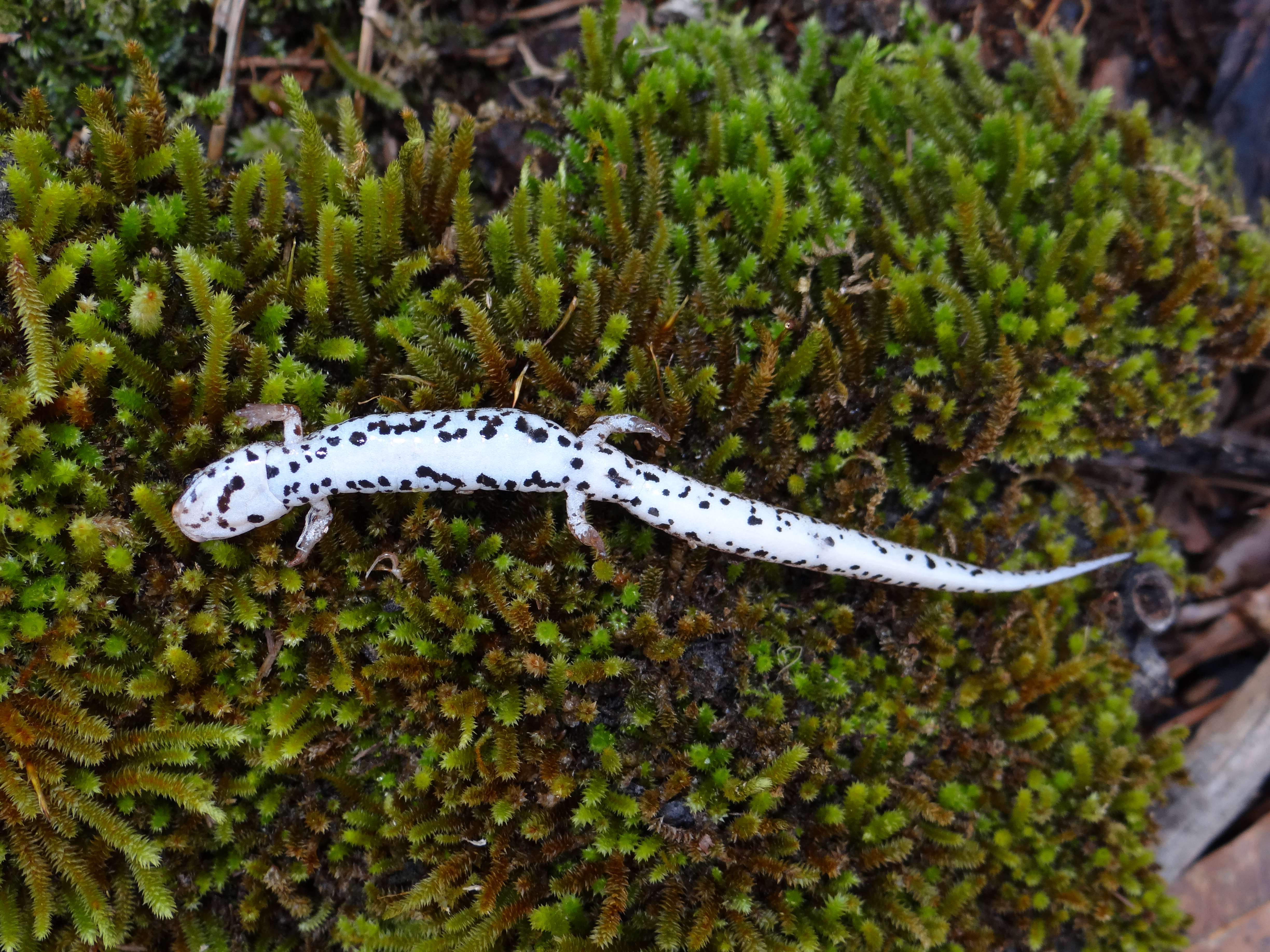
Adult Description: Small salamander (maximum 4”) with a reddish tan to rusty color on top, with small, scattered black spots and markings. Often more vibrant tan or orange coloration on snout, tops of limbs, and tail. Sides may be gray or white with gray markings like belly, particularly on lower sides. Short, squared-off snout. 13–14 costal grooves. Obvious constriction at base of tail. Four toes on hindlimbs. Belly is cream to white with black spots.
Similar Species:
Species Range: Patchily distributed in eastern North America from southern Canada through all States east of Mississippi River, as well as southeastern Oklahoma, Arkansas, and Missouri.
Louisiana Range: Isolated records from Ascension Parish and Florida Parishes of East Baton Rouge, East Feliciana, Livingston, and St. Tammany.
Adult Habitat: Forested flatwoods, pine, or mixed pine-hardwoods, in vicinity of gum ponds with ample sphagnum moss.
Natural History: Four-toed Salamanders are nocturnal and spend most of their lives underground. They prey upon a wide variety of invertebrates. Poison glands on their tail may offer some protection as few predators have been noted. However, it is likely that small mammals, snakes, and birds will prey upon Four-toed Salamanders. In late fall and winter females deposit up to 60 eggs or more concealed within sphagnum or in rotten logs perched just above shallow water, which allows the larvae to wriggle downward after hatching. Communal nesting is well known, with only the initial female brooding communal clutches. Eggs typically hatch in 1–2 months in late February or early March and larvae have a short time to metamorphosis of only 20–40 days. Maximum wild longevity is unknown, but a captive lived 9 years.
Best Time and Place to Observe: Few known existing populations in Louisiana, but Four-toed Salamanders may best be found under woody debris or sphagnum moss during the breeding season in late fall and winter.
Global Conservation Status: Four-toed Salamanders have a relatively wide distribution in eastern North America and a presumed large population, and thus, are listed as Least Concern by the IUCN Red List. Their NatureServe Global Conservation Status Rank is G5 (Secure).
Federal Conservation Status: None.
Louisiana Conservation Status: Four-toed Salamanders have a ranking of S1 (critically imperiled because of extreme rarity – 5 or fewer known extant populations) in Louisiana.
*** If you live in the range of this species in Louisiana and believe you may have observed this species please let me know (take a picture if possible), as there may be more unknown populations in the state.***
Author's Remarks: I saw a couple individuals, a male under a log and a female on eggs under sphagnum (and another unattended egg mass) in early 2016 in Louisiana. Only a few known populations are extant in the state. I have found this species only a couple of times before this in middle Tennessee.
