
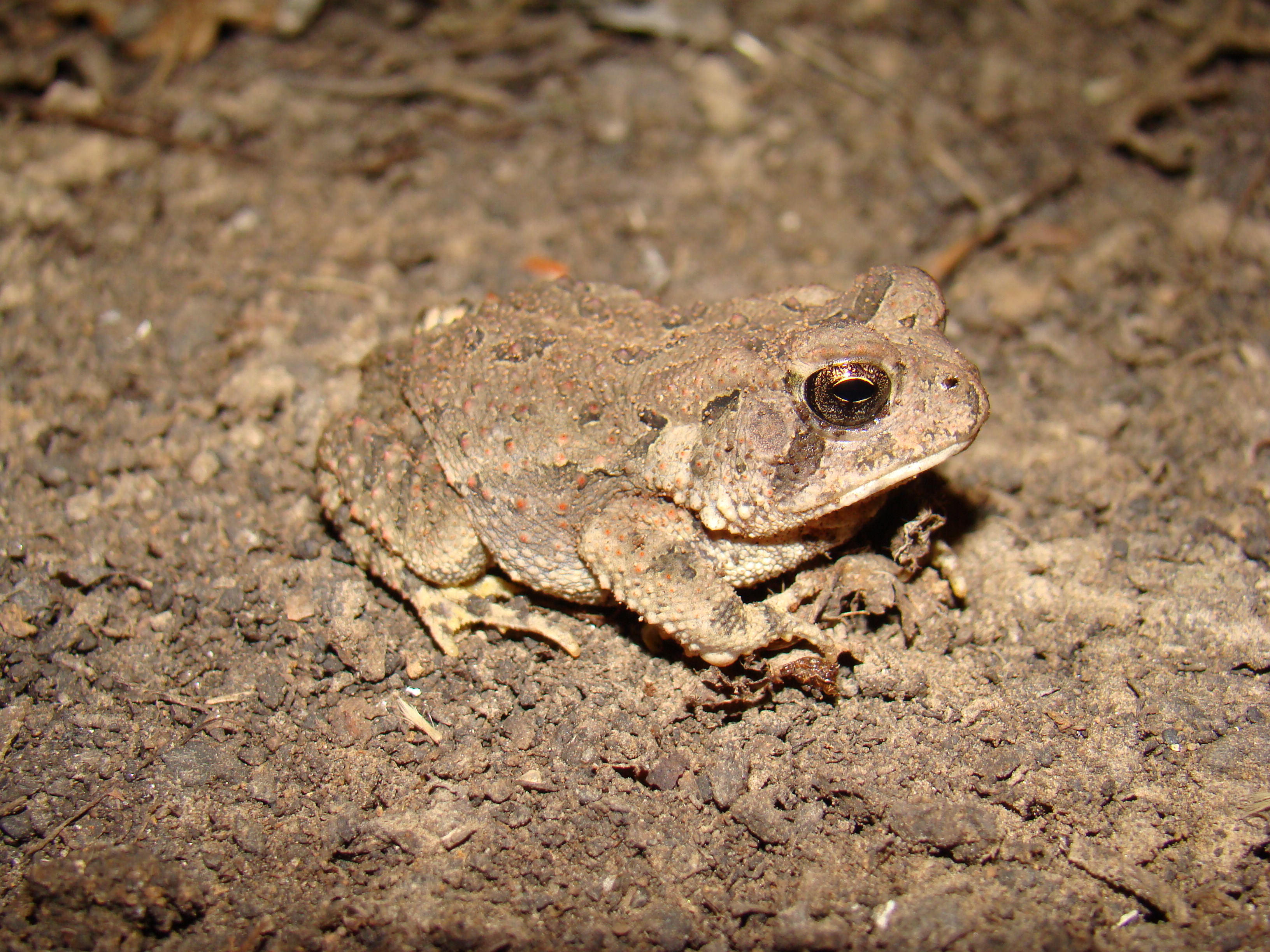
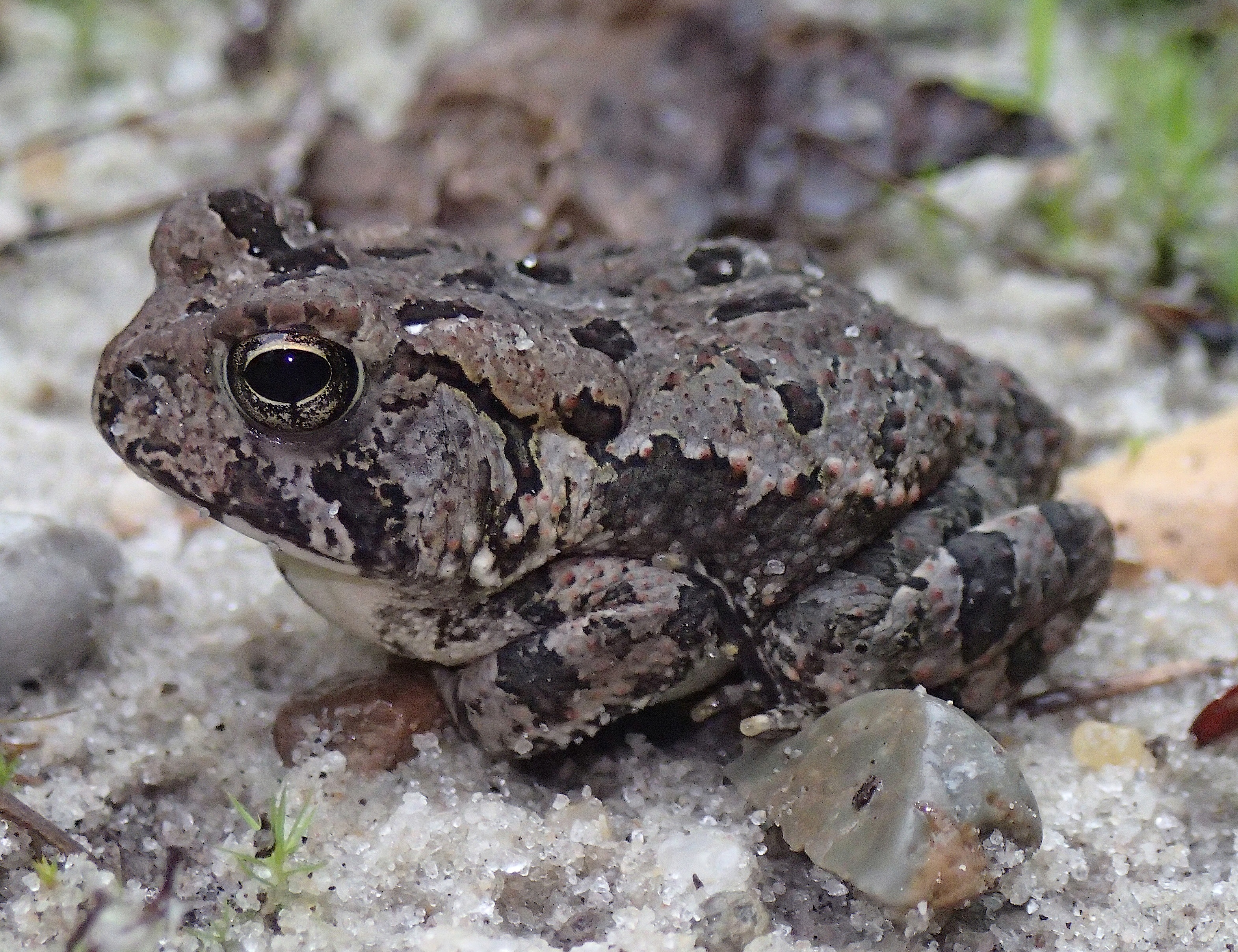
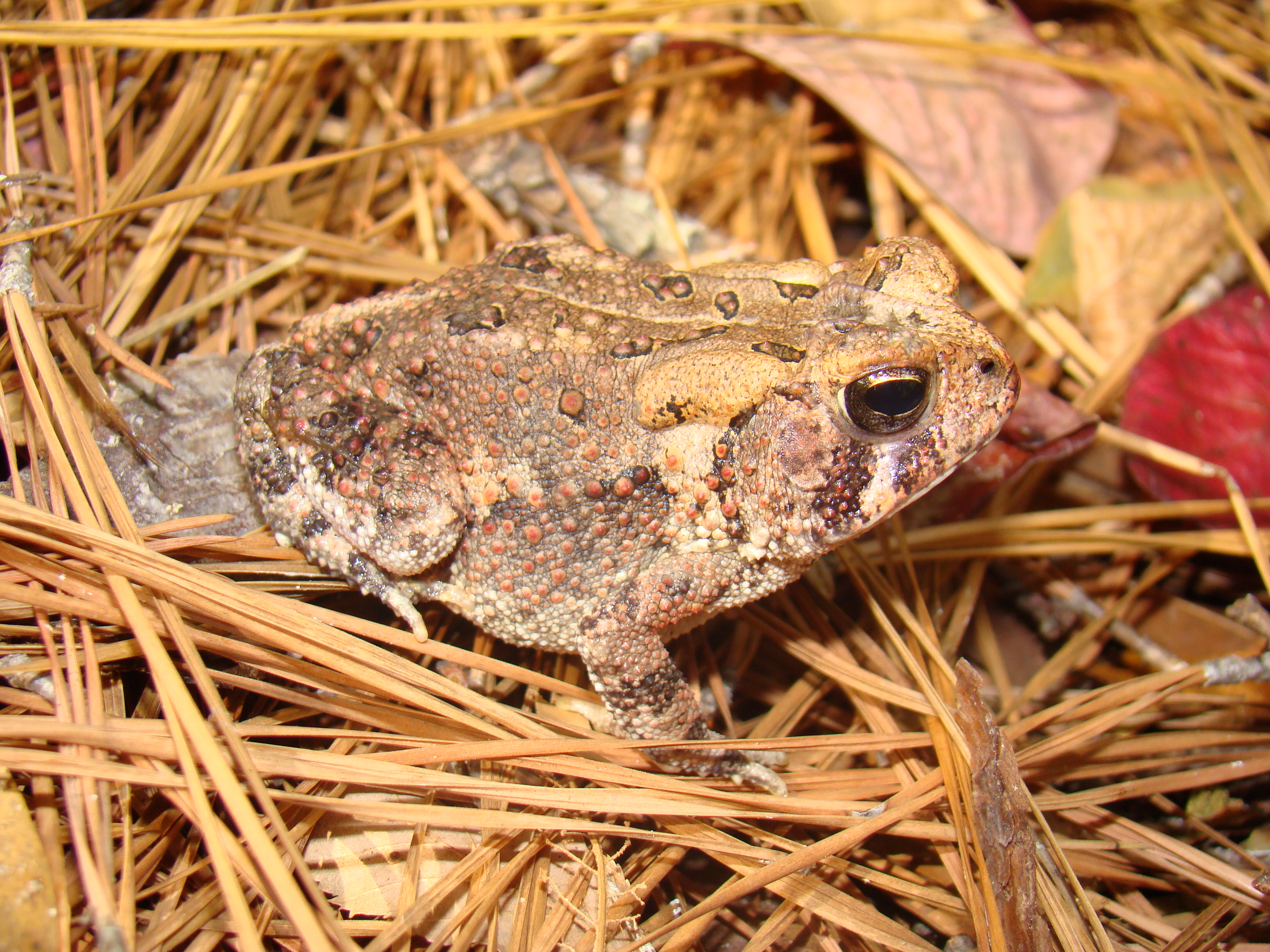
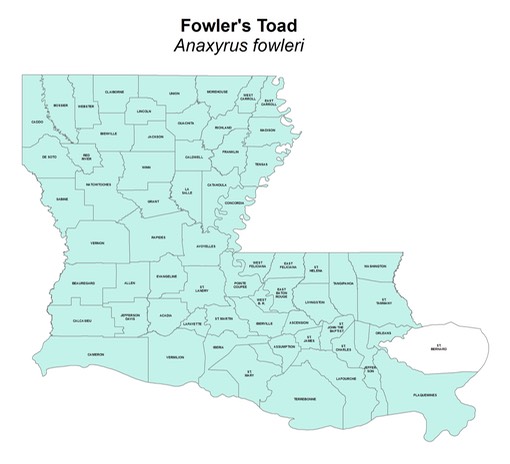
*The colored areas of the map above represent parishes with currently known records for the given species (Source: Jeff Boundy, LA Dept. of Wildlife and Fisheries). By no means does it represent the full range of the species in the state, nor does it necessarily mean that a species can be found throughout the parish with the record. This is provided as a guide to where you might be able to find these species in the state and to aid in identification. A descriptive explanation of the range of each species can be found in the text below.
Other Common Names:
Subspecies: No subspecies recognized.
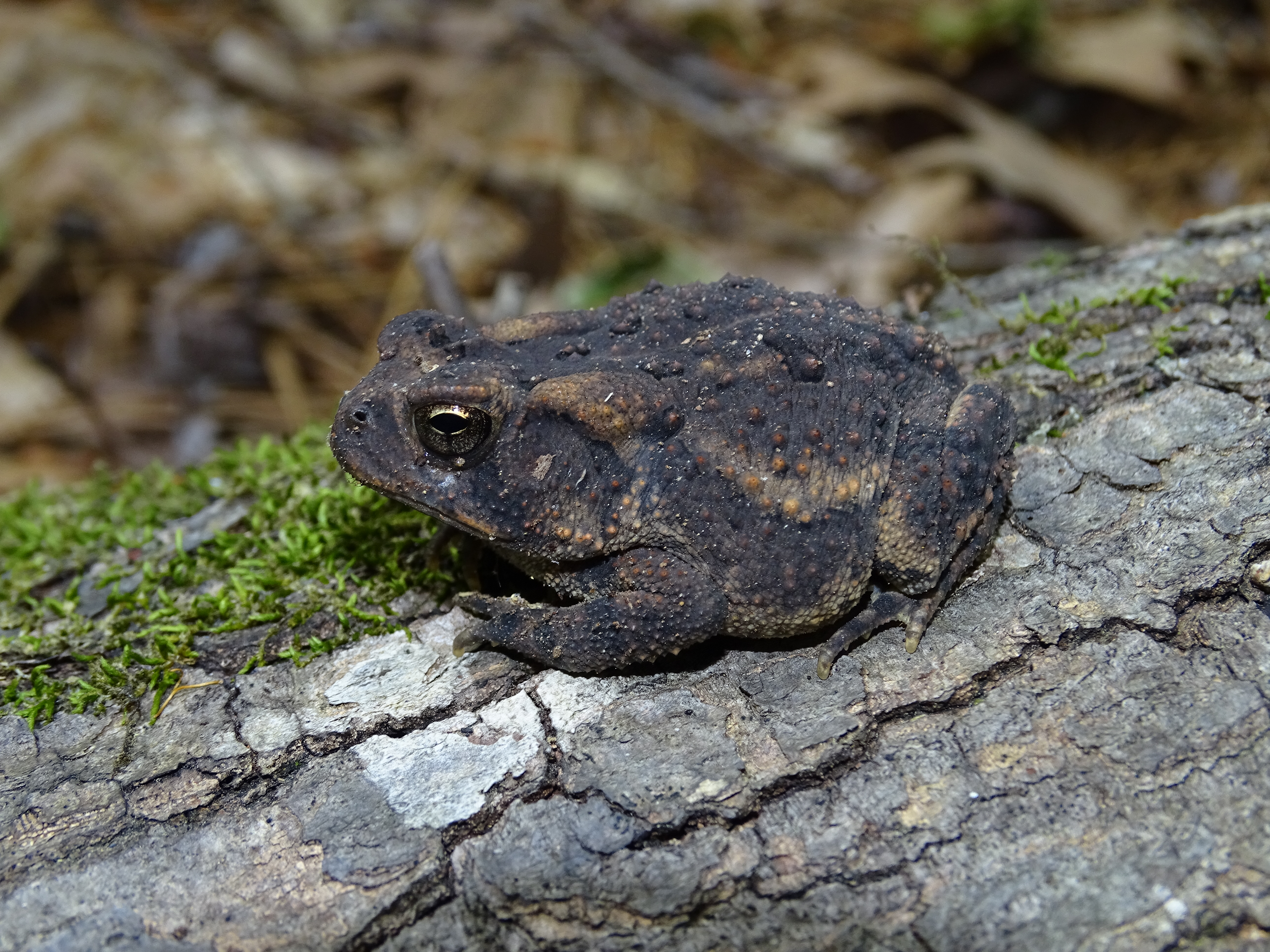
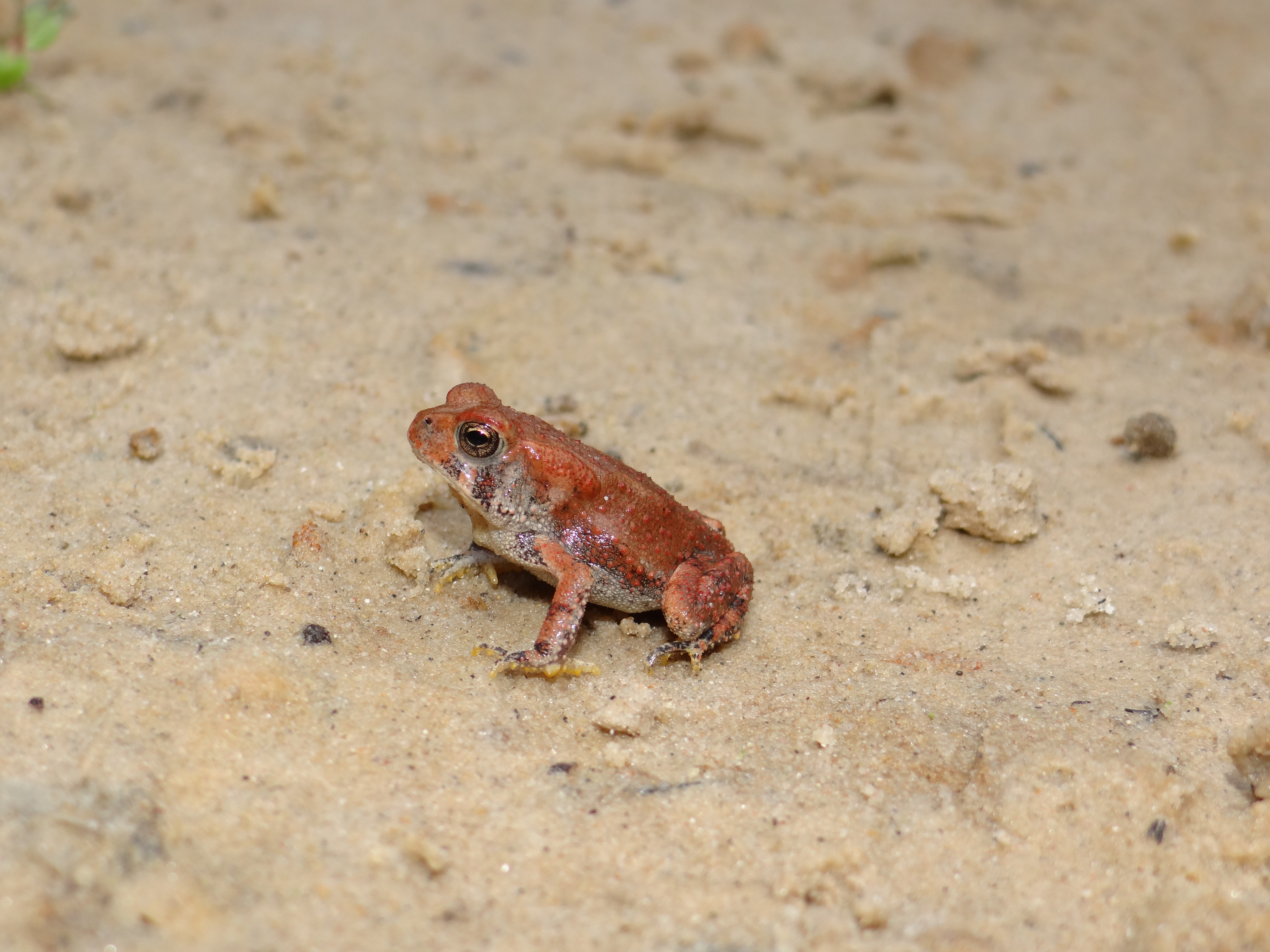
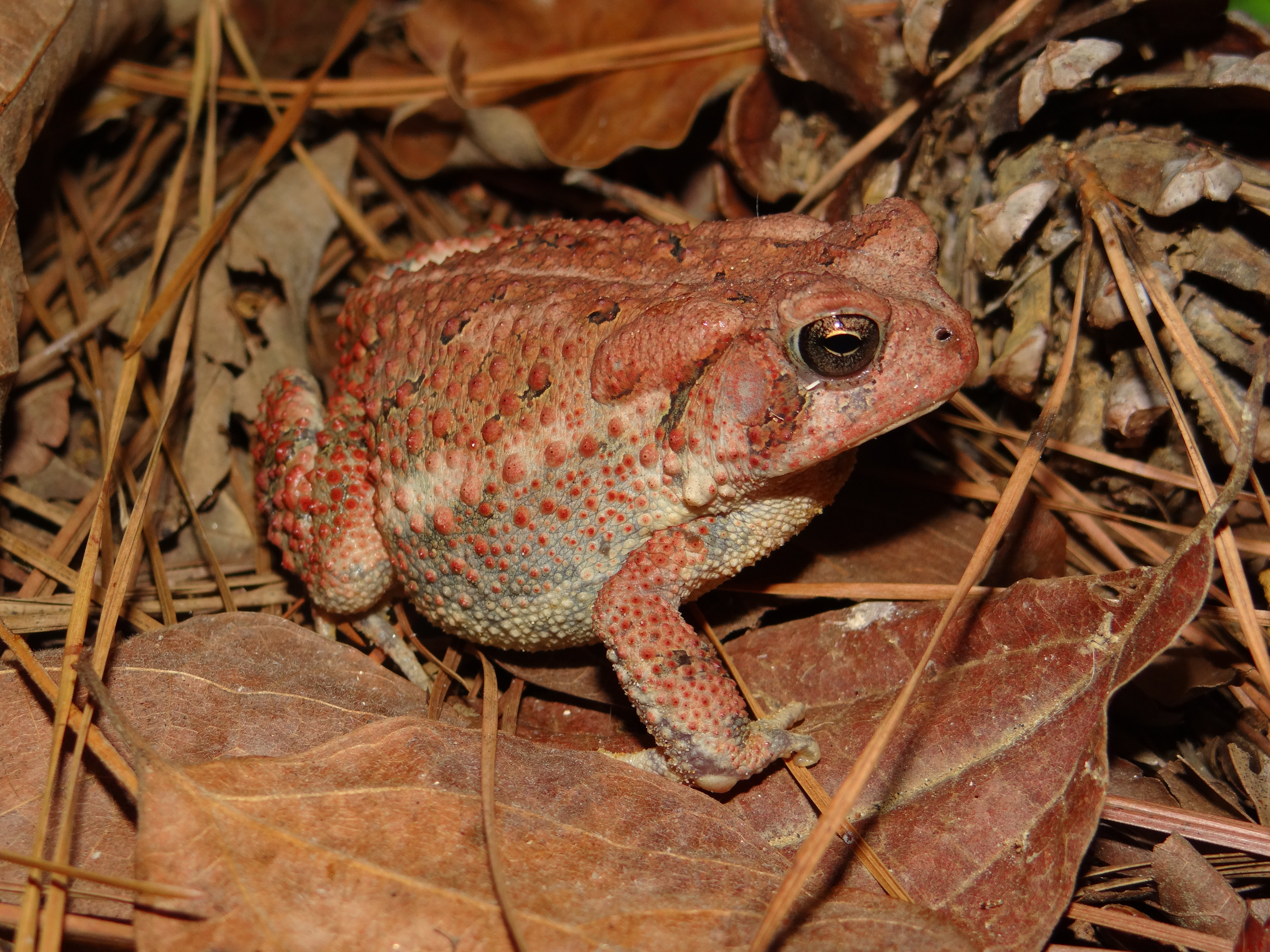
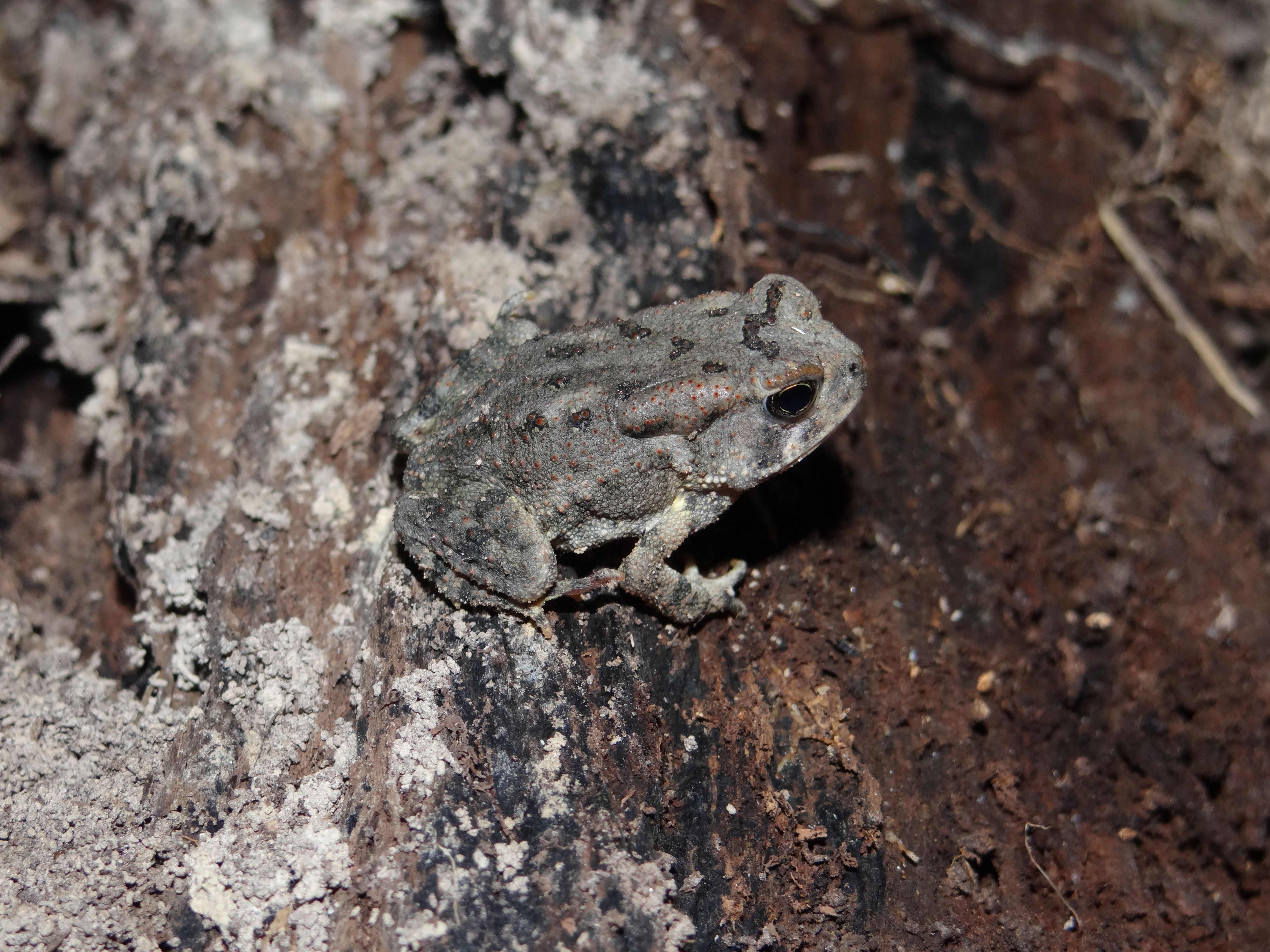
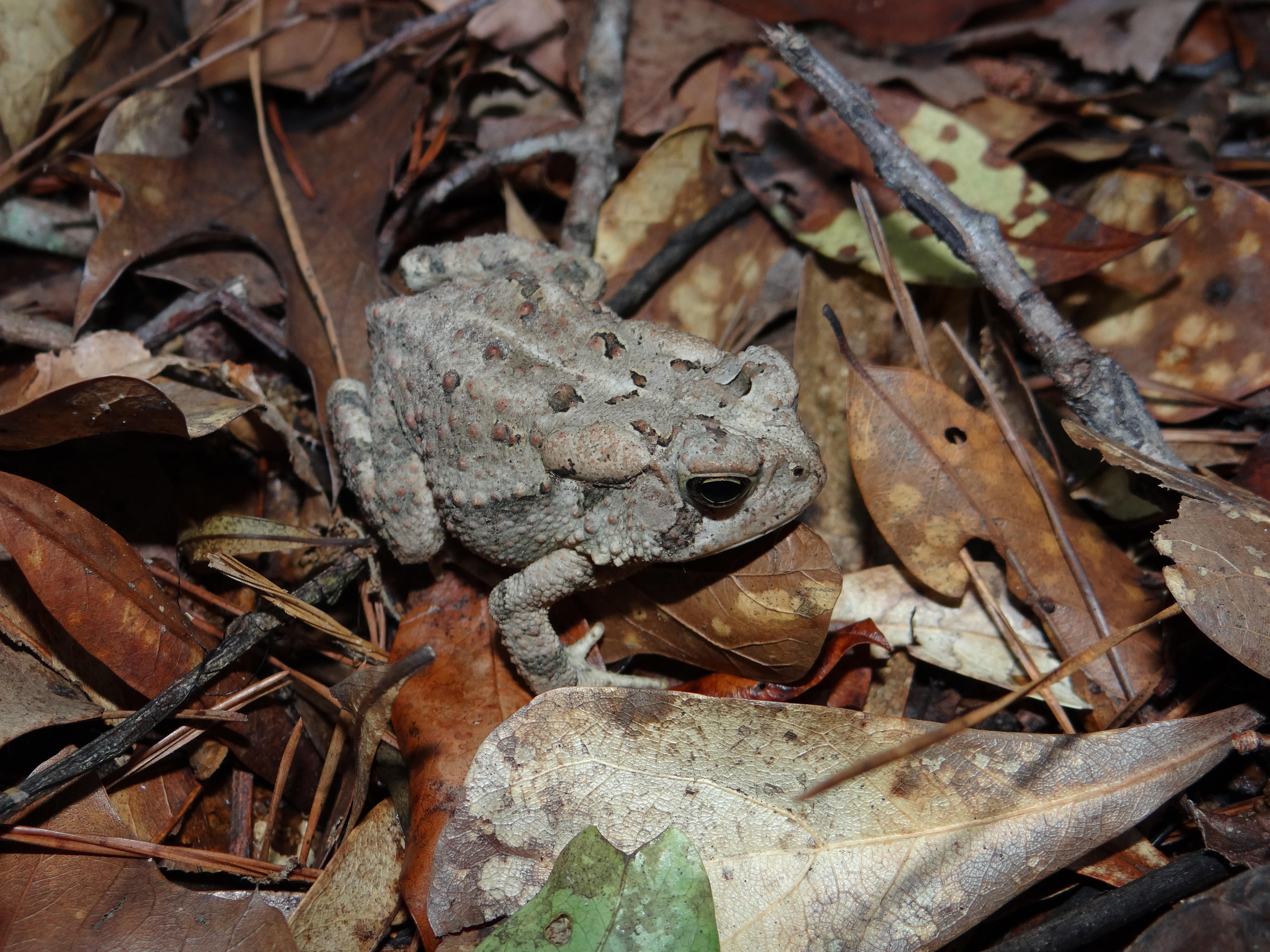
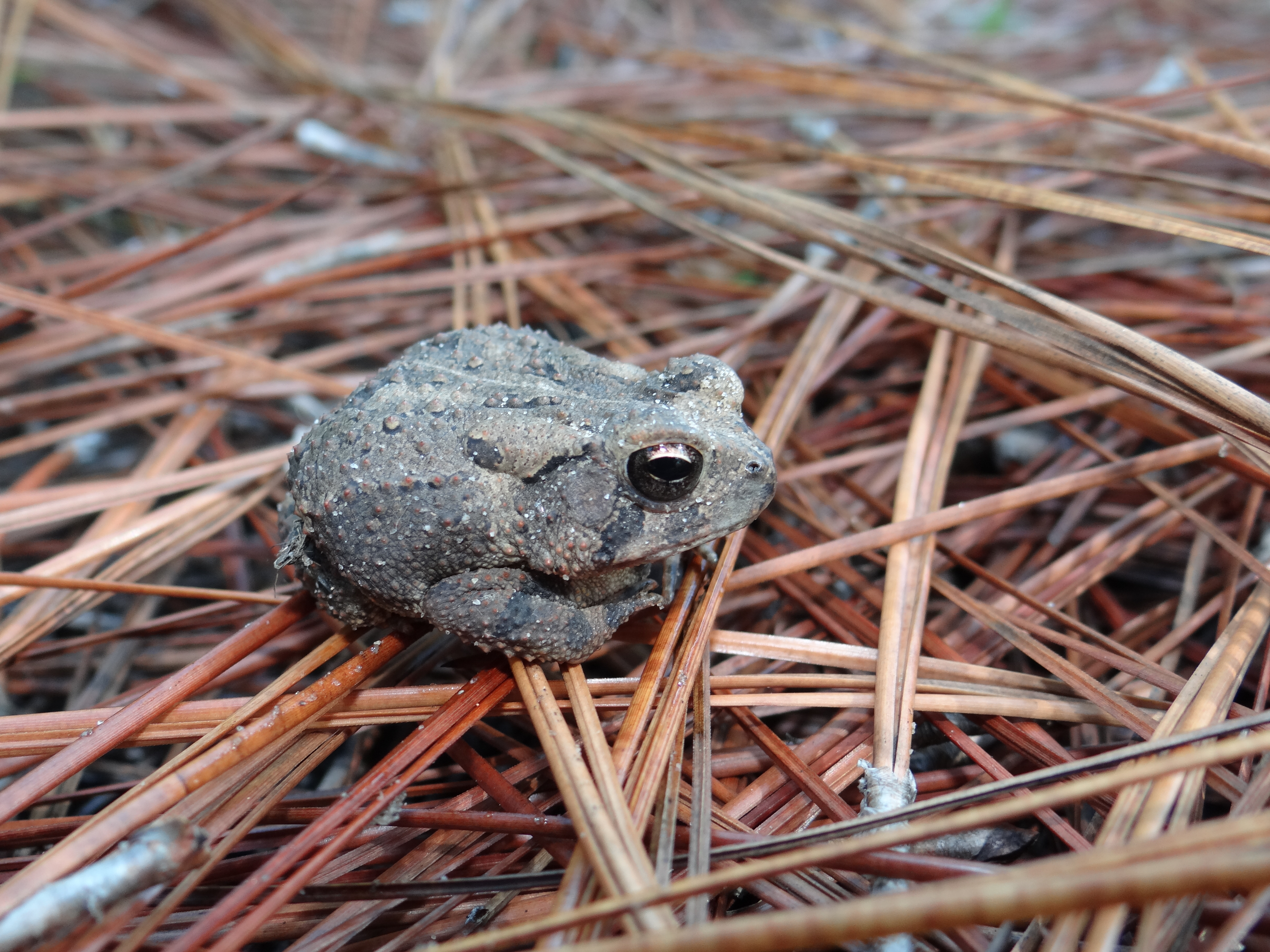
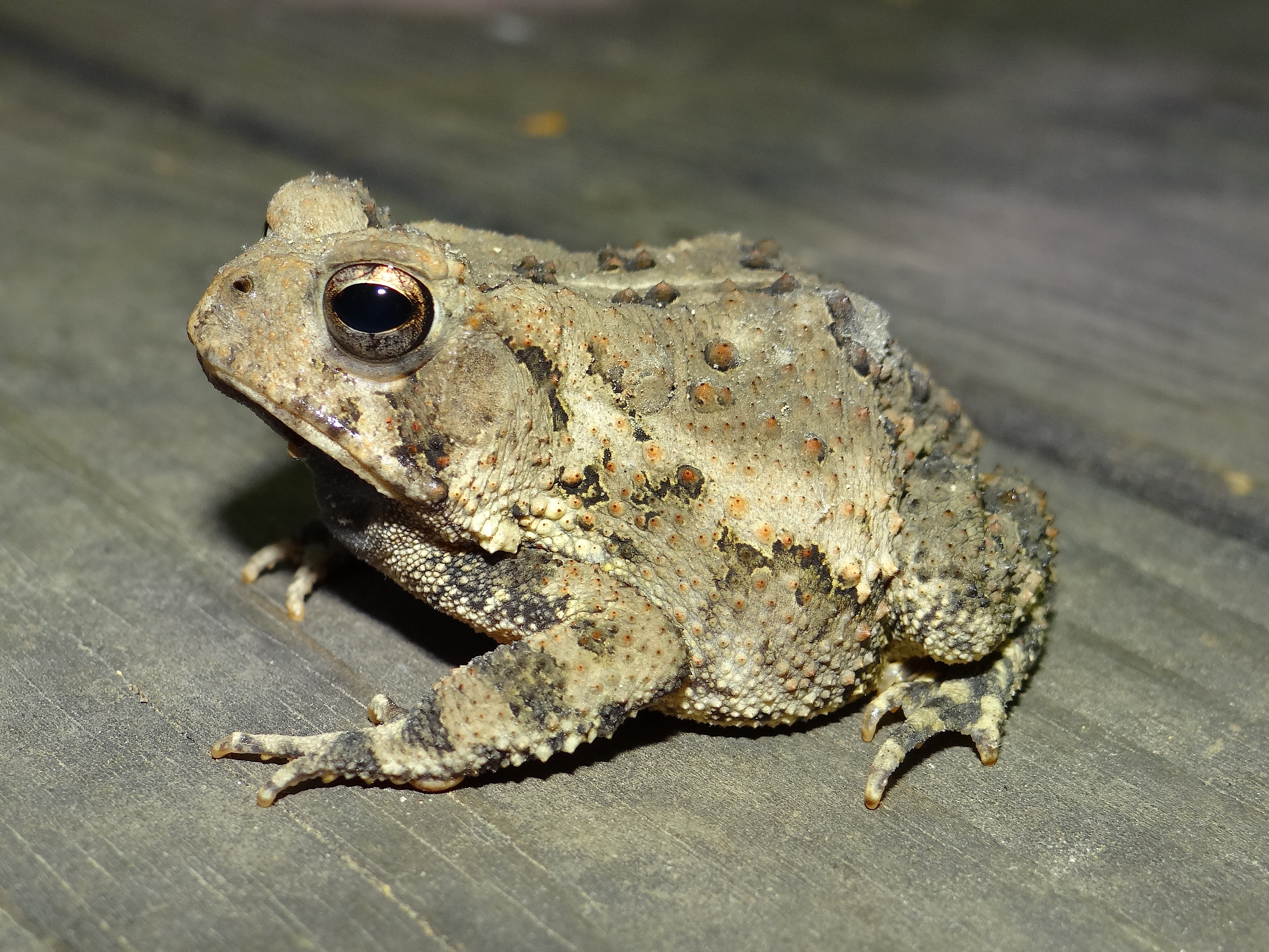
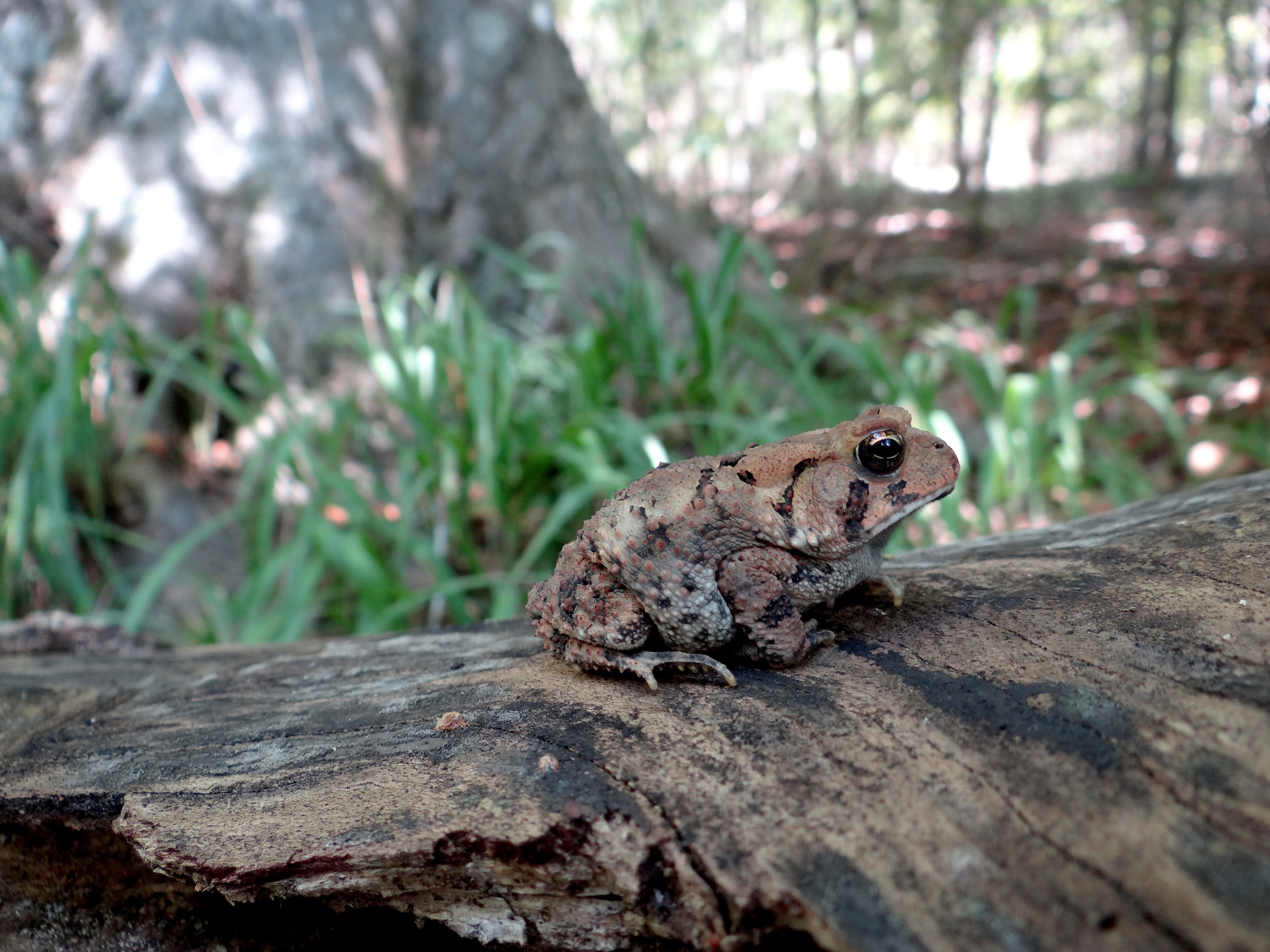
Adult Description: Relatively large warty toads (maximum 3.7”) with variable coloration, usually ranging from gray to brown, but sometimes reddish, typically with a white line down middle of back. Typically have multiple dark spots on back, each with three or more warts. No enlarged warts on tibia. Poison glands elongate and typically touch postorbital ridge. Cranial crests not as conspicuous as American Toad. Belly whitish, with some individuals having chest spots or mottling.
Similar Species:
Species Range: Widespread throughout much of eastern North America.
Louisiana Range: Statewide except extensive areas of marsh. Have become rare or absent in many urban areas in southern Louisiana where Gulf Coast Toads now predominate.
Adult Habitat: Nearly any habitat outside of extensive swamp and marsh but can be found on coastal cheniers. Particularly common in areas near water with sandy soils.
Natural History: Fowler’s Toads can be active during the day, particularly on cloudy days or after rainfall, but are most often active between dusk and dawn, particularly during warm weather. They are primarily ambush predators and indiscriminate feeders, taking any moving prey, usually arthropods, they can fit into their mouths. Despite their poison glands, some birds, snakes, and mammals readily prey upon juveniles and adults. They typically breed from March to mid-July. Between 1,000 and 16,000 fertilized eggs are deposited in long strands usually around vegetation and debris in shallow waters of all types, but particularly semi-permanent and permanent aquatic habitats where fish tend to avoid eggs and tadpoles. Eggs hatch in 2–5 days and tadpoles metamorphose in 1–2 months. Maturity may take 1–2 years. Maximum wild longevity is 5 years.
Call: A short nasal ‘waaaaaaaa’ likened to a bleat of a sheep or goat lasting up to 4 seconds.
Best Time and Place to Observe: Listen for their calls in spring just after dusk in their breeding habitats. Alternatively, they can readily be found on the forest floor from dusk until dawn in warmer months, particularly in areas with sandy soils.
Global Conservation Status: Fowler’s Toads have a wide distribution in eastern North America, a presumed large population, and tolerate a broad range of habitats, and thus, are listed as Least Concern by the IUCN Red List. Their NatureServe Global Conservation Status Rank is G5 (Secure).
Federal Conservation Status: None.
Louisiana Conservation Status: Fowler’s Toads do not have any special status in Louisiana.
Author's Remarks: I have found this species in most places I have herped in Louisiana, but they are less common in suburban and urban areas than Gulf Coast Toads in southern Louisiana. I actually found this species in St. Bernard Parish, the one parish without a record. It was within a few years after Katrina, but not sure exactly what year. It was on the grass at my dad’s house in Meraux. I was surprised to see it as they have seemingly been extirpated from many areas south of Lake Pontchartrain.
