
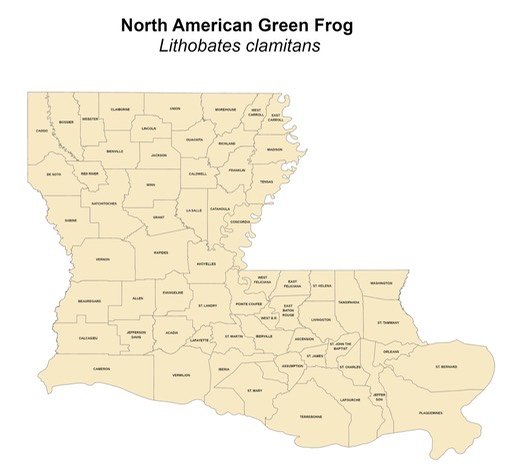
*The colored areas of the map above represent parishes with currently known records for the given species (Source: Jeff Boundy, LA Dept. of Wildlife and Fisheries). By no means does it represent the full range of the species in the state, nor does it necessarily mean that a species can be found throughout the parish with the record. This is provided as a guide to where you might be able to find these species in the state and to aid in identification. A descriptive explanation of the range of each species can be found in the text below.
Other Common Names: Bronze Frog
Subspecies: No subspecies recognized.
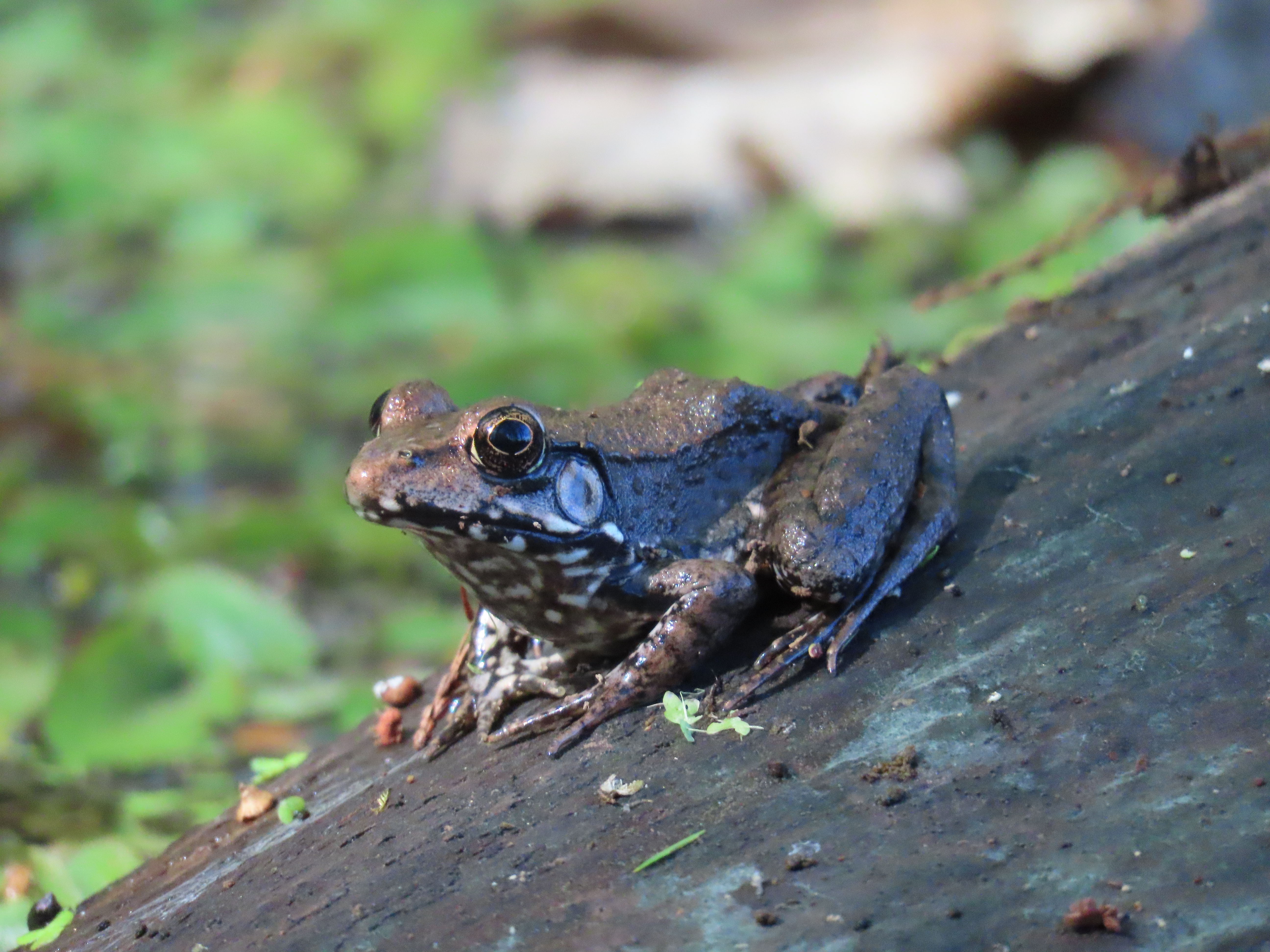
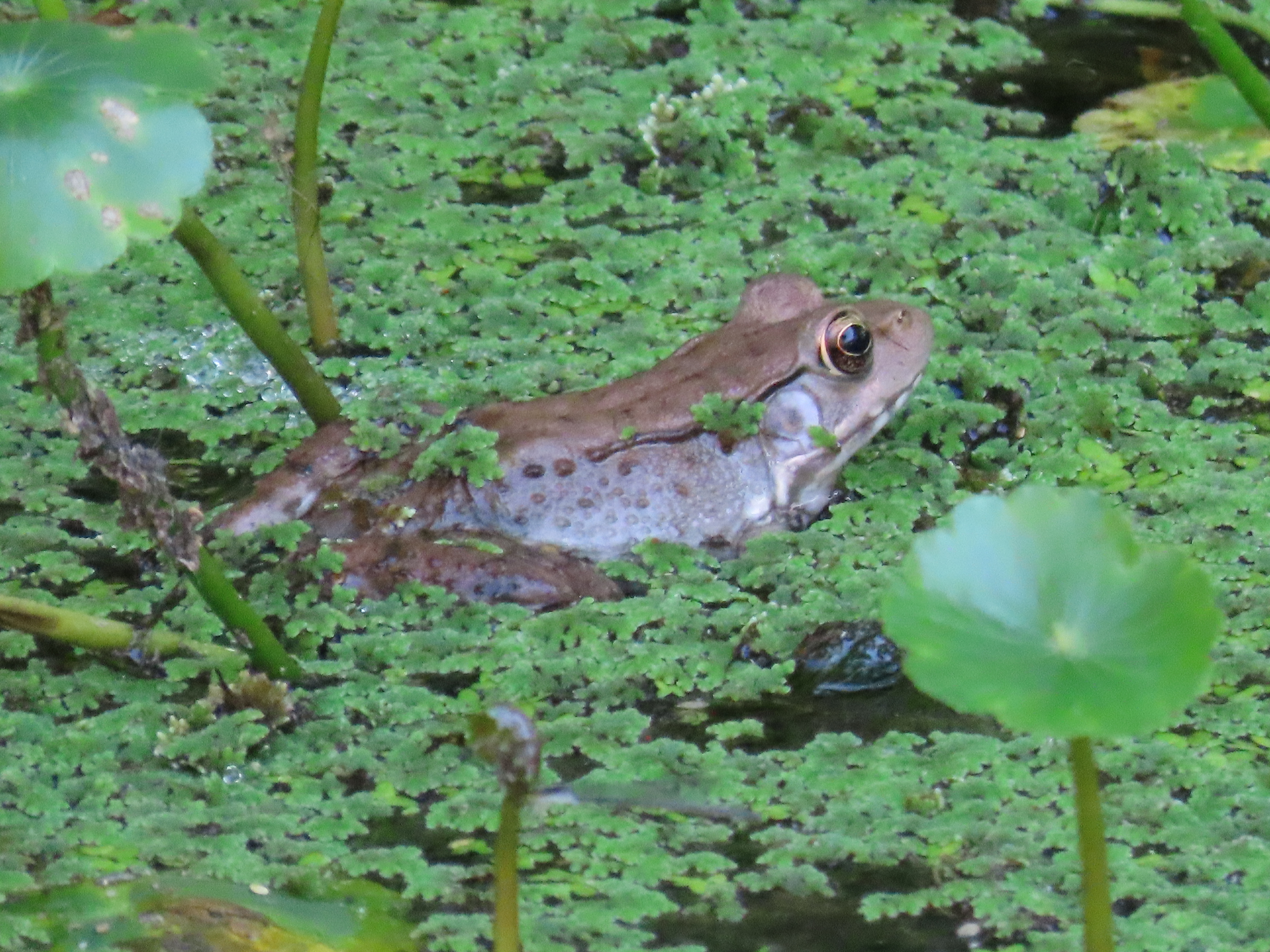
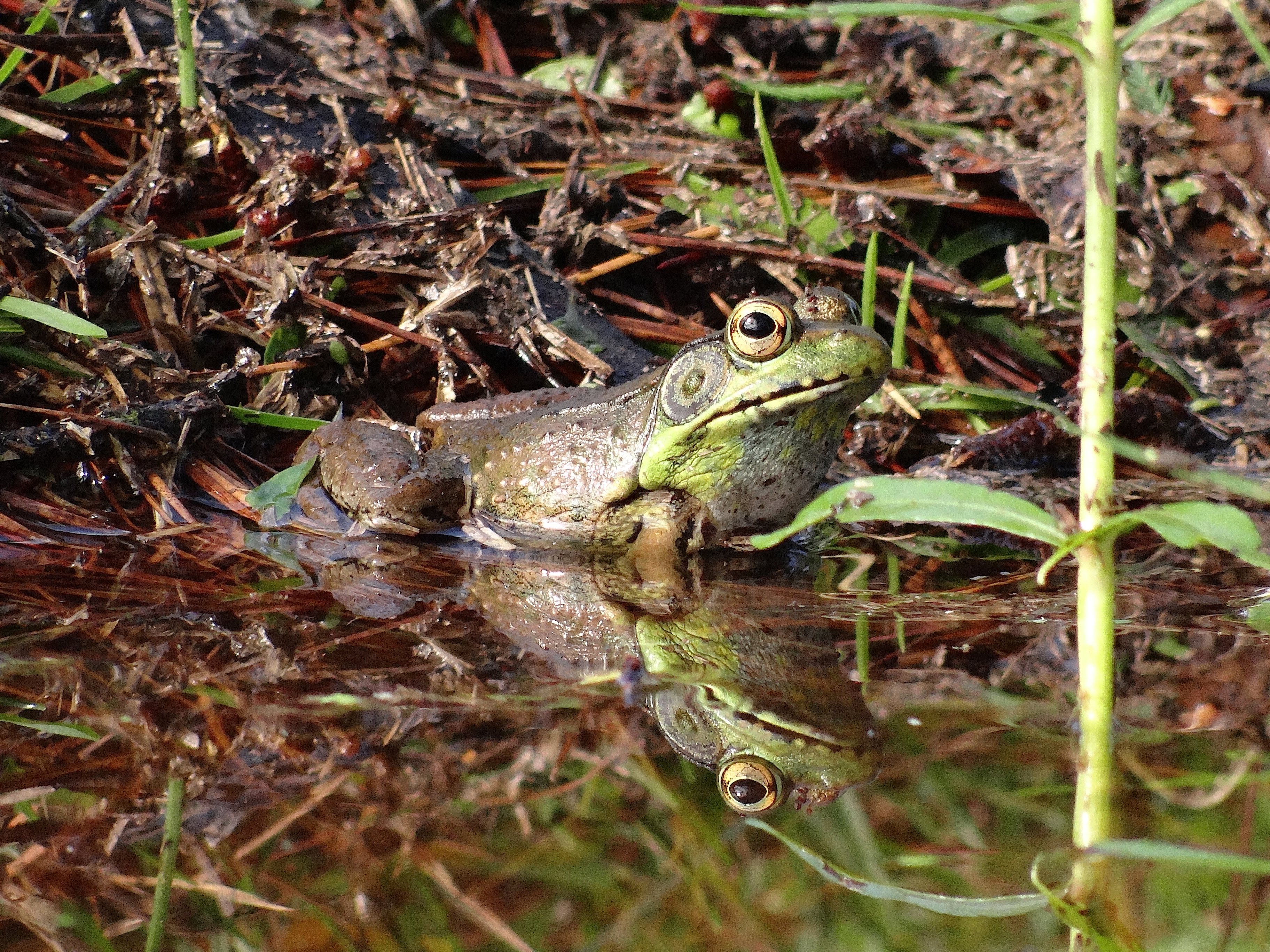
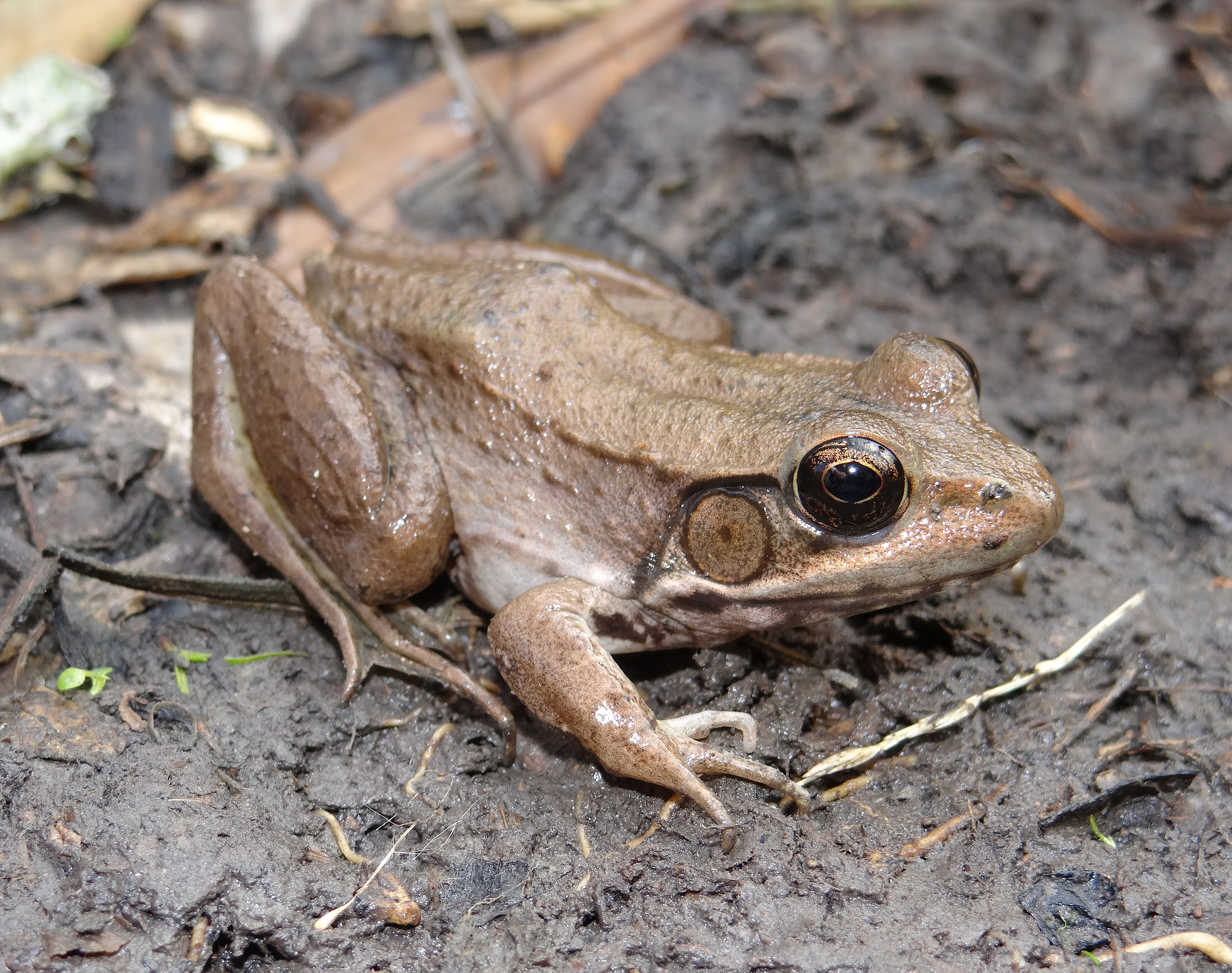
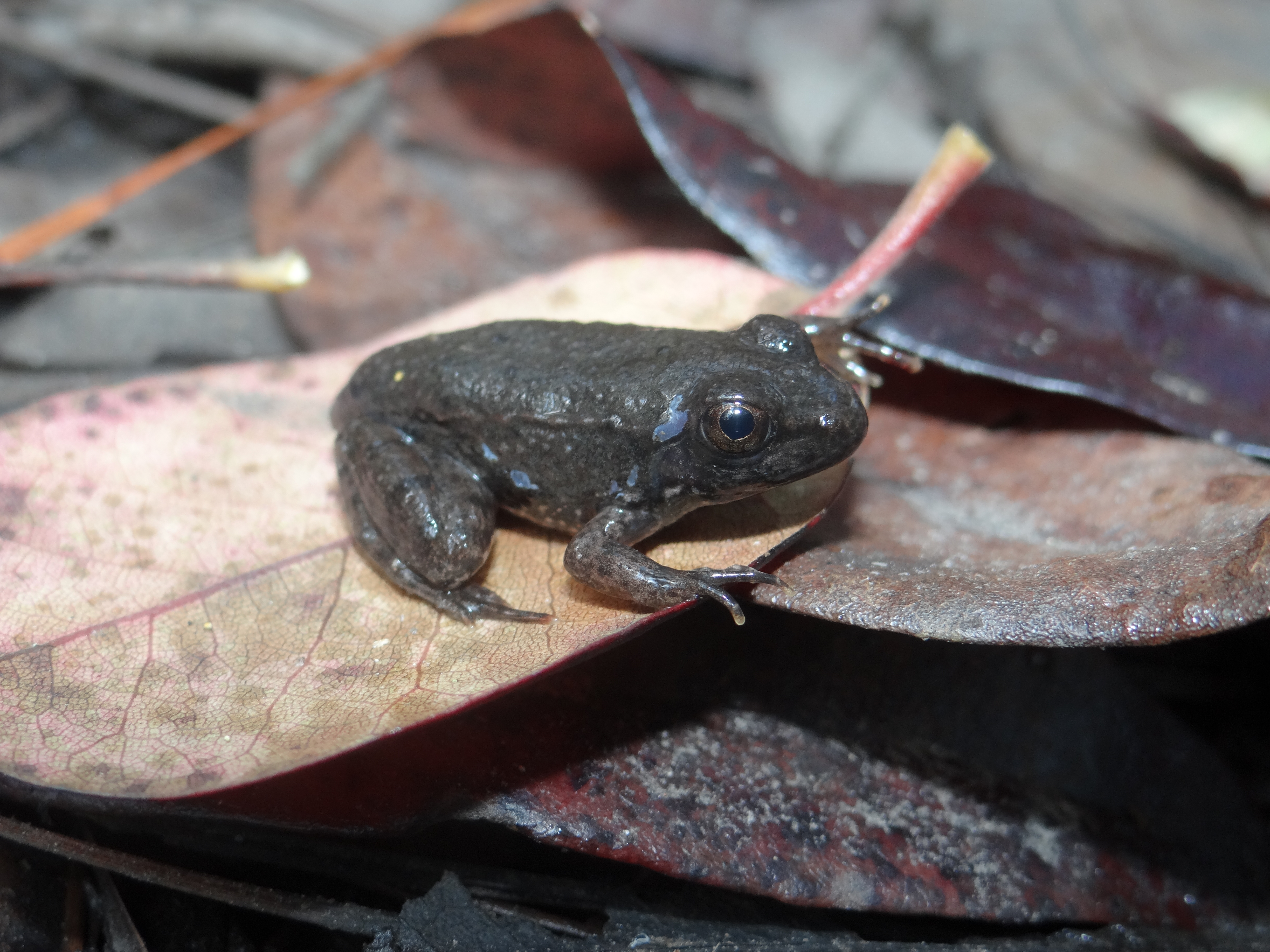
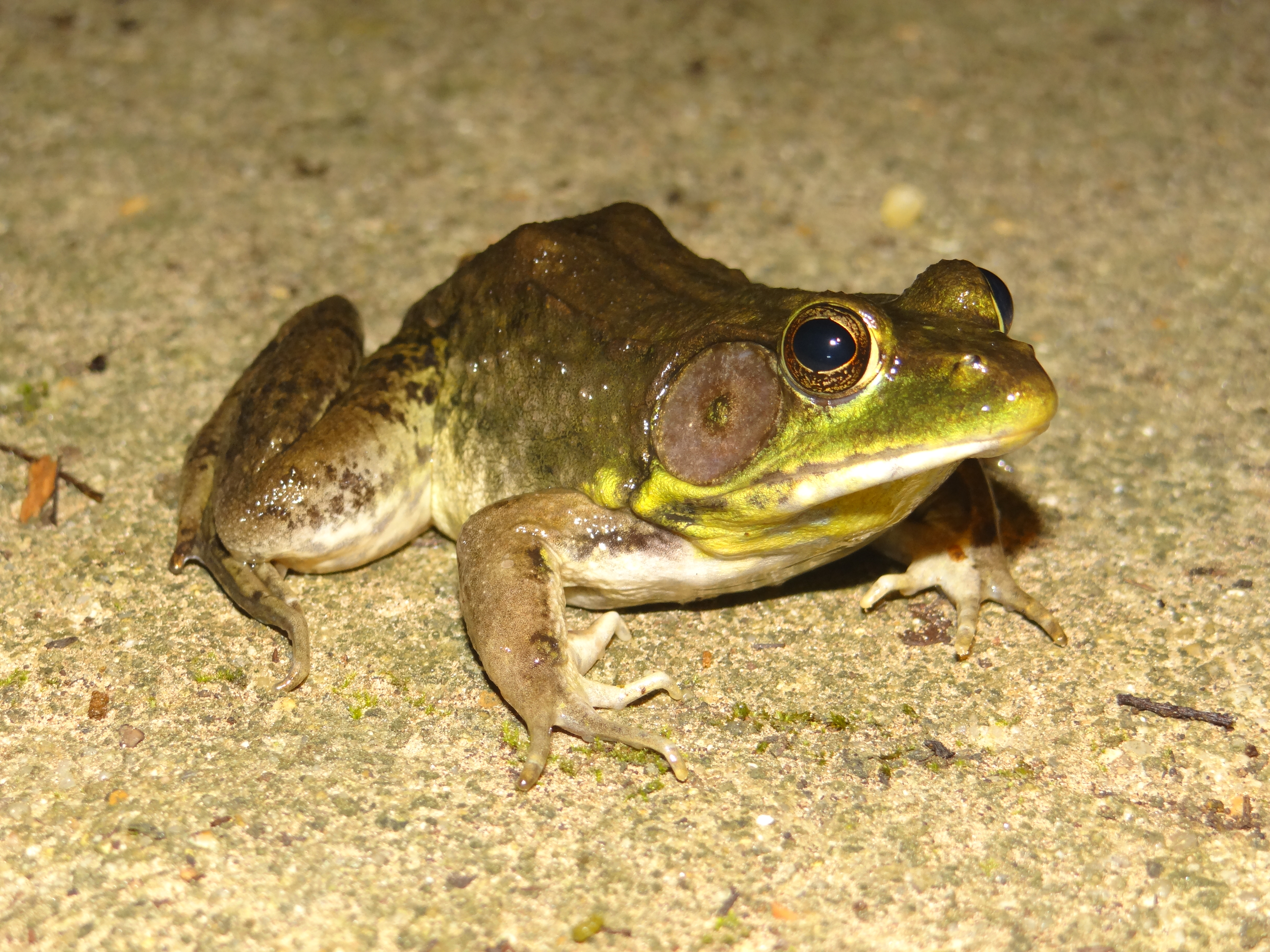
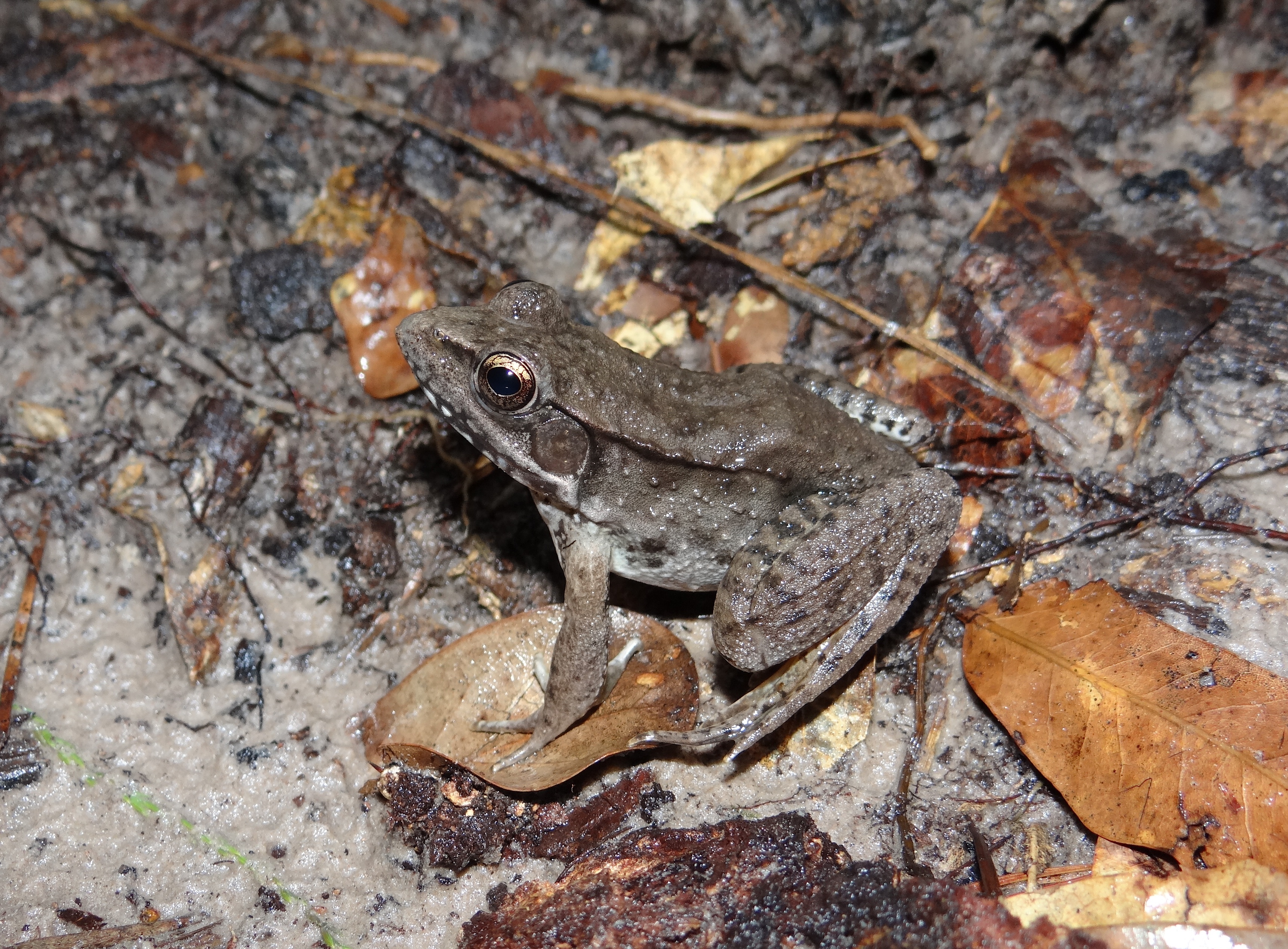
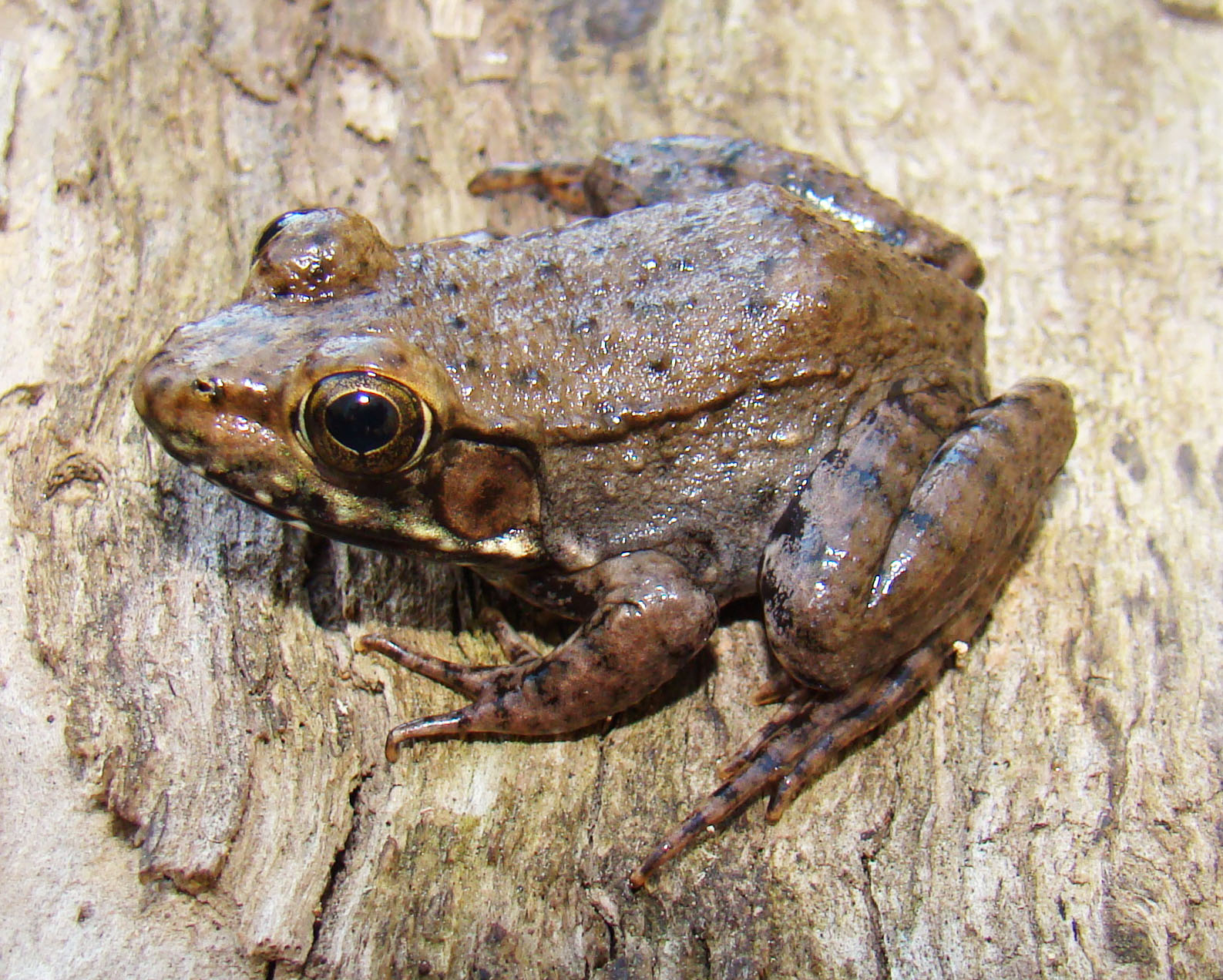
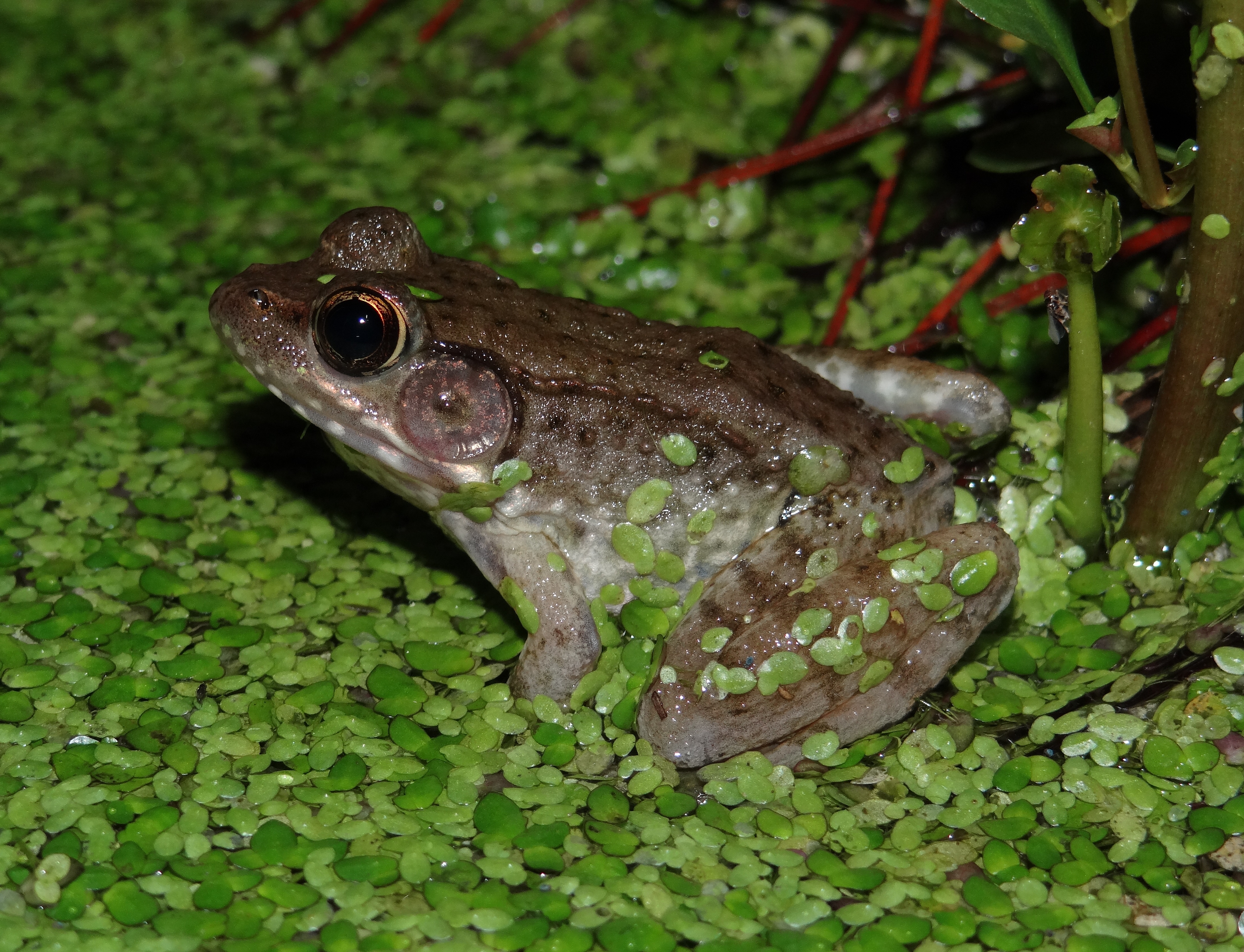
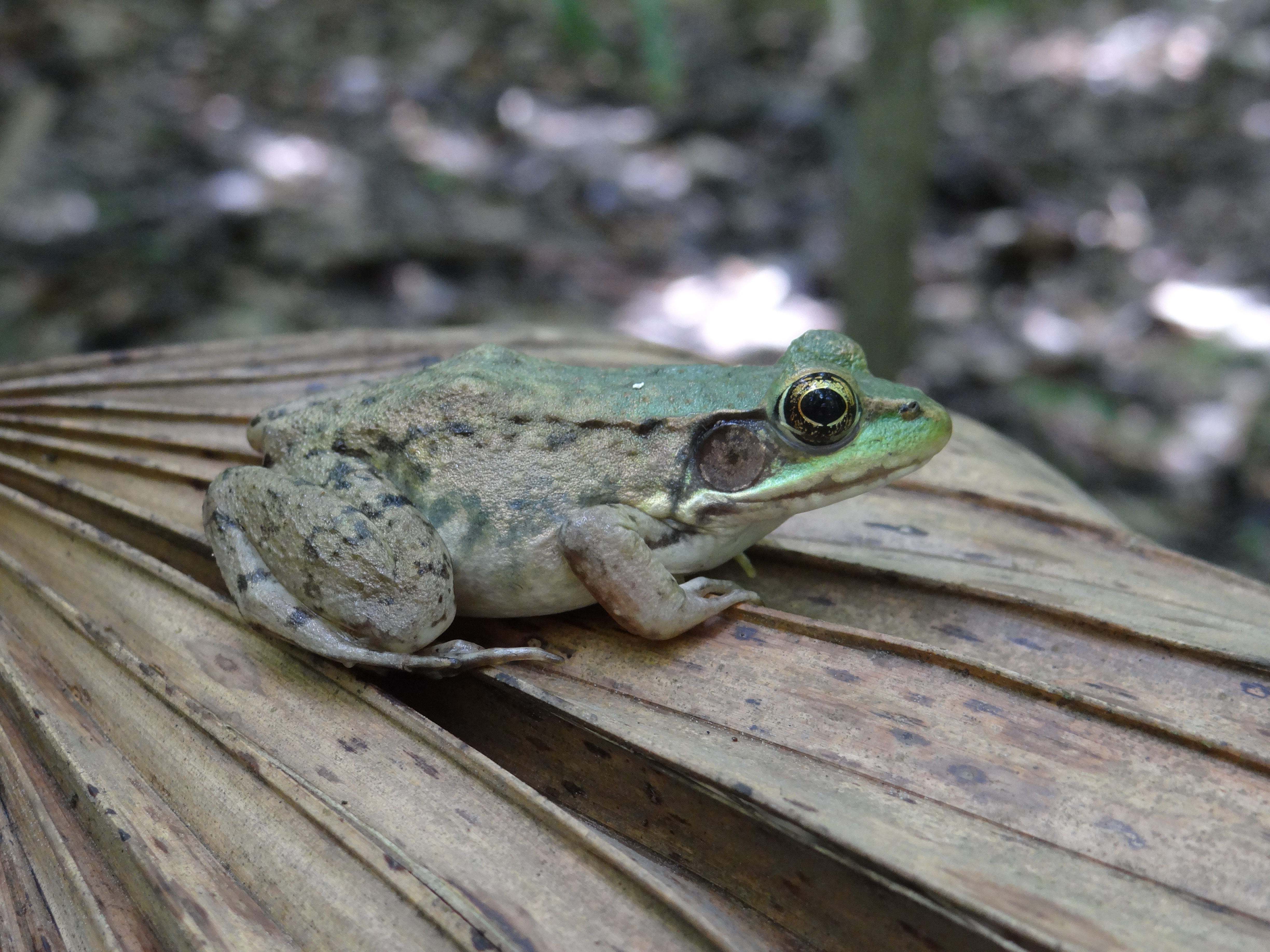
Adult Description: A medium-sized frog (maximum 3.6”) with bronze coloration, sometimes with green on head, particularly in adult males. Some individuals may have irregular dark markings on back and sides. Skin is smooth with diffuse small bumps. A raised area of skin begins behind each eye and extends towards groin, usually breaking up and disappearing halfway to two-thirds of way to groin. Margins of mouth are often gray or black and white. Limbs sometimes with dark crossbars. Belly is white, often with gray mottling.
Similar Species:
Species Range: From Maritime Provinces of southeastern Canada south to north-central Florida, west to east Texas, north through eastern Oklahoma, and southern and eastern Missouri to southern Ontario, Canada.
Louisiana Range: Statewide except extensive coastal marshes.
Adult Habitat: A wide variety of forested and wooded habitats that surround inland waters, such as swamps, woodland ponds, sloughs, and banks of slow-moving streams and rivers.
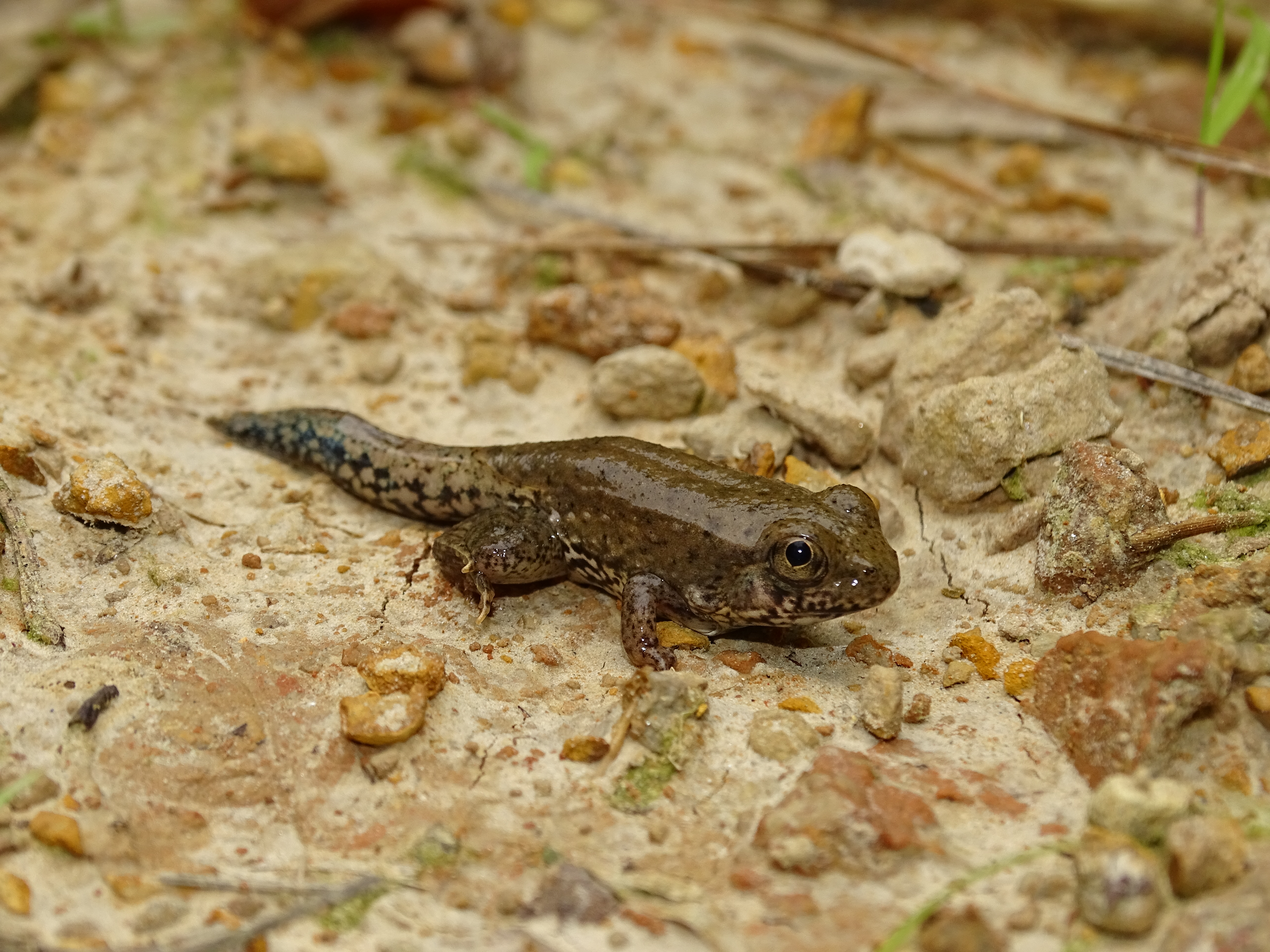
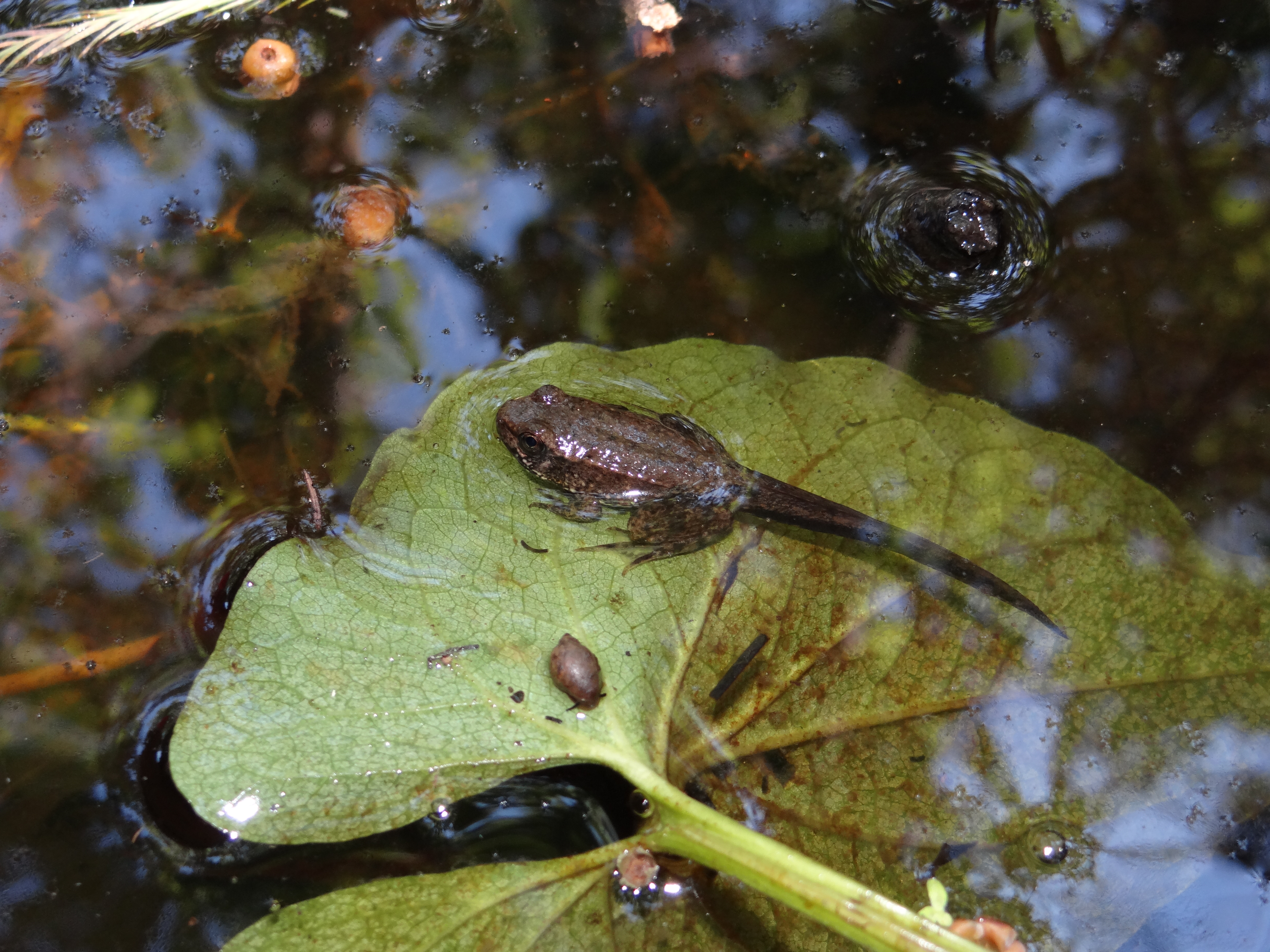
Natural History: Green Frogs can be active day or night but are most active between dusk and dawn during warm, humid weather where they don’t often stray far from water. They feed on a variety of arthropods and other invertebrates. Frogs, snakes, turtles, birds, and mammals are noted predators. They breed in semi-permanent to permanent water from late March to late August when females lay 1,000–7,000 eggs in a surface film. Eggs hatch in 3–6 days and tadpoles can metamorphose in 2 months but may also overwinter and transform the following spring or summer. Maturity takes only 3–4 months in Louisiana. Wild longevity is unknown, but a captive lived for 10 years.
Call: An explosive, low-pitched staccato ‘gunk’ likened to the sound made by plucking a loose banjo string and often repeated 3–4 times. May be given day or night.
Best Time and Place to Observe: This abundant frog can be observed day or night from spring through autumn near their breeding water bodies. One walk around a bottomland hardwood pond for instance should yield several. However, they are not easily located by their conspicuous vocalizations as they tend to go quiet upon approach.
Global Conservation Status: North American Green Frogs have a relatively wide distribution in eastern North America, a presumed large population, and tolerate a broad range of habitats, and thus, are listed as Least Concern by the IUCN Red List. Their NatureServe Global Conservation Status Rank is G5 (Secure).
Federal Conservation Status: None.
Louisiana Conservation Status: North American Green Frogs do not have any special status in Louisiana.
Author's Remarks: I have found this species throughout the state in a variety of habitats, including suburban and urban areas.
