

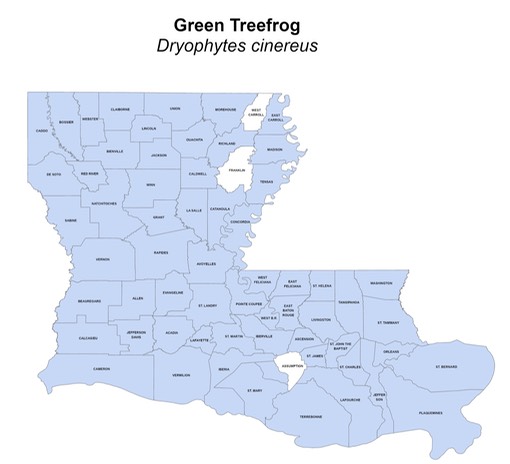
*The colored areas of the map above represent parishes with currently known records for the given species (Source: Jeff Boundy, LA Dept. of Wildlife and Fisheries). By no means does it represent the full range of the species in the state, nor does it necessarily mean that a species can be found throughout the parish with the record. This is provided as a guide to where you might be able to find these species in the state and to aid in identification. A descriptive explanation of the range of each species can be found in the text below.
Other Common Names:
Subspecies: No subspecies recognized.
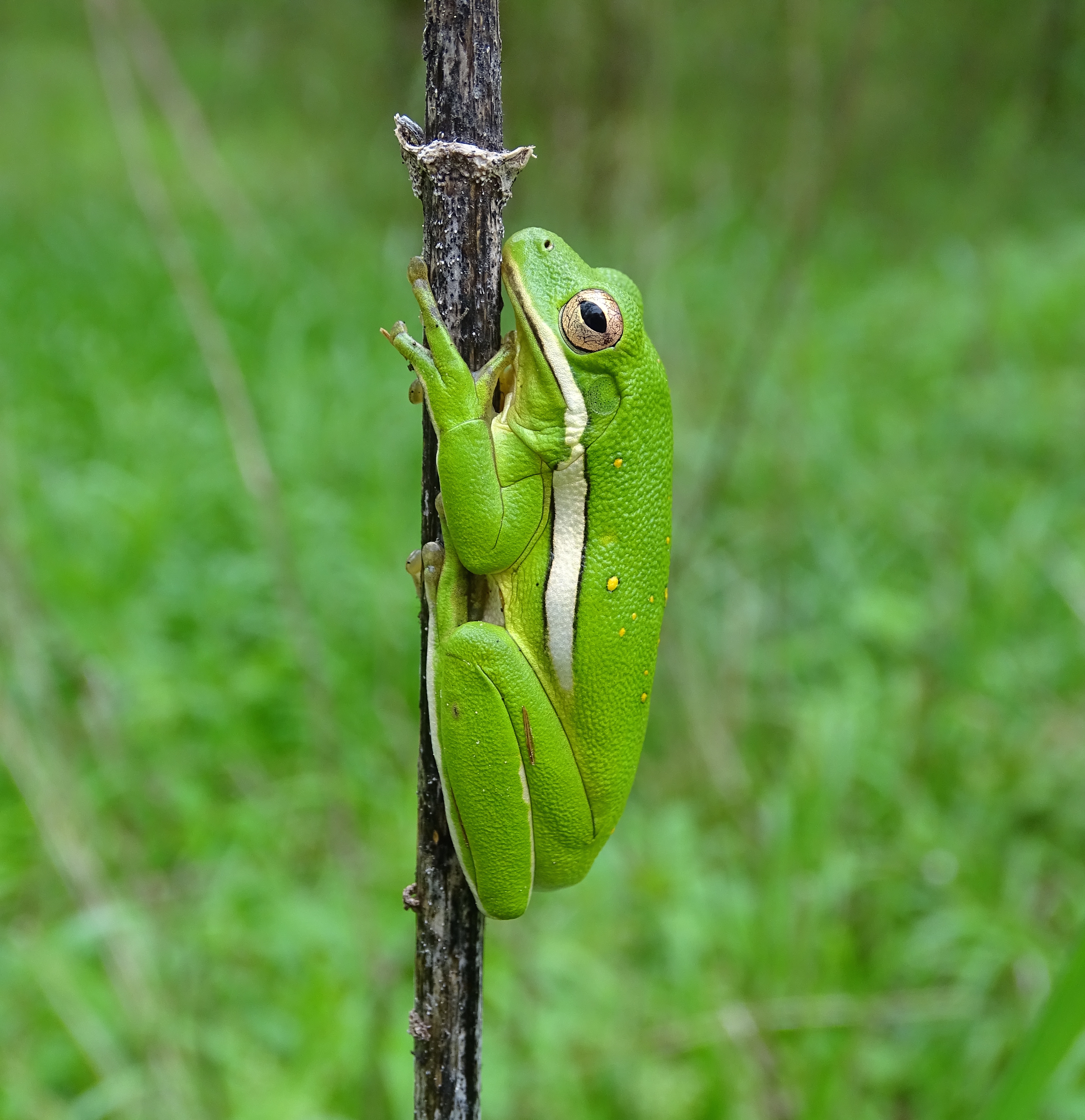
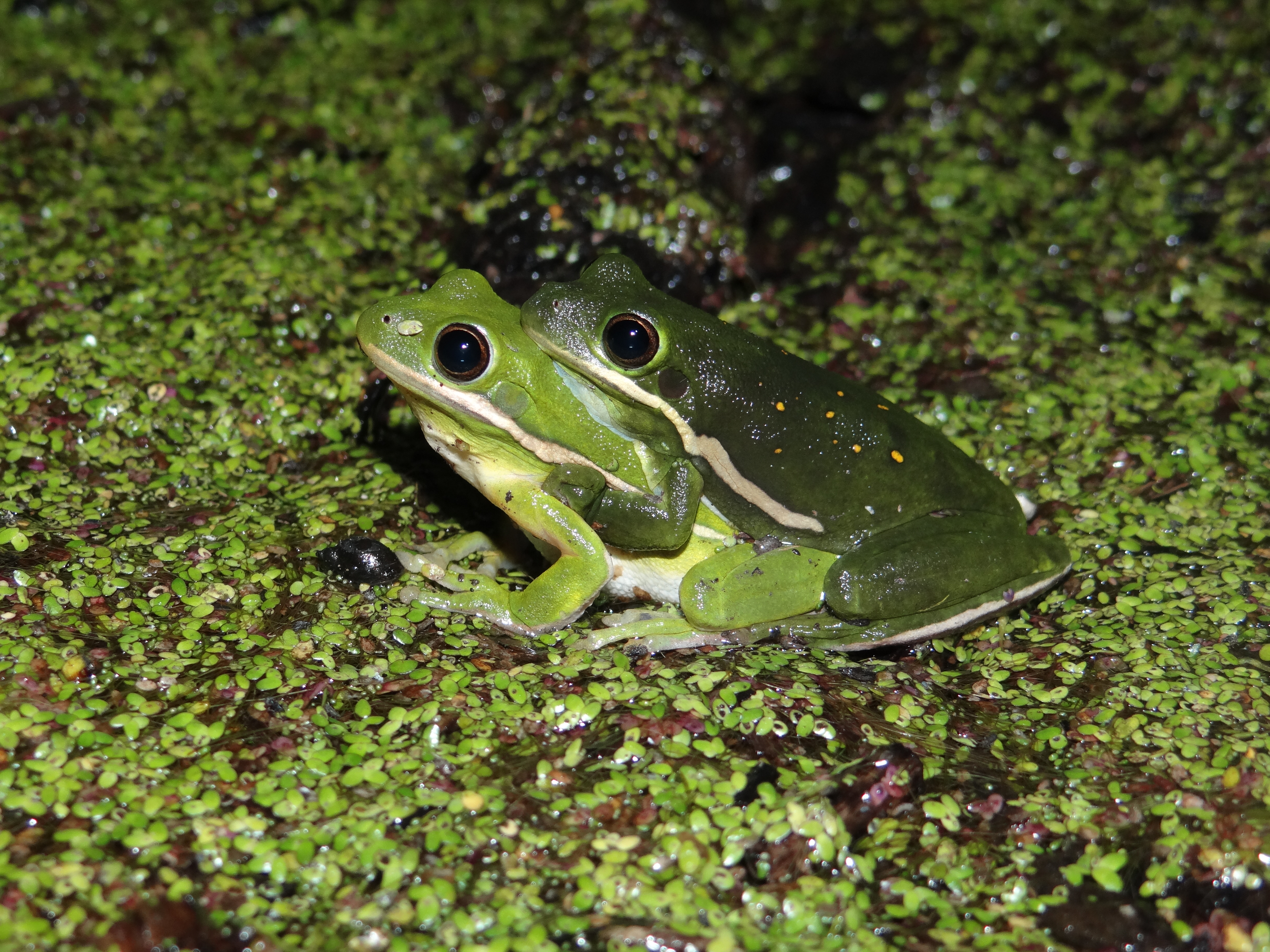
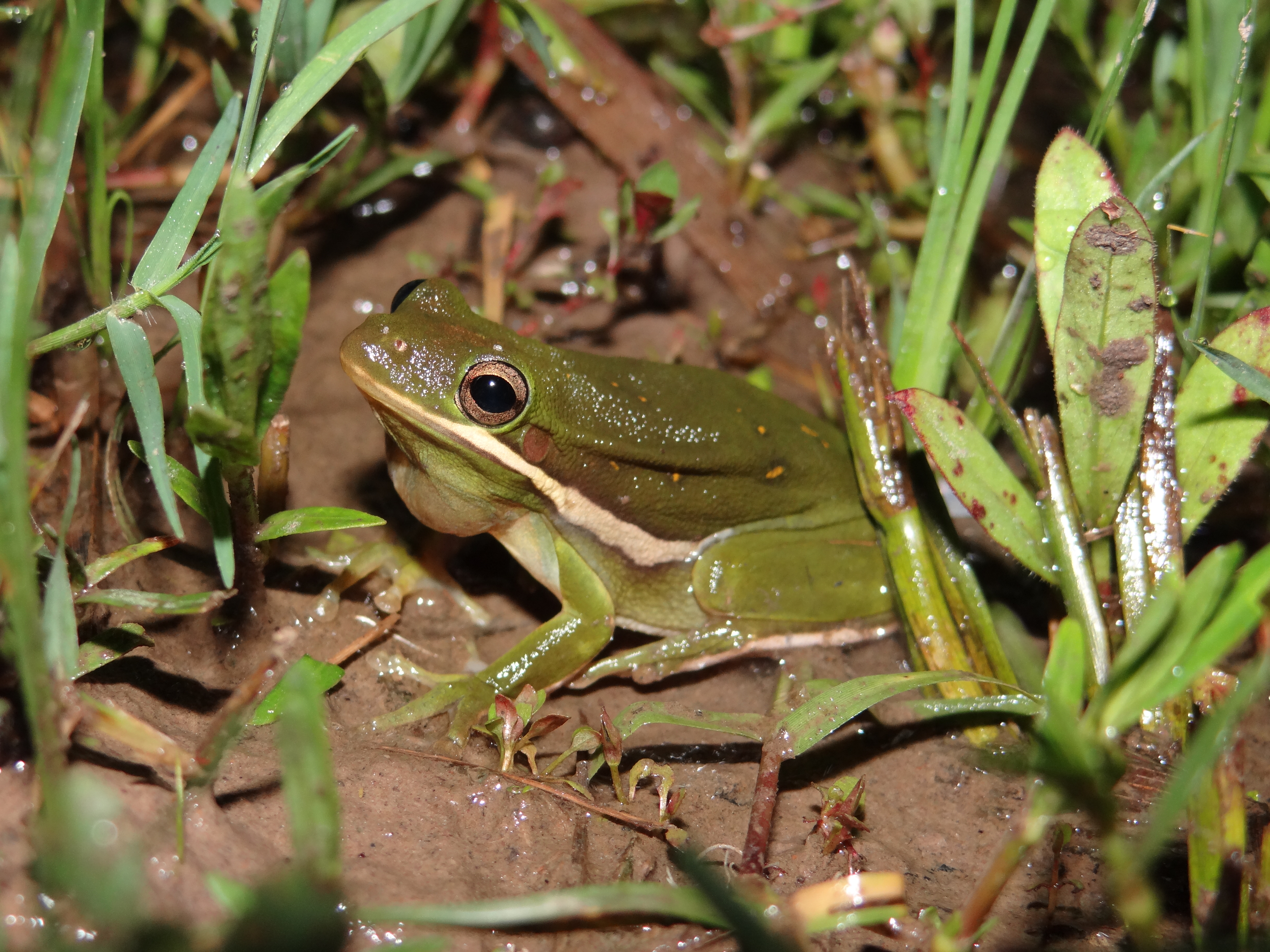
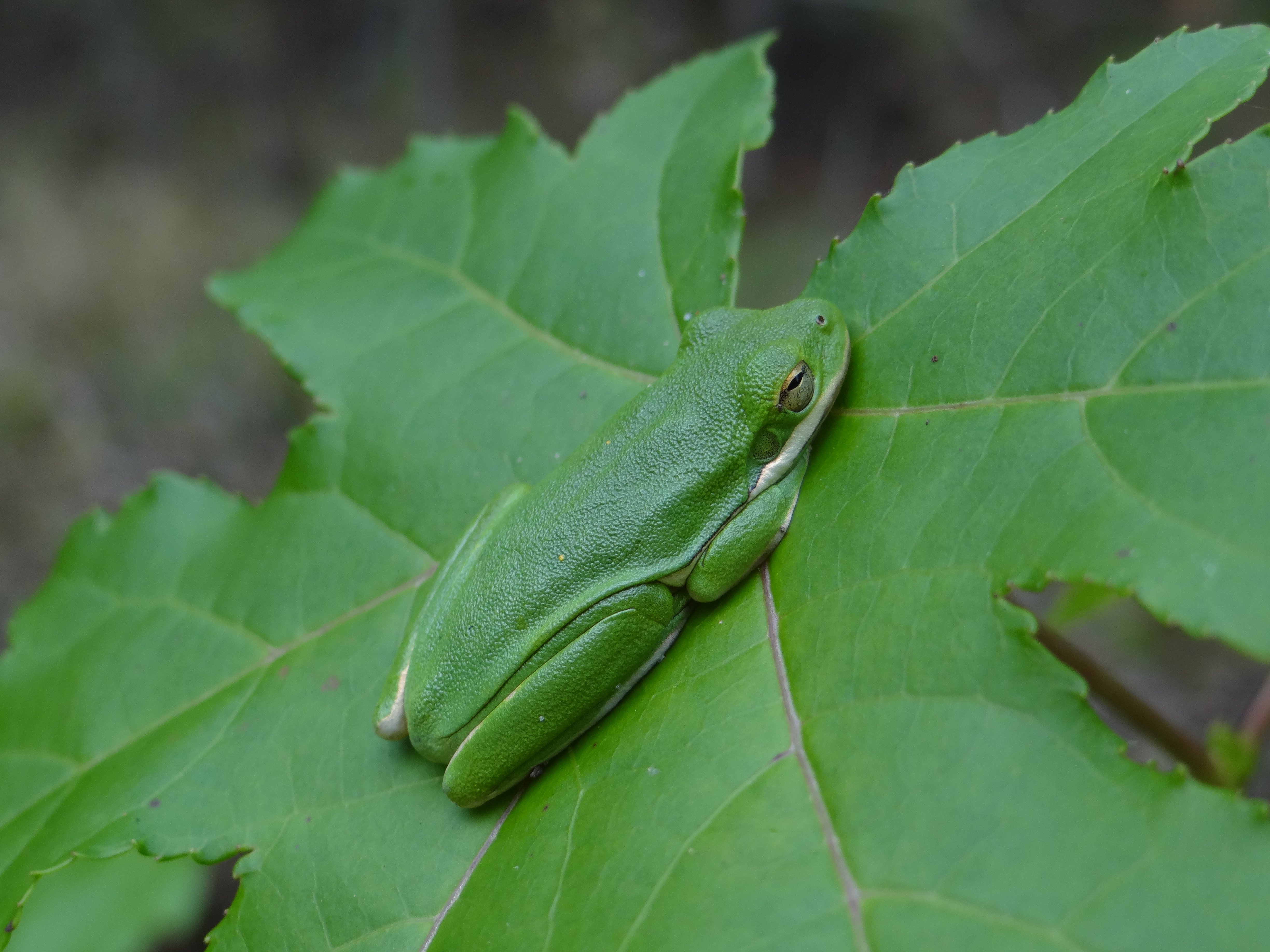
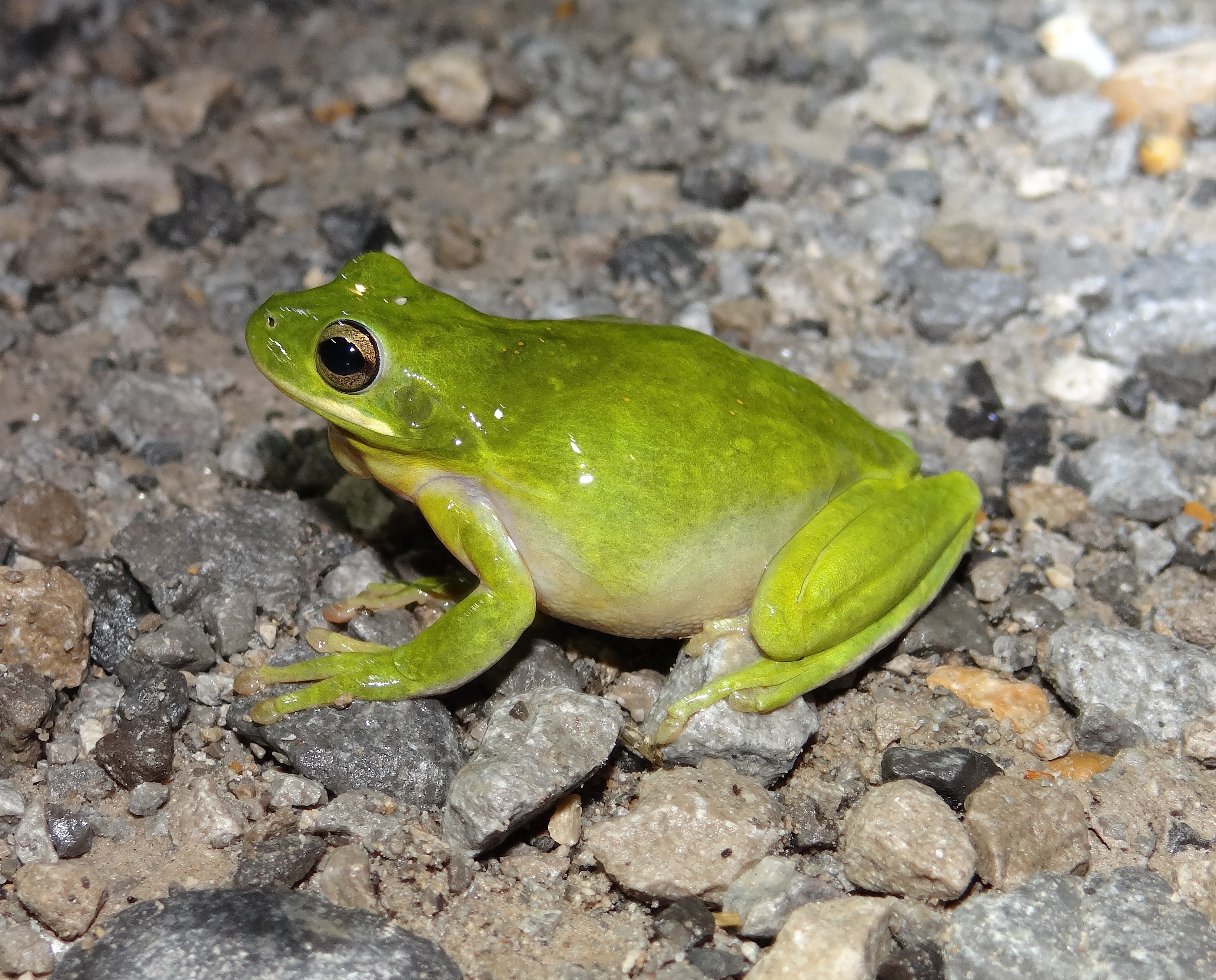
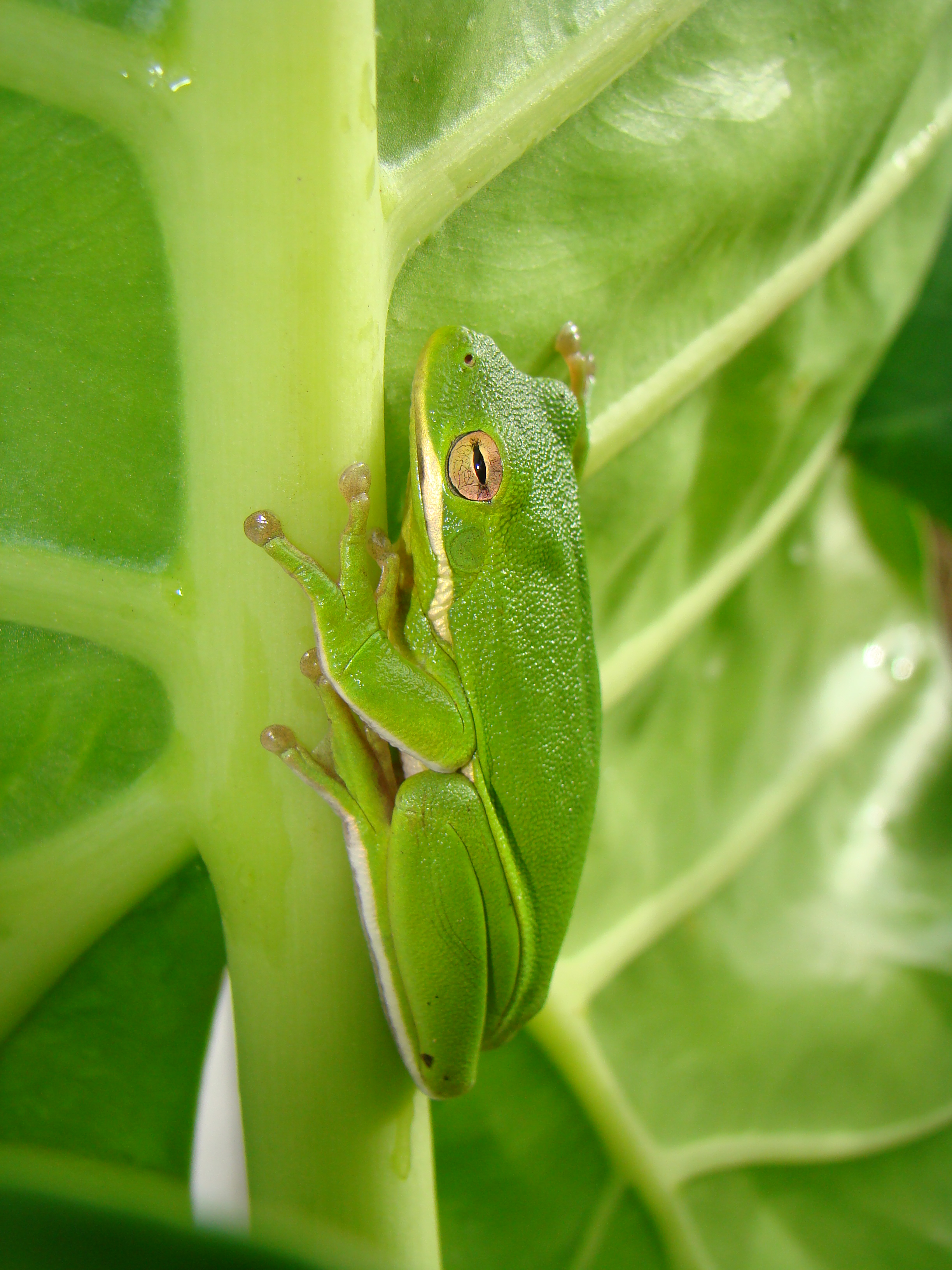
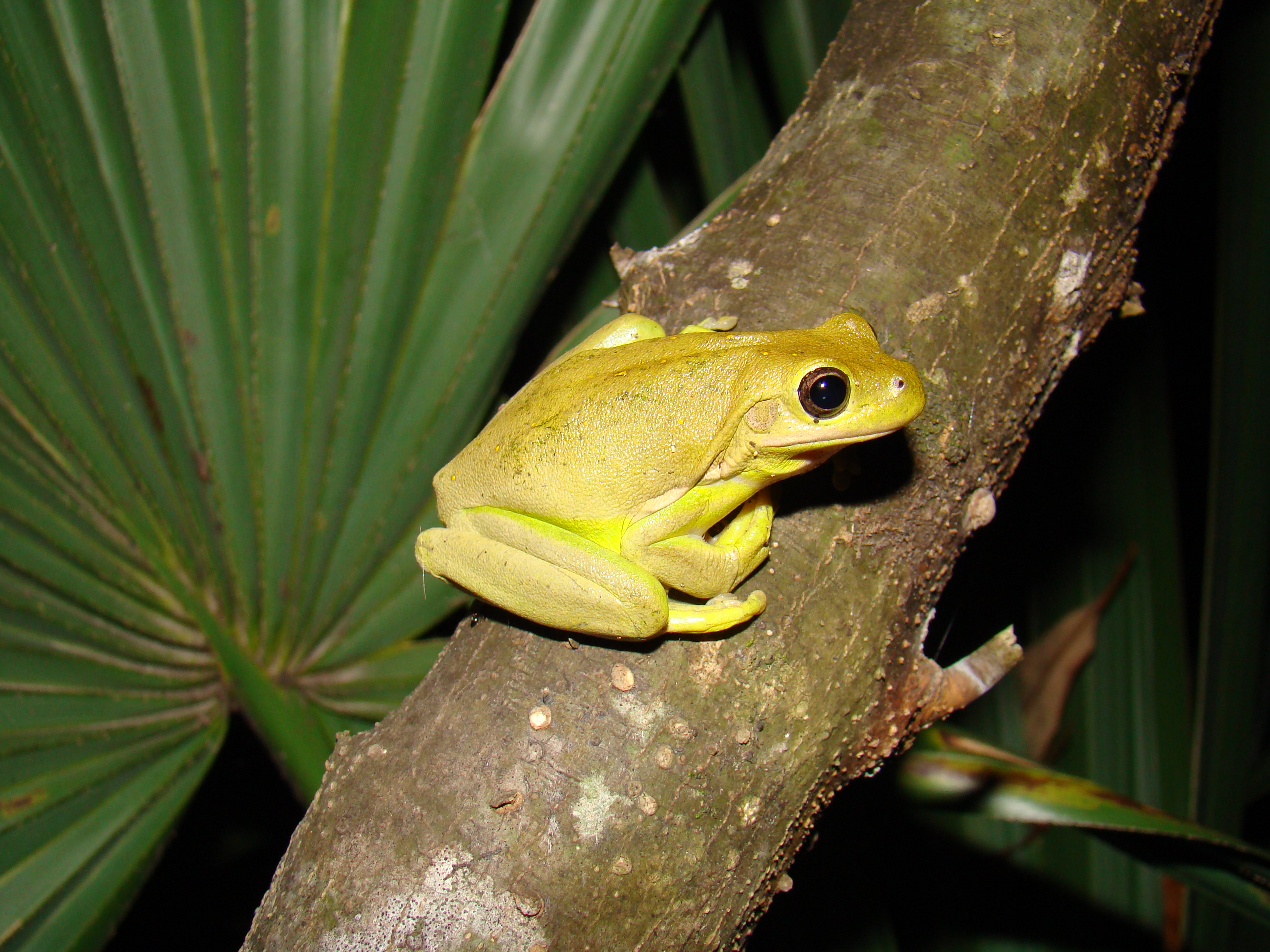
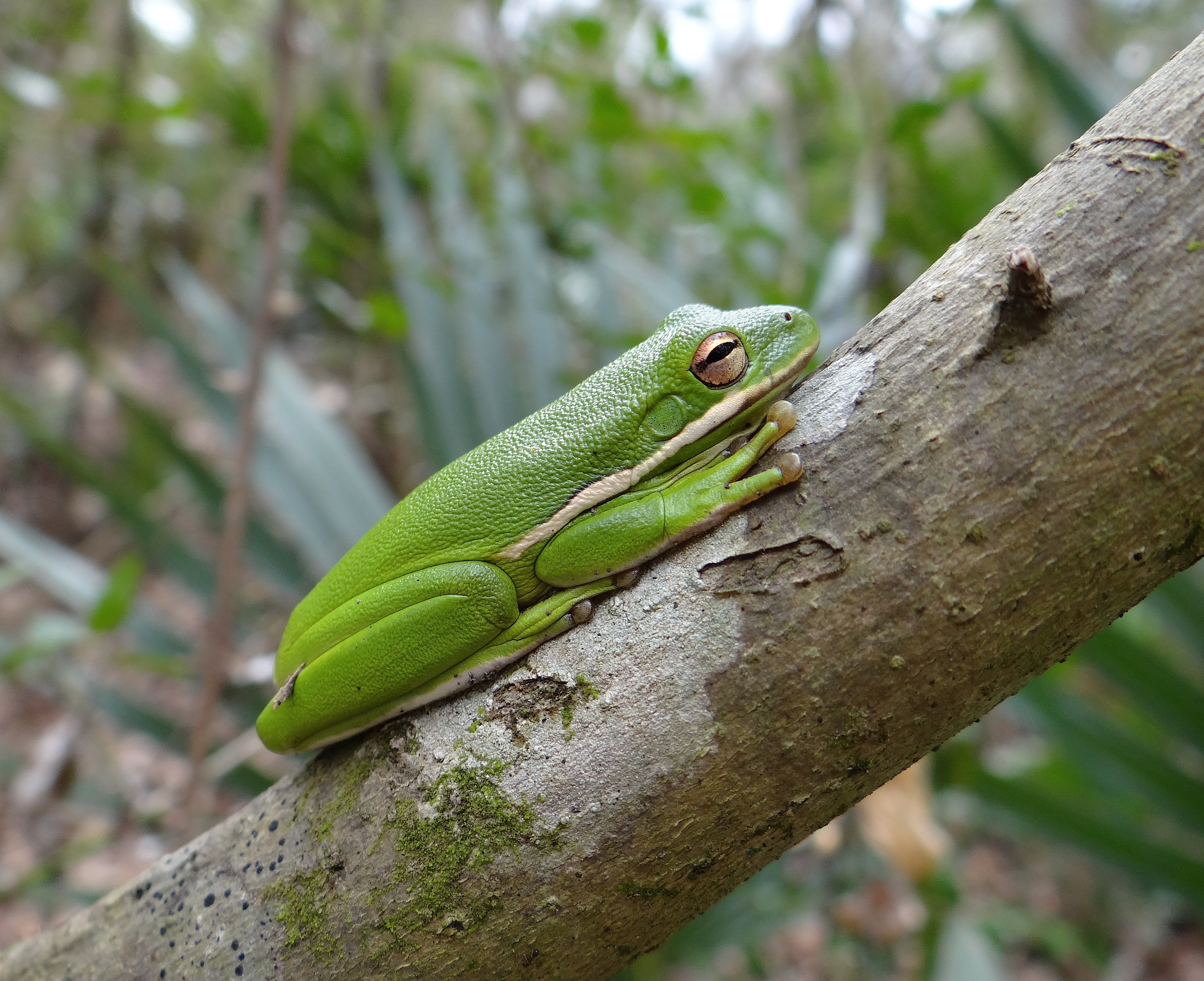
Adult Description: Longest native treefrog in Louisiana (maximum 2.8”). Usually some shade of green, but rarely brownish or grayish, especially when stressed. Often with yellow flecks on dorsum. Expanded, adhesive toe pads used for climbing. Skin relatively smooth with a fine grainy texture. Bold, clean white stripe, sometimes outlined in black, on sides extending from upper lip and passing under eardrum a variable distance towards groin. Occasionally stripes are completely absent. Green coloration above and below stripe, unlike Squirrel Treefrogs. Eardrum usually green but can be brown. No markings on limbs or rear of thighs. Belly is white.
Similar Species:
Species Range: Nearly entire Coastal Plain from Delmarva Peninsula south to Florida Keys, west to central Texas and north to southern Illinois.
Louisiana Range: Statewide except in salt marshes.
Adult Habitat: Nearly all habitats from brackish marsh to upland forests.
Natural History: Green Treefrogs are primarily nocturnal outside of occasional cloudy and rainy days and spend most of the daytime resting on vegetation or manmade structures. They eat a wide variety of insects and other arthropods. Predators include birds, snakes, turtles, and mammals. They breed from mid-March to late August in a wide variety of vegetated ephemeral, semi-permanent, and permanent waters. Females lay up to 4,000 eggs per season in small clumps of up to 50 eggs that float on surface typically among mats of floating vegetation. Eggs hatch in 2–3 days and tadpoles metamorphose in about 1–1.5 months. Maturity takes 2 years. Wild longevity is unknown, but captives may live up to 6 years.
Call: A short, nasal ‘quonk’ or ‘quank’ given once or twice per second.
Best Time and Place to Observe: This ‘treefrog’ is just as at home in low-lying herbaceous plants and shrubs as it is in trees. And they are comfortable living in most suburban situations. Look for this abundant treefrog at night near artificial light on windows and walls in warmer months. Also, listen for their vocalizations at night in breeding habitats in spring and summer.
Global Conservation Status: Green Treefrogs have a relatively wide distribution in the southeastern United States and a presumed large population, and thus, are listed as Least Concern by the IUCN Red List. Their NatureServe Global Conservation Status Rank is G5 (Secure).
Federal Conservation Status: None.
Louisiana Conservation Status: Green Treefrogs do not have any special status in Louisiana.
Author's Remarks: The Green Treefrog is the state amphibian of Louisiana. I have found this species pretty much everywhere I have herped in the state. Green Treefrogs are also at home in suburban and urban areas.
