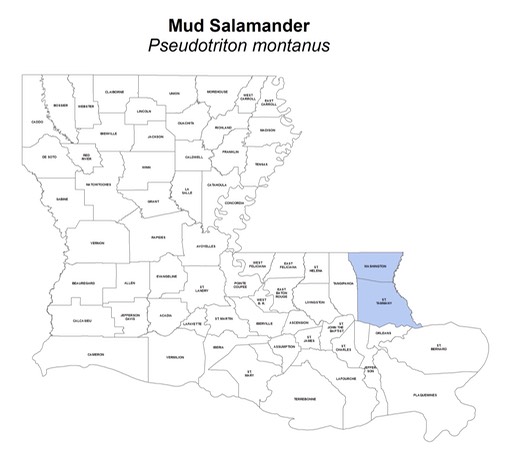
*The colored areas of the map above represent parishes with currently known records for the given species (Source: Jeff Boundy, LA Dept. of Wildlife and Fisheries). By no means does it represent the full range of the species in the state, nor does it necessarily mean that a species can be found throughout the parish with the record. This is provided as a guide to where you might be able to find these species in the state and to aid in identification. A descriptive explanation of the range of each species can be found in the text below.
Other Common Names:
Subspecies: Only the Gulf Coast Mud Salamander, Pseudotriton montanus flavissimus, occurs within Louisiana.
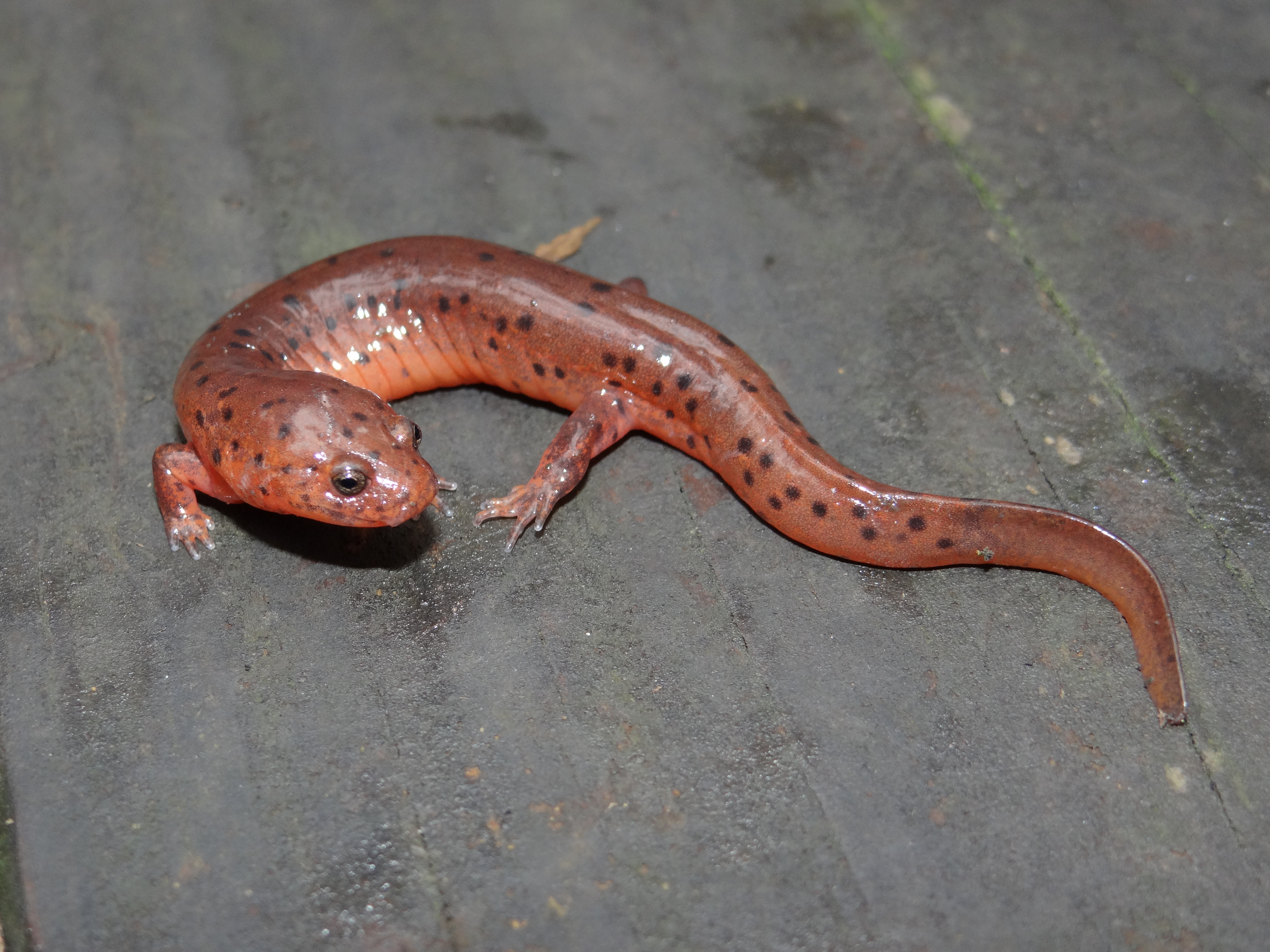
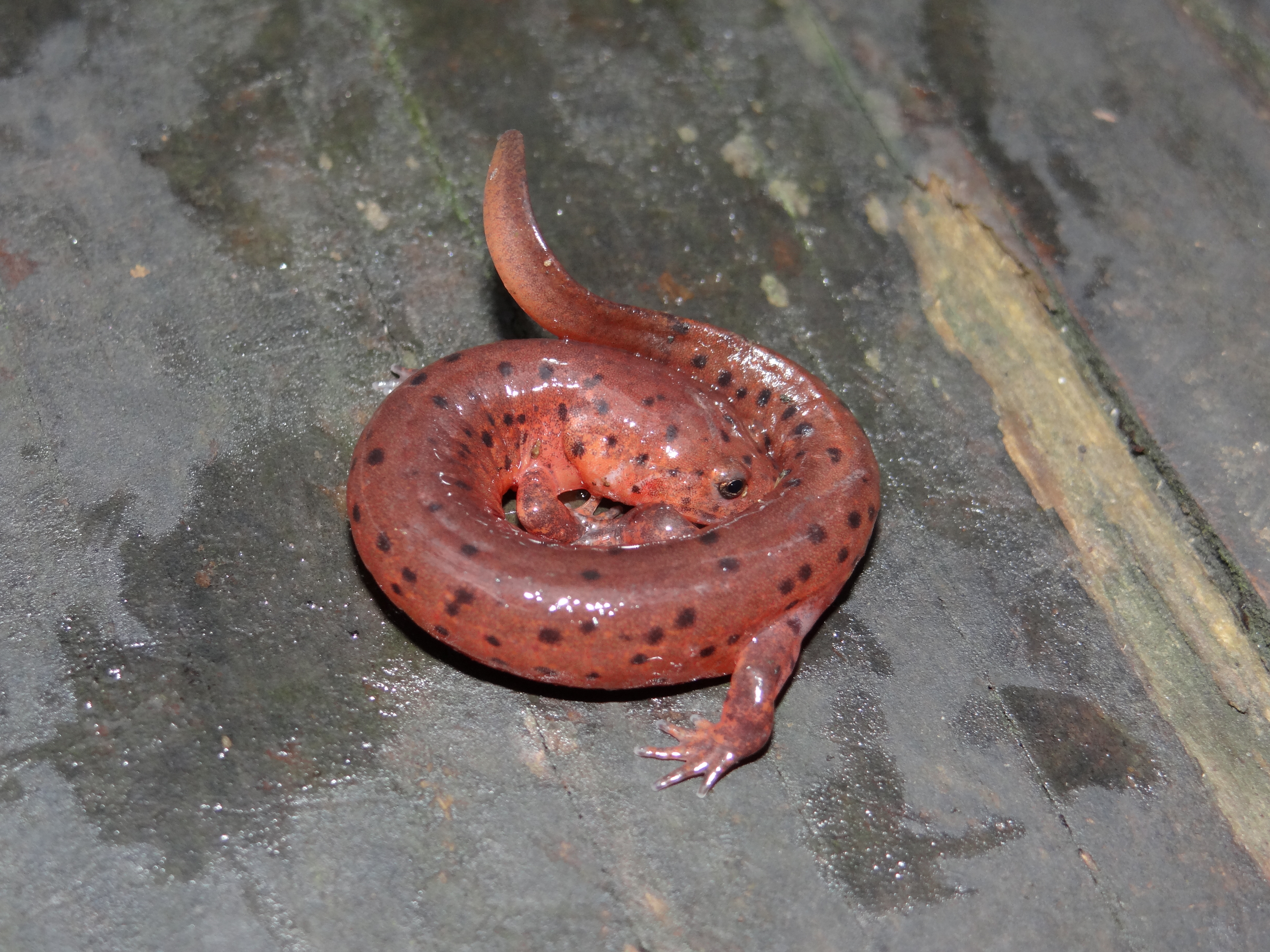
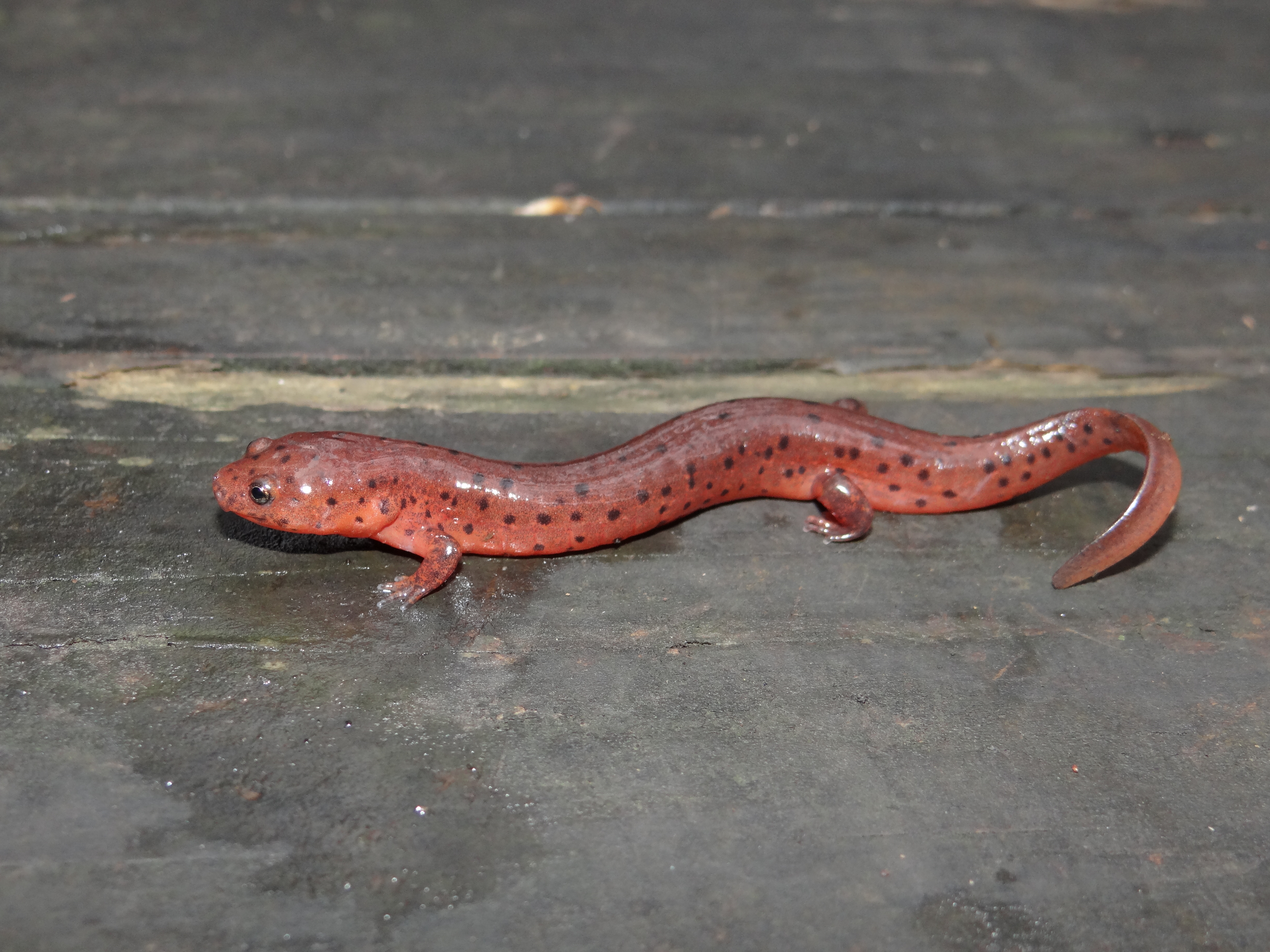
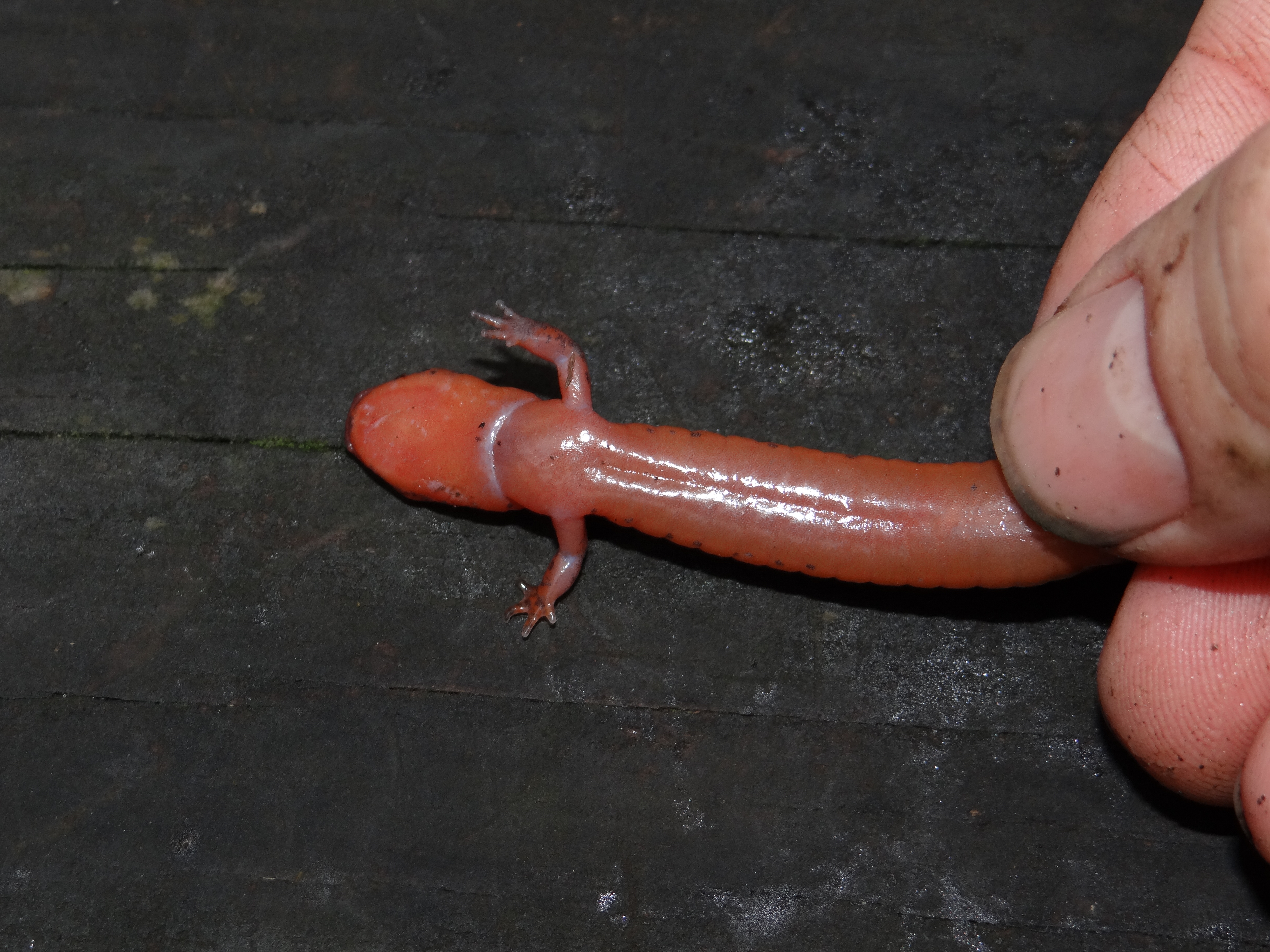
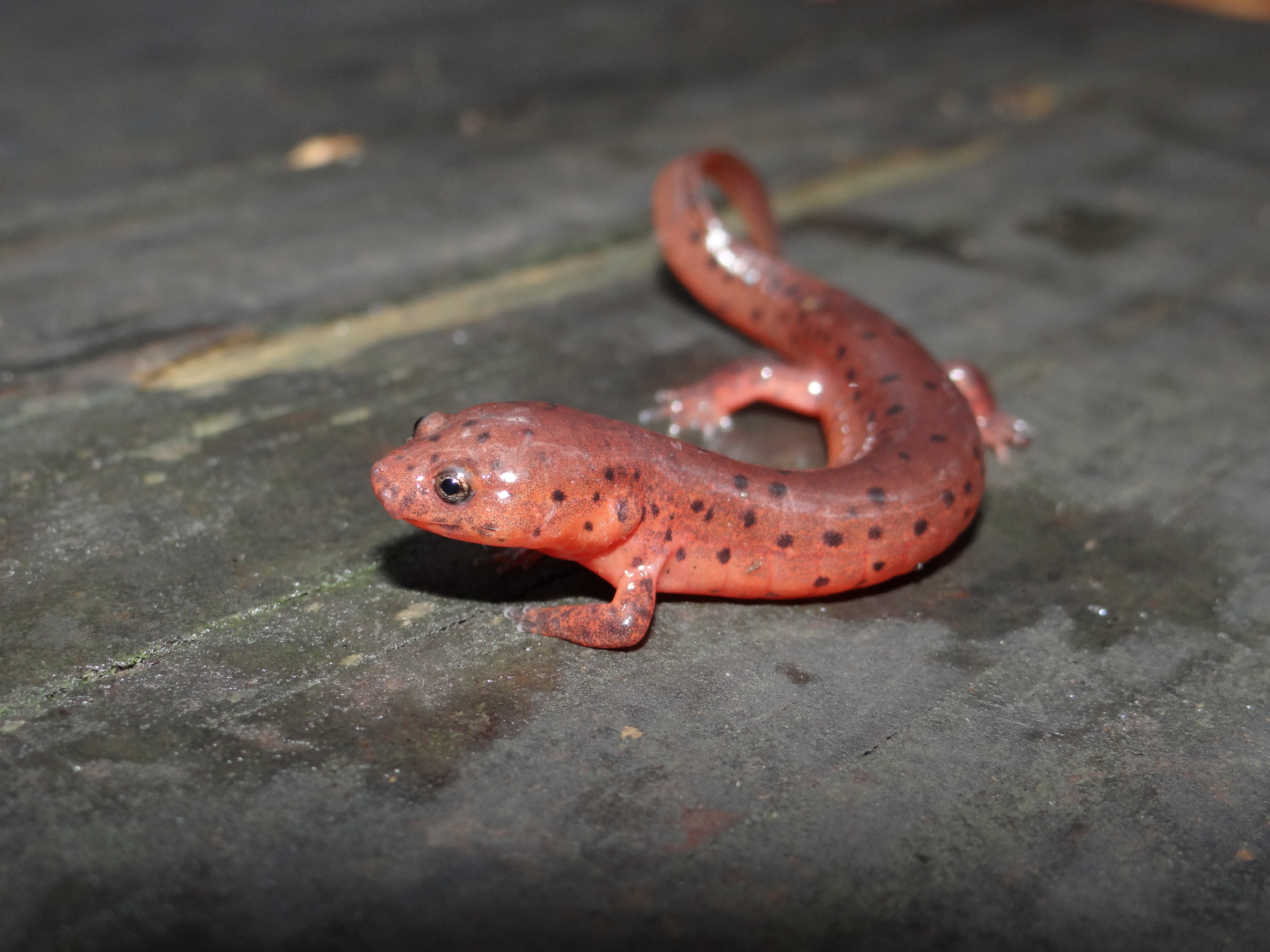
Adult Description: Stout-bodied salamander (maximum 4.7”) that is predominantly orange to orange red on top, but can become more brownish with age, with scattered black spots on upper surfaces of body and limbs. Tail becomes more laterally compressed towards tip. Iris brown as opposed to gold eyes of Red Salamanders. 16–17 costal grooves. Belly is similar in color to top but with no or few spots.
Similar Species:
Species Range: Composite range of all subspecies from southern New Jersey west to southern Ohio, south to extreme eastern Louisiana, and east to northern Florida.
Louisiana Range: Eastern Florida Parishes of Washington and St. Tammany.
Adult Habitat: Forested lowland seeps, bogs, and baygalls extending into spring-fed bottomland hardwoods.
Natural History: Mud Salamanders spend most of their time within underground cavities, or within the muck itself, but sometimes can be found under surface cover. Their diet is mostly unknown, but presumably they feed upon invertebrates. Smaller salamanders have been speculated to also be possible prey. Mud Salamanders produce toxic skin secretions, especially on their back, which likely thwart many predators. Some snakes, however, likely prey upon them. Mud Salamander reproductive ecology is poorly understood, but based on few discovered nests, females likely lay up to 30 eggs in underground cavities in fall. Females are believed to guard their nests. Hatching likely takes place a few months later in winter. Larvae may take 1–2 years to metamorphose. Maturity may occur as early as 2 years in males. Females may require 4 years or more. Maximum wild longevity is unknown, but a captive lived over 15 years.
Best Time and Place to Observe: Mud Salamanders are prohibited from take in Louisiana and are currently known from only two sites in eastern Louisiana. It is best to look for them in cooler months in appropriate muddy habitats by uncovering woody debris, leaf litter mats, or moss clumps that cover their burrows.
Global Conservation Status: Mud Salamanders have a relatively wide distribution in the eastern United States and a presumed large population, and thus, are listed as Least Concern by the IUCN Red List. Their NatureServe Global Conservation Status Rank is G3G4 (Vulnerable to Apparently Secure).
Federal Conservation Status: None.
Louisiana Conservation Status: Mud Salamanders have a ranking of S1 (critically imperiled because of extreme rarity – 5 or fewer known extant populations) in Louisiana. In Louisiana, Mud Salamanders have a State Protection Status of ‘prohibited’, meaning possession or harvest of this species is illegal.
*** If you live in the range of this species in Louisiana and believe you may have observed this species please let me know (take a picture if possible), as there may be more unknown populations in the state.***
Author's Remarks: I found my first and only individual of this species in Louisiana in December 2016, but have rarely herped in its range in likely habitats. I have only seen one other individual and it was from Coffee County, Tennessee.
