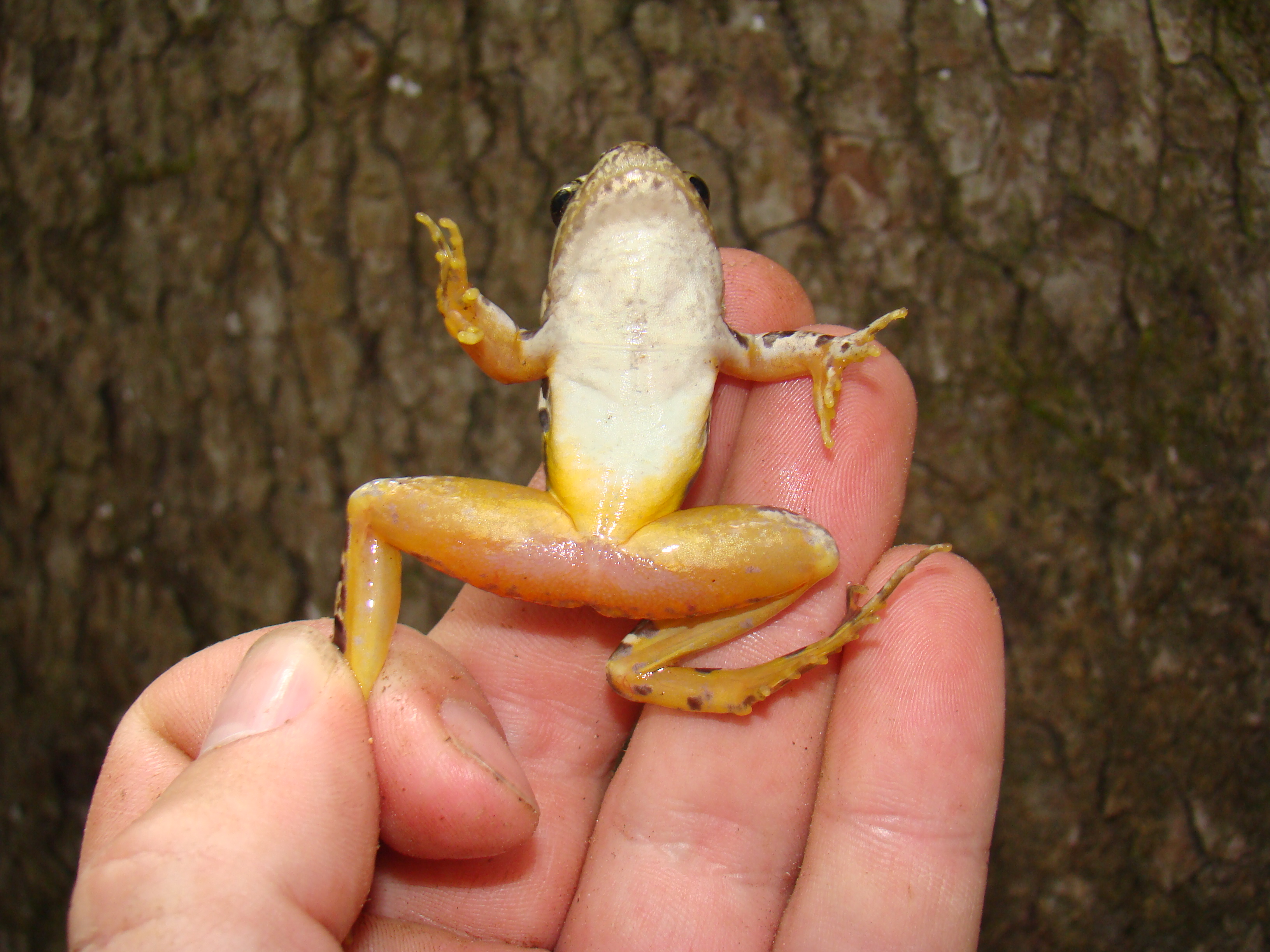
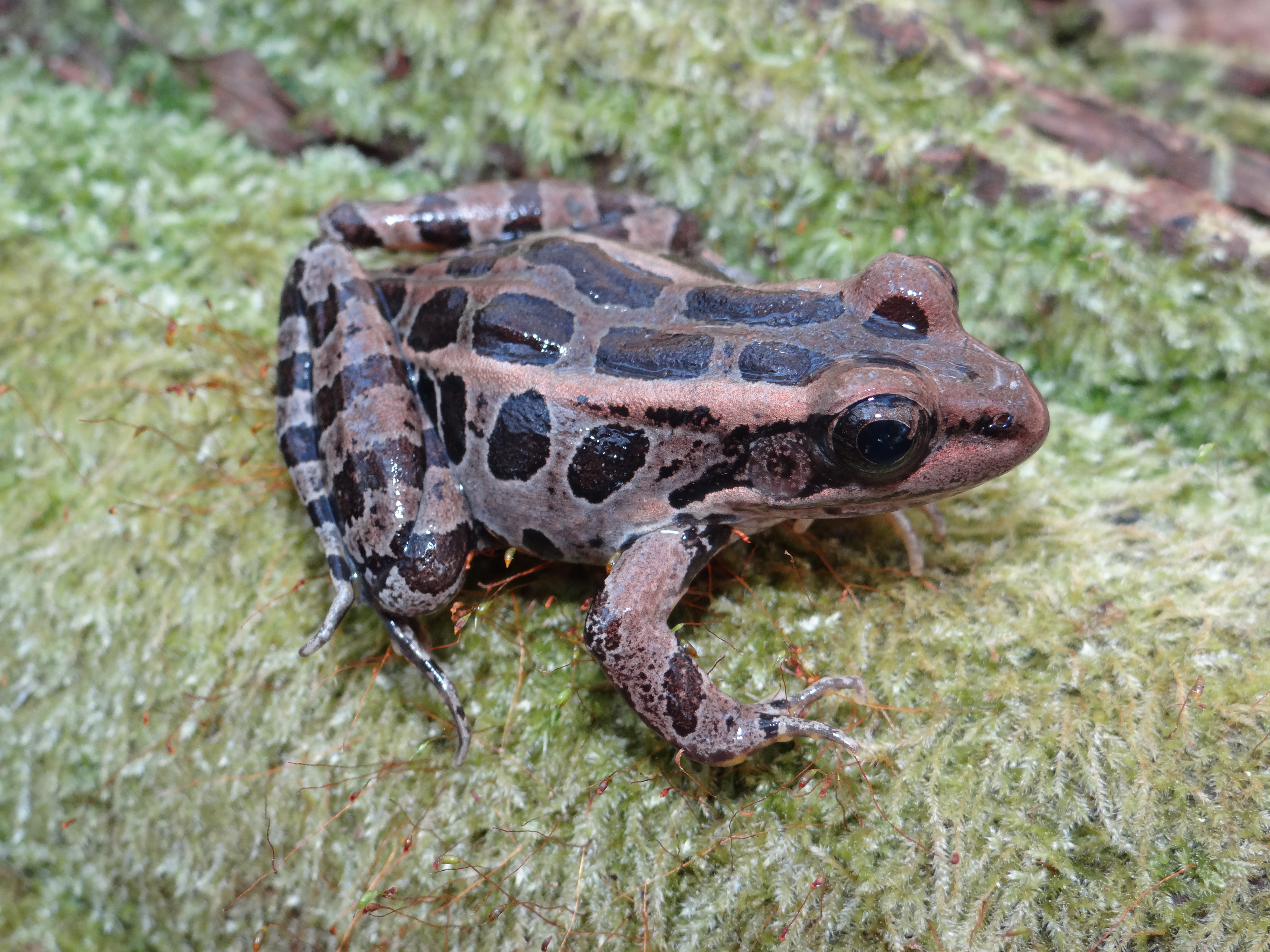

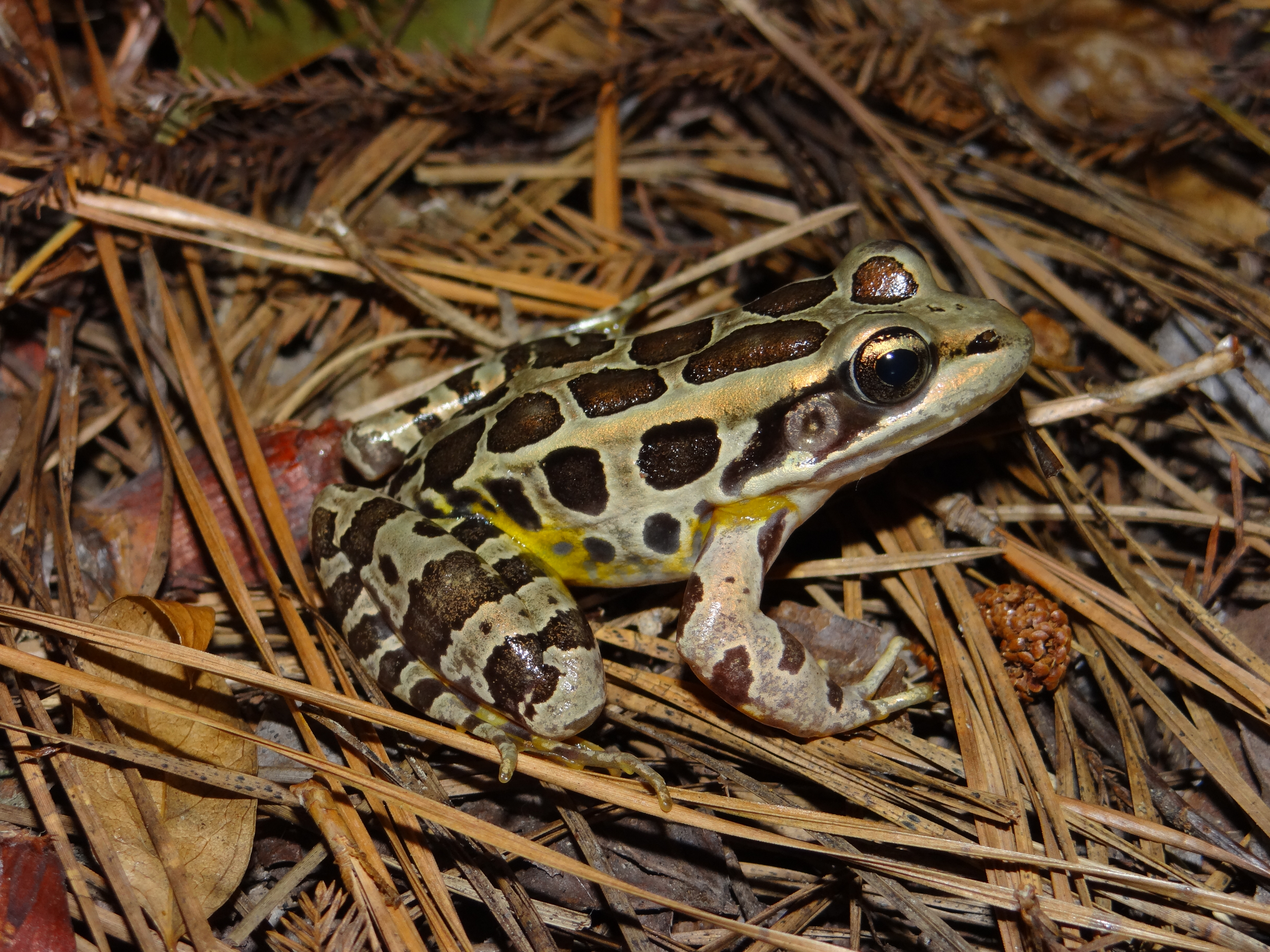
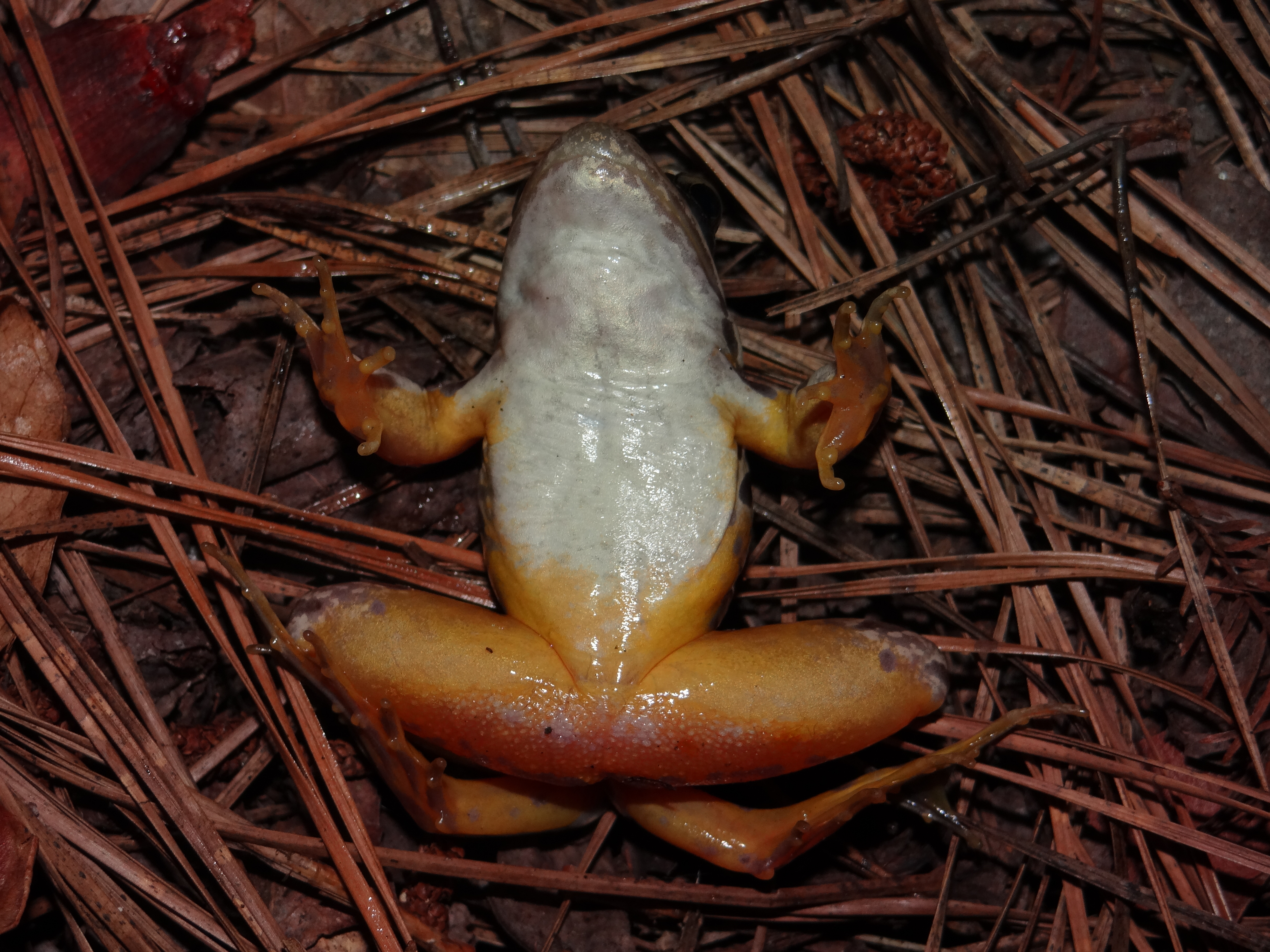

*The colored areas of the map above represent parishes with currently known records for the given species (Source: Jeff Boundy, LA Dept. of Wildlife and Fisheries). By no means does it represent the full range of the species in the state, nor does it necessarily mean that a species can be found throughout the parish with the record. This is provided as a guide to where you might be able to find these species in the state and to aid in identification. A descriptive explanation of the range of each species can be found in the text below.
Other Common Names:
Subspecies: No subspecies recognized.
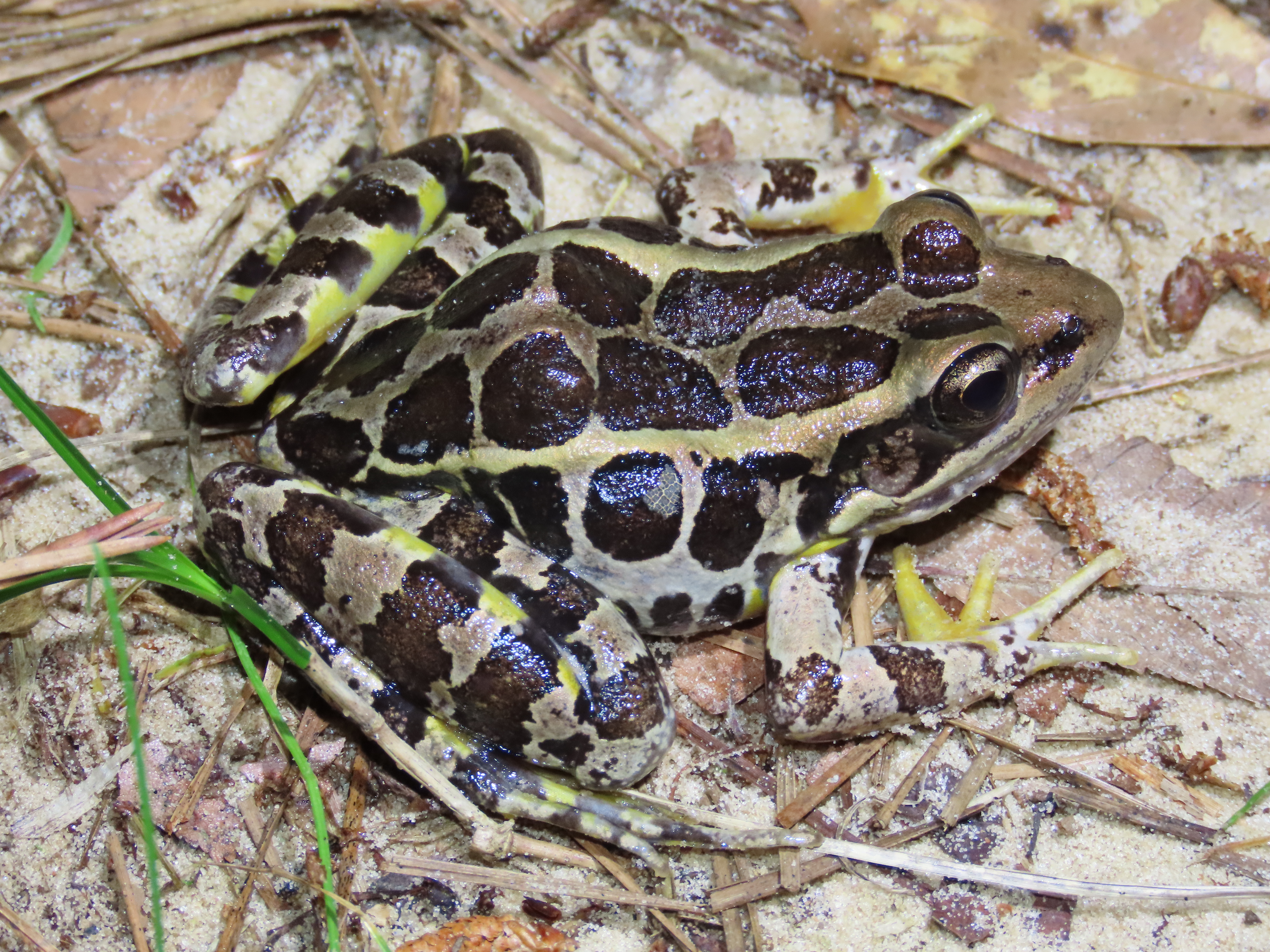
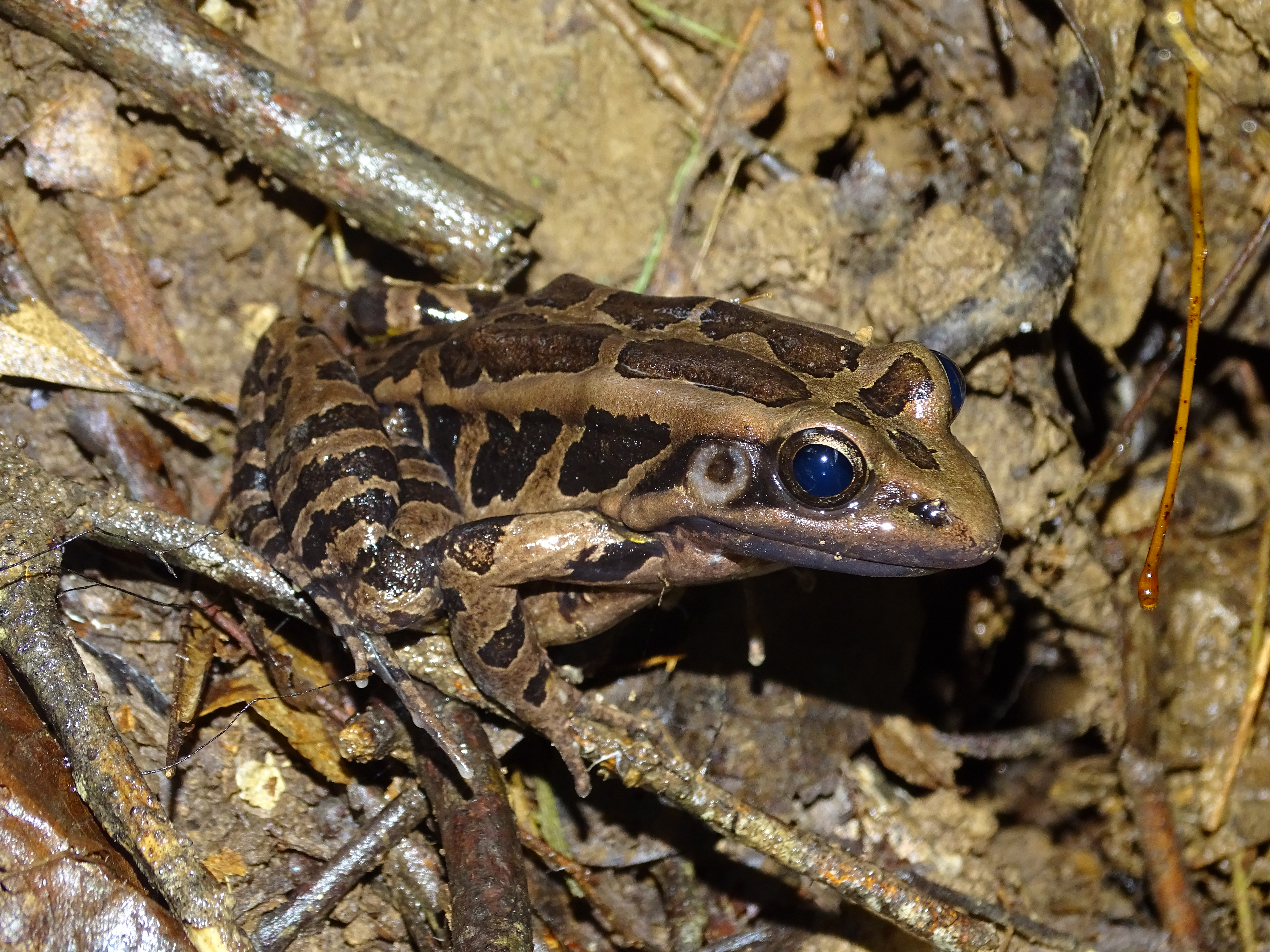
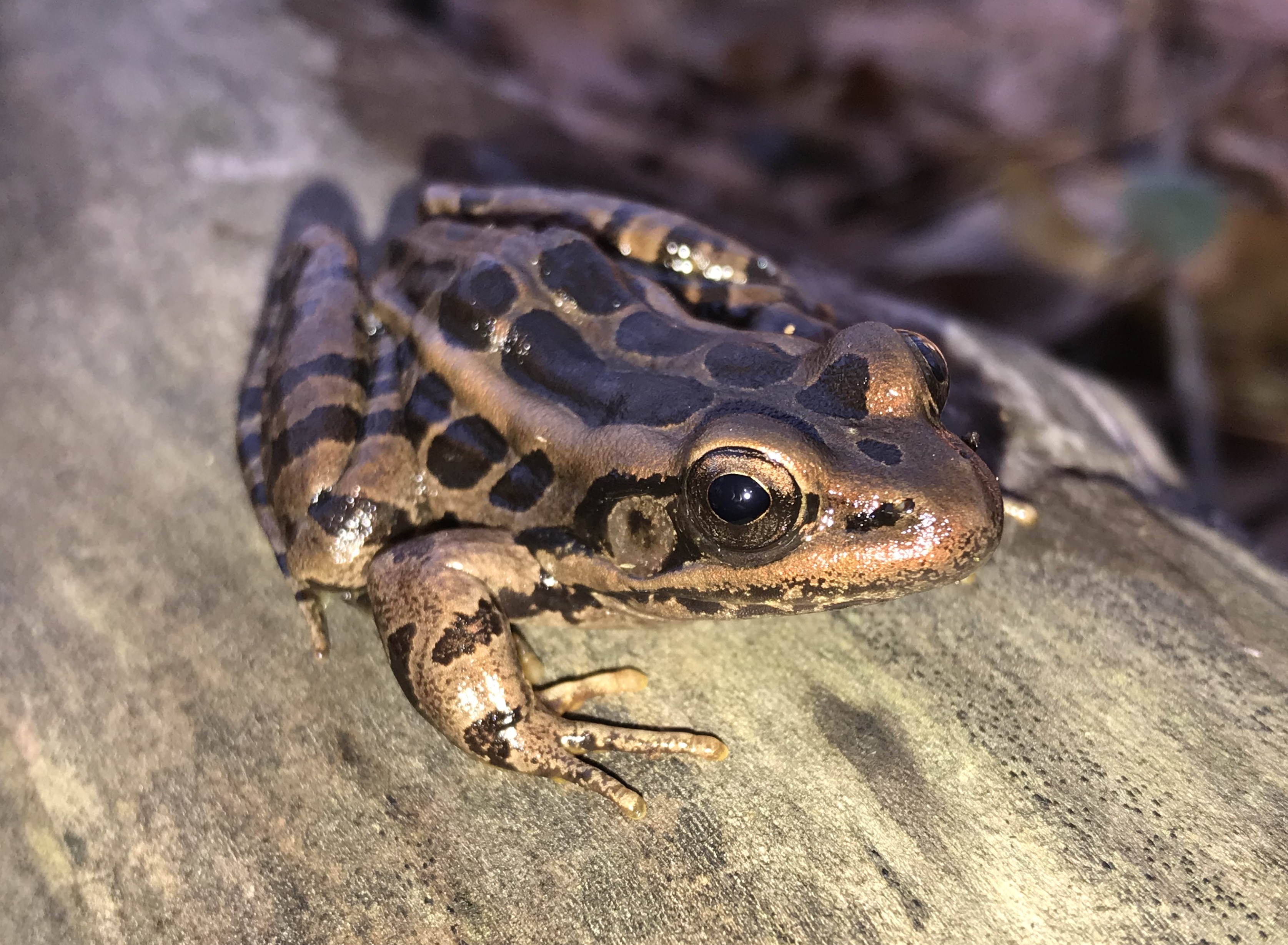
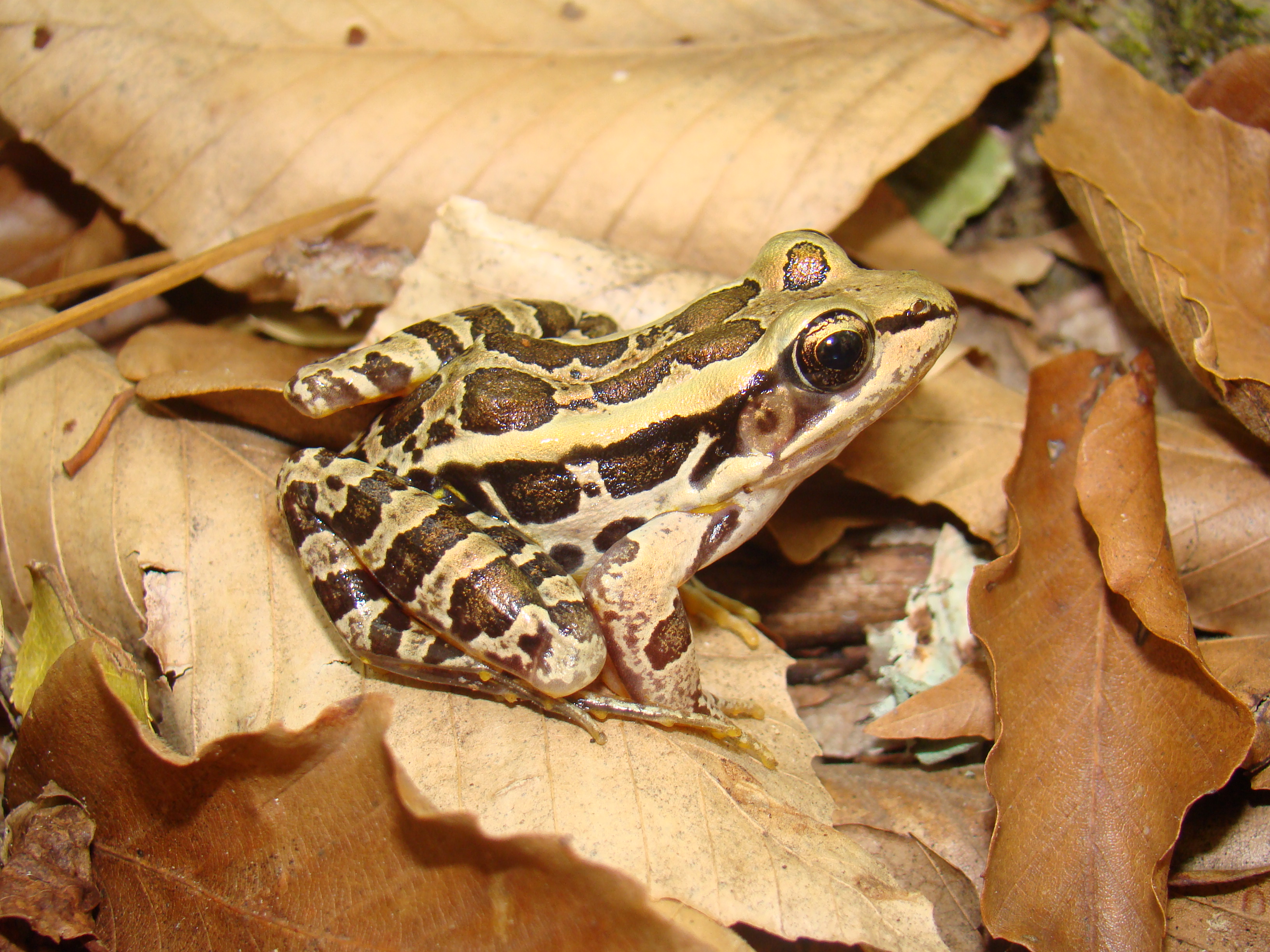
Adult Description: A medium-sized frog (maximum 3.4”) of light to dark brown coloration, with a smooth, raised area of tan skin on each side of back extending from behind eye to groin. Paired rows of pale-edged dark markings, usually squarish but sometimes fused to become rectangular in shape, cover most of area on back. A round spot is usually present on each side of skin between eyes and another on top of snout. Square to round markings occur on sides. Dark patch behind eye and eardrum. Center of eardrum usually with dark central spot unlike Southern Leopard Frog. Hindlimbs with distinct dark crossbars. Belly is white with a bold yellow wash over limbs and groin.
Similar Species:
Species Range: From Maritime Provinces of Canada, south to South Carolina, west to east Texas, and north through much of Arkansas and southern Missouri to southeast Minnesota.
Louisiana Range: Scattered records throughout central and northern Louisiana and northern Florida Parishes, but uncommon in Mississippi River floodplain.
Adult Habitat: Upland pine and hardwood forests, as well as bottomland hardwoods and floodplain swamps.
Natural History: Pickerel Frogs are primarily nocturnal and are known to wander away from their breeding habitats in the nonbreeding season. They feed upon a wide variety of arthropods and other invertebrates. Documented predators include pickerel fish, gartersnake, watersnake, bald eagle, and mink. They breed from December to March usually in ephemeral ponds and depressions, but other wetland habitats may be used. Females lay 700–3,000 eggs in a firm, globular cluster that may be attached to vegetation near the surface or rest on the shallow substrate. Eggs hatch in about 10 days and tadpoles metamorphose in about 3 months. Maturity may take 1–2 years. Wild longevity is unknown but may be 5 years or more.
Call: A muted, low-pitched grating snore lasting 2–3 seconds, sometimes given underwater.
Best Time and Place to Observe: Pickerel Frogs are not observed frequently or in abundance in Louisiana. Their calls can also be overlooked, especially when chorusing together with louder winter-breeding species or when calling underwater. A good chance to observe them is on a mild winter night in or near their cool and clear breeding pools.
Global Conservation Status: Pickerel Frogs have a relatively wide distribution in eastern North America, a presumed large population, and tolerate a degree of habitat modification, and thus, are listed as Least Concern by the IUCN Red List. Their NatureServe Global Conservation Status Rank is G5 (Secure).
Federal Conservation Status: None.
Louisiana Conservation Status: Pickerel Frogs do not have any special status in Louisiana.
Author's Remarks: I have only observed ten individuals of this species in the state, two in Kisatchie National Forest in Natchitoches Parish in 2010 and 2011, one in early 2017 from Clear Creek WMA in Vernon Parish, one in late 2017 from Lake Bistineau State Park, one in late 2019 and another in early 2022 at Walter B. Jacobs Park in Caddo Parish, and two from Mary Ann Brown Preserve in West Feliciana Parish in 2020. We found a couple at Briarwood in Natchotoches Parish in spring of 2023. I have found many in other states, particularly in Tennessee.
