
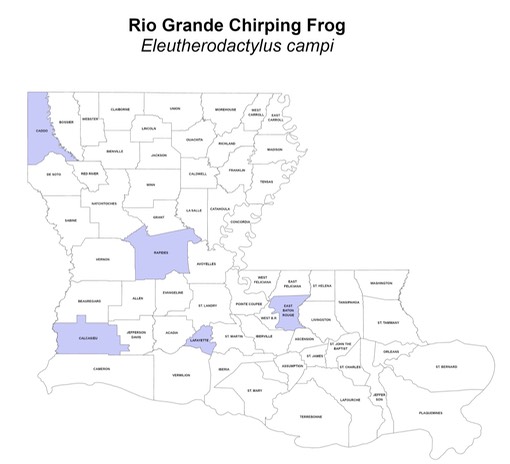
*The colored areas of the map above represent parishes with currently known records for the given species (Source: Jeff Boundy, LA Dept. of Wildlife and Fisheries). By no means does it represent the full range of the species in the state, nor does it necessarily mean that a species can be found throughout the parish with the record. This is provided as a guide to where you might be able to find these species in the state and to aid in identification. A descriptive explanation of the range of each species can be found in the text below.
Other Common Names:
Subspecies: No subspecies recognized.
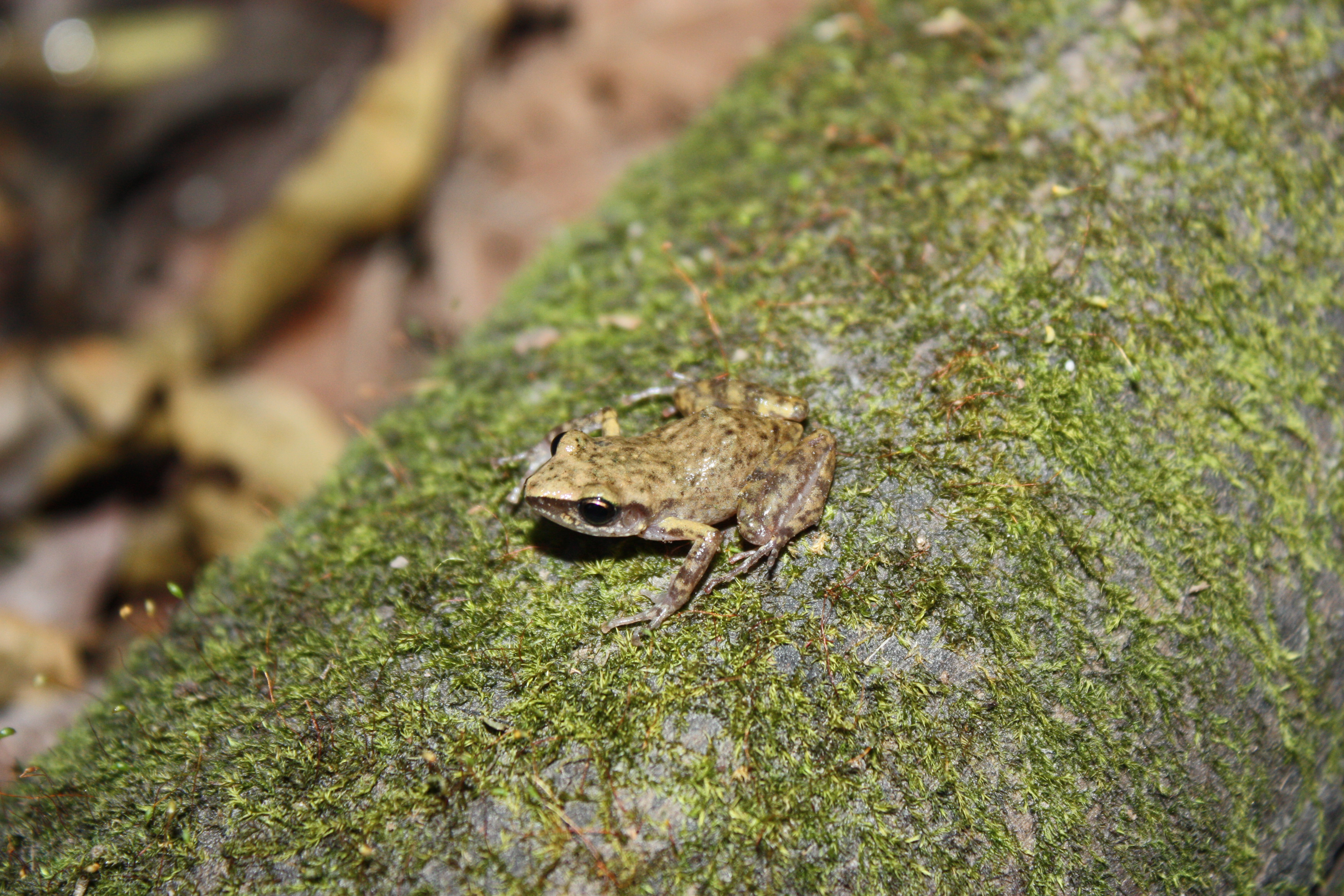
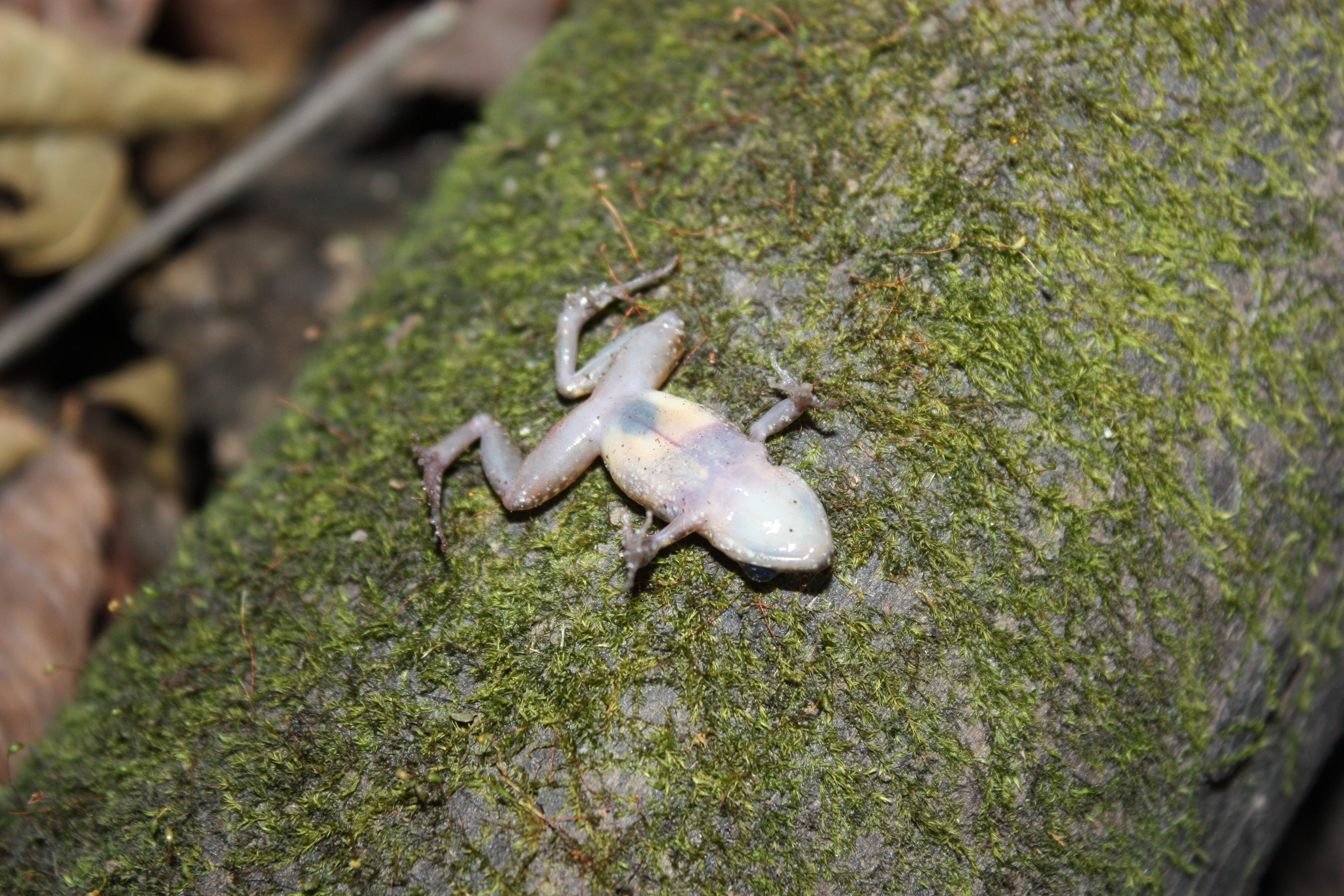
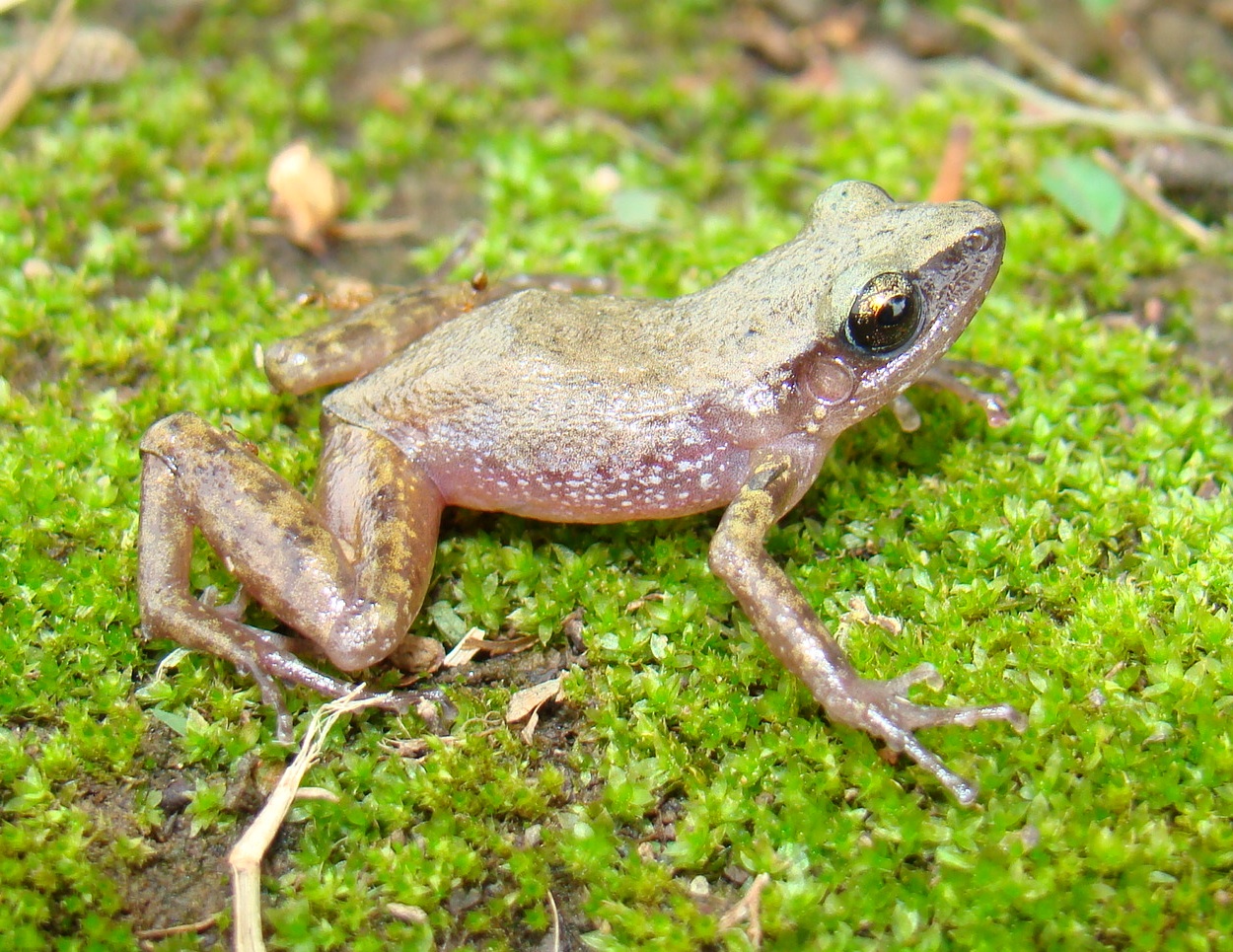
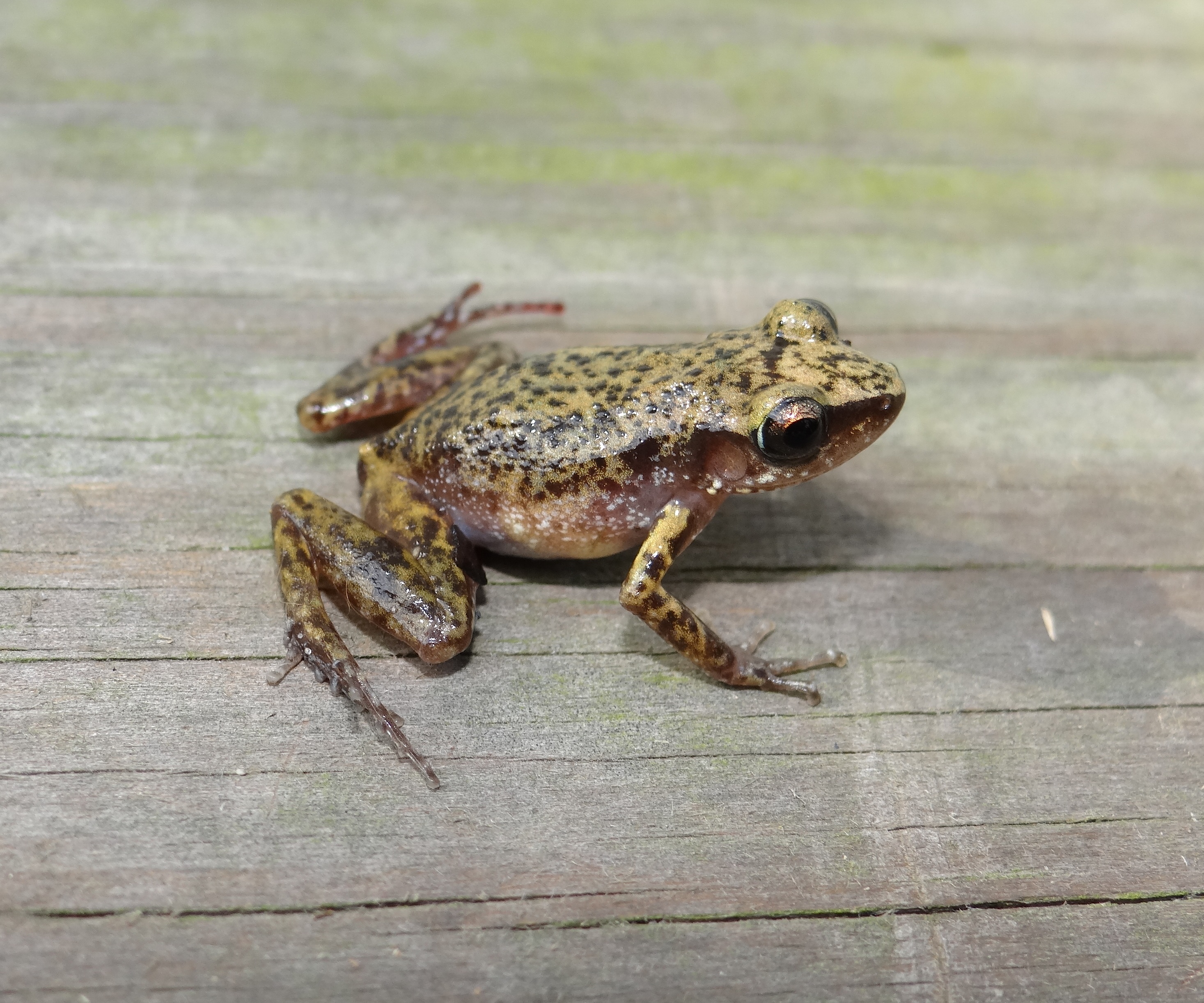
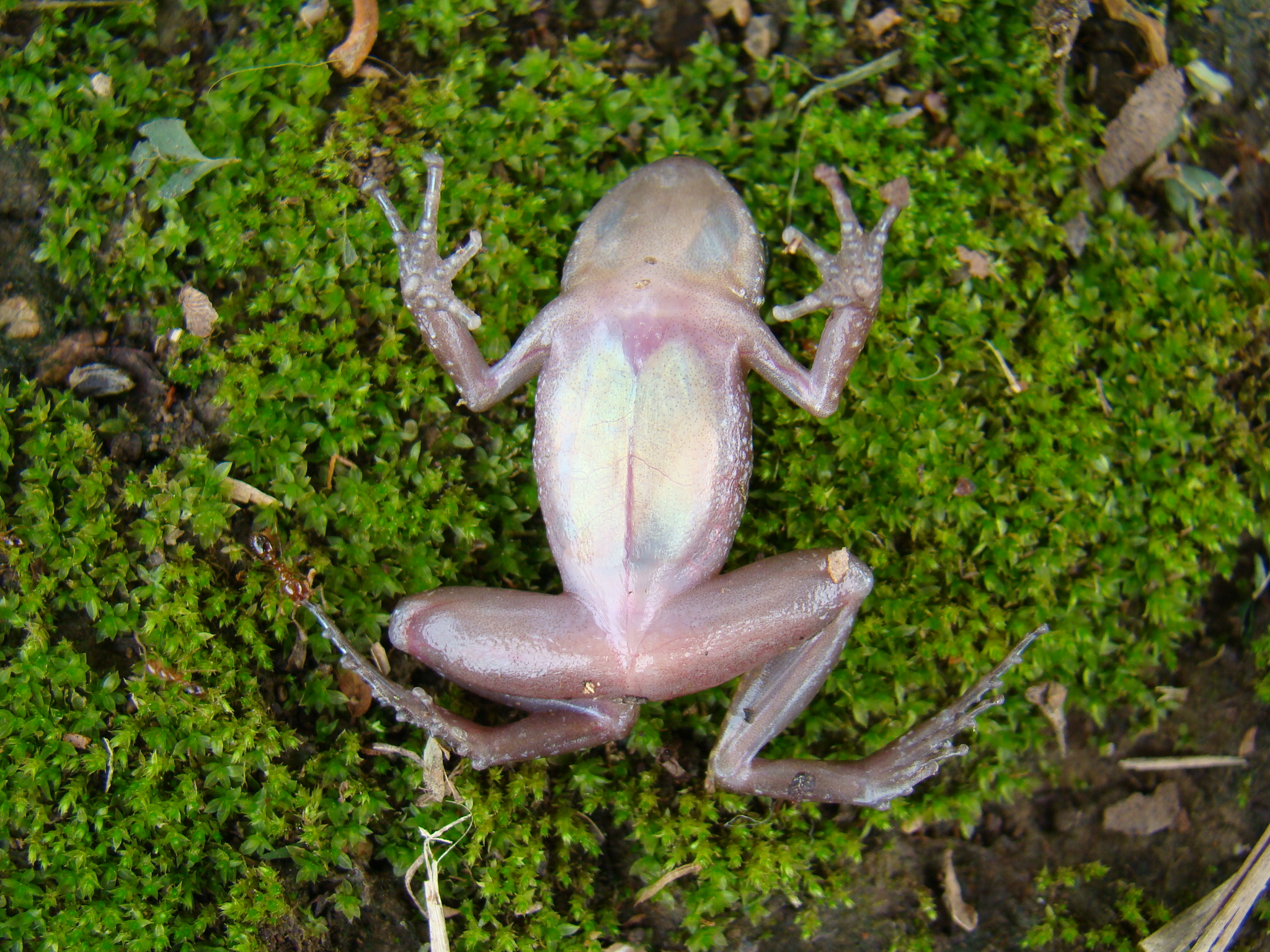
Adult Description: A small frog (maximum 1”) with smooth skin and expanded toe tips, and no webbing between toes. Variable coloration, often olive or tan, but can be brown or gray. Small and dark irregular markings scattered on back. A pale bar often between eyes and sometimes bordered posteriorly by a dark bar or marking. A well-defined black mask extends from snout past eye and above eardrum, which is not as distinct or present in Greenhouse Frogs. Area above upper lip typically has small, scattered white markings, which are also usually present on lower sides. Dark bars on limbs, though sometimes not prominent and appearing as dark markings. Belly is dull white to gray with a conspicuous abdominal vein down middle of belly, which is only seen in Louisiana in our two exotic Eleutherodactylus species.
Similar Species:
Species Range: Native range is extreme southern Texas south into Mexican states of Nuevo León and Tamaulipas. Introduced and established in many metropolitan areas along Gulf Coast in Texas and Louisiana, probably by way of plants and mulch from nurseries.
Louisiana Range: First discovered in Louisiana near Shreveport in 1998, this species is known primarily from parishes containing major metropolitan areas of Lake Charles, Lafayette, Shreveport, Baton Rouge, and Alexandria. Additional records exist from East Feliciana Parish as well as parts of Atchafalaya Basin, specifically along levee road in Indian Bayou area of Sherburne Complex where vocalizations were first heard in 2013.
Adult Habitat: Often found in urban and suburban areas, they can also be found in more natural habitats near these populated areas. Because they often stowaway in soil, mulch, and potted plant shipments, they may be discovered anywhere these materials are transported.
Natural History: Rio Grande Chirping Frogs are primarily nocturnal and are active in warm, humid weather. They are reported to eat a variety of small arthropods. Predators are unknown but likely include snakes. They are primarily terrestrial and secretive, typically living in leaf litter and ground cover, but are known to climb several feet above ground and will vocalize from these higher perches. Calling occurs from April through September but breeding in their native range is in April and May. Females lay 5–13 eggs just under loose soil, and eggs hatch in 14–16 days into tiny froglets. Maturity is unknown, but likely within a year of hatching. Wild longevity is unknown.
Call: High-pitched, delicate, cricket-like chirp repeated up to four times, each lasting less than a second. Soft trilled notes are also produced.
Best Time and Place to Observe: This frog can often be found under cover objects in contact with moist soil where it is usually quick to escape when uncovered. They can sometimes be found while gardening or during or after heavy rains when they are forced to evacuate their home burrows and crevices. Trying to find individuals that are calling can be extremely difficult.
Global Conservation Status: Rio Grande Chirping Frogs have a relatively wide native distribution in the south-central United States and Mexico, a presumed large population, and tolerate a broad range of habitats, and thus, are listed as Least Concern by the IUCN Red List. Their NatureServe Global Conservation Status Rank is G4 (Apparently Secure).
Federal Conservation Status: None
Louisiana Conservation Status: Exotic Rio Grande Chirping Frogs do not have any special status in Louisiana.
Author's Remarks: I have found this species at multiple locations within Lafayette Parish, including the cities of Lafayette and Youngsville. In one woodlot near the mall in Lafayette Parish, this species has become very abundant - multiple cover objects turned over in a 2012 outing contained up to 5 or 6 individuals. This species has now been detected in the Atchafalaya Basin in 2014 in the Indian Bayou area in St. Martin Parish. I also found an individual in Sherburne WMA on Bayou Manual Road in 2019.
