


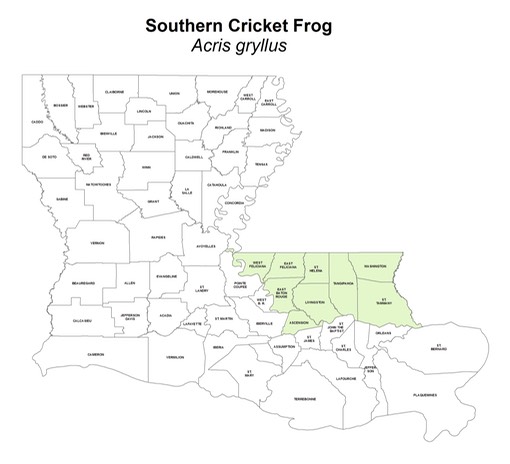
*The colored areas of the map above represent parishes with currently known records for the given species (Source: Jeff Boundy, LA Dept. of Wildlife and Fisheries). By no means does it represent the full range of the species in the state, nor does it necessarily mean that a species can be found throughout the parish with the record. This is provided as a guide to where you might be able to find these species in the state and to aid in identification. A descriptive explanation of the range of each species can be found in the text below.
Other Common Names:
Subspecies: No subspecies recognized.
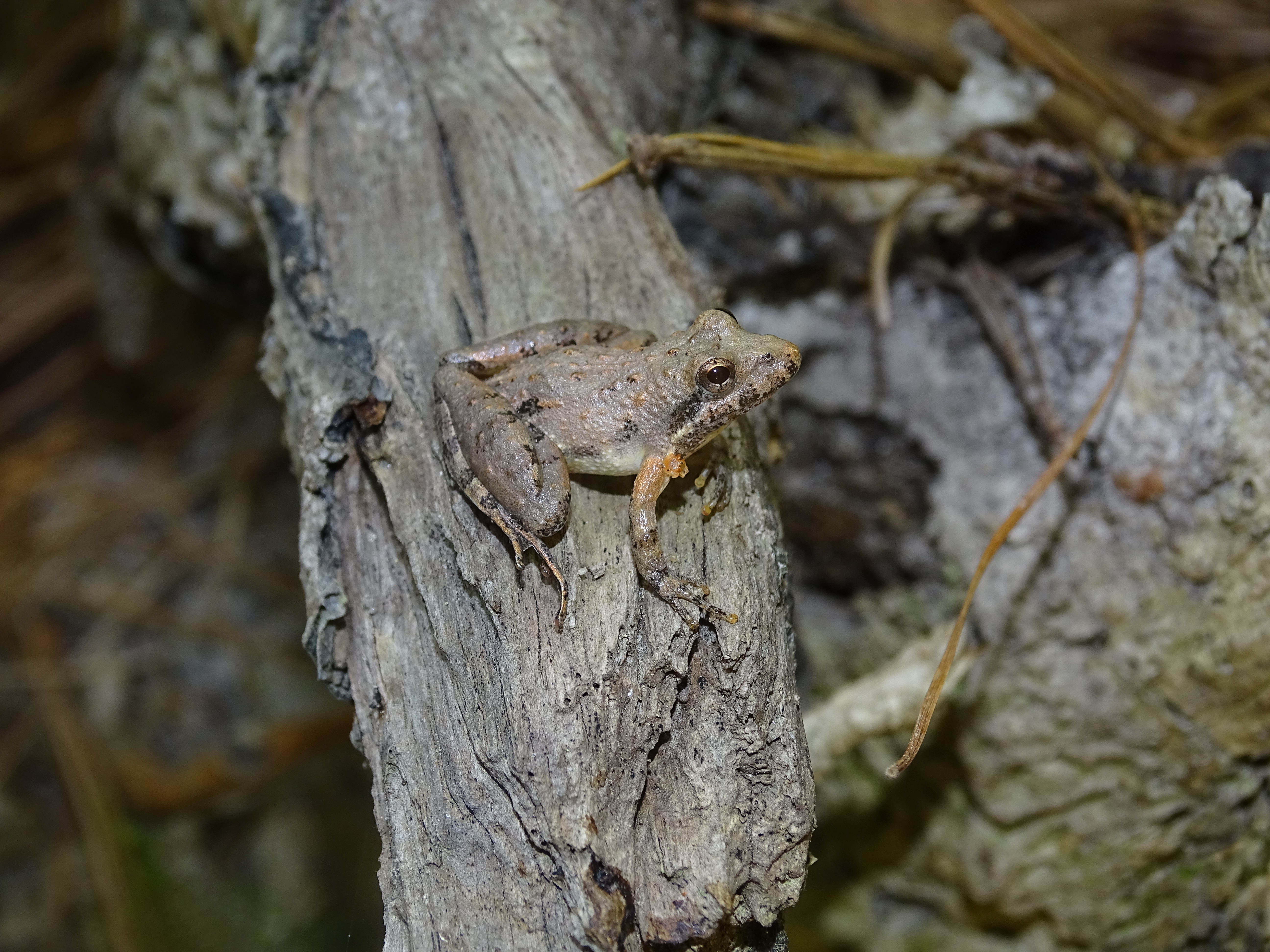
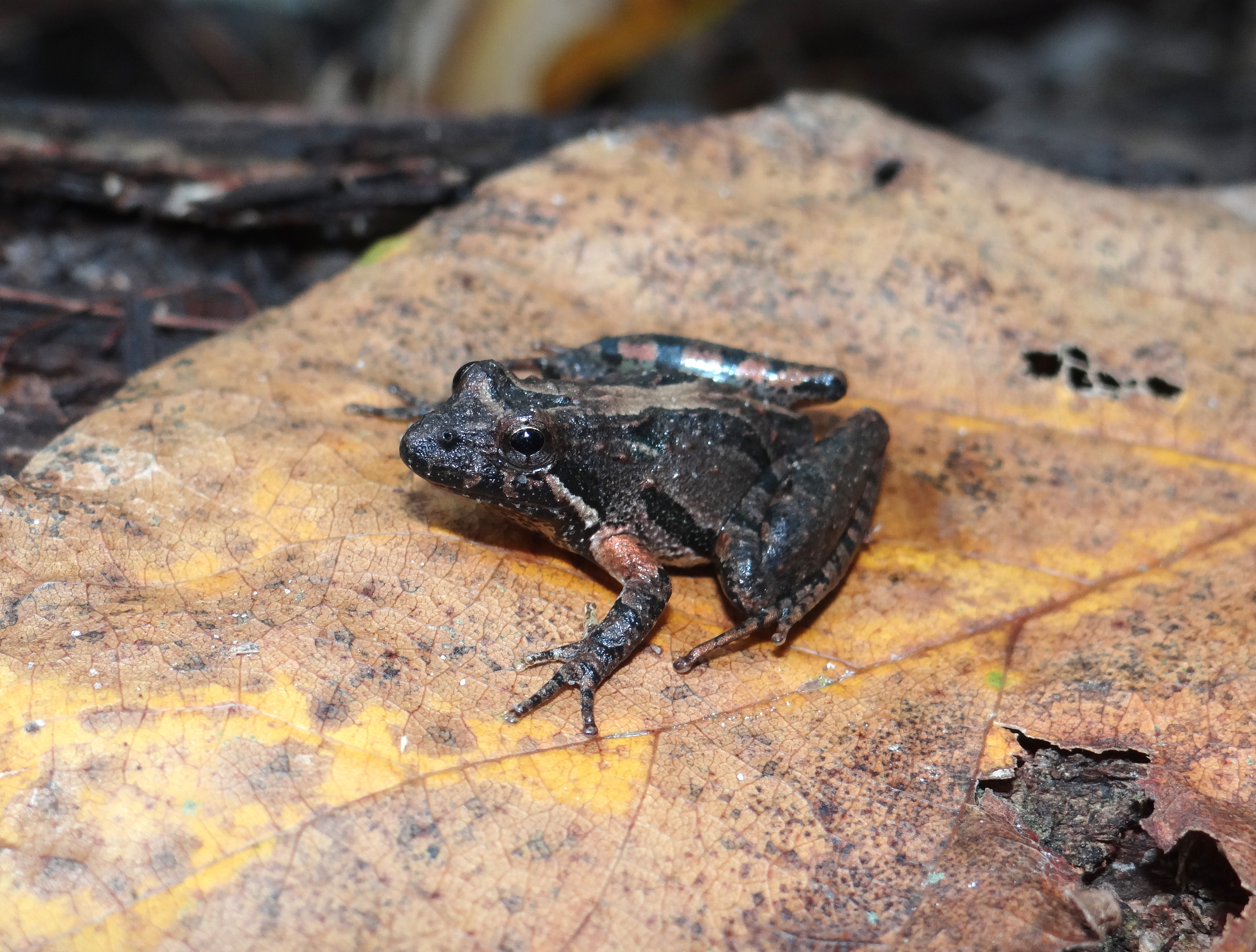
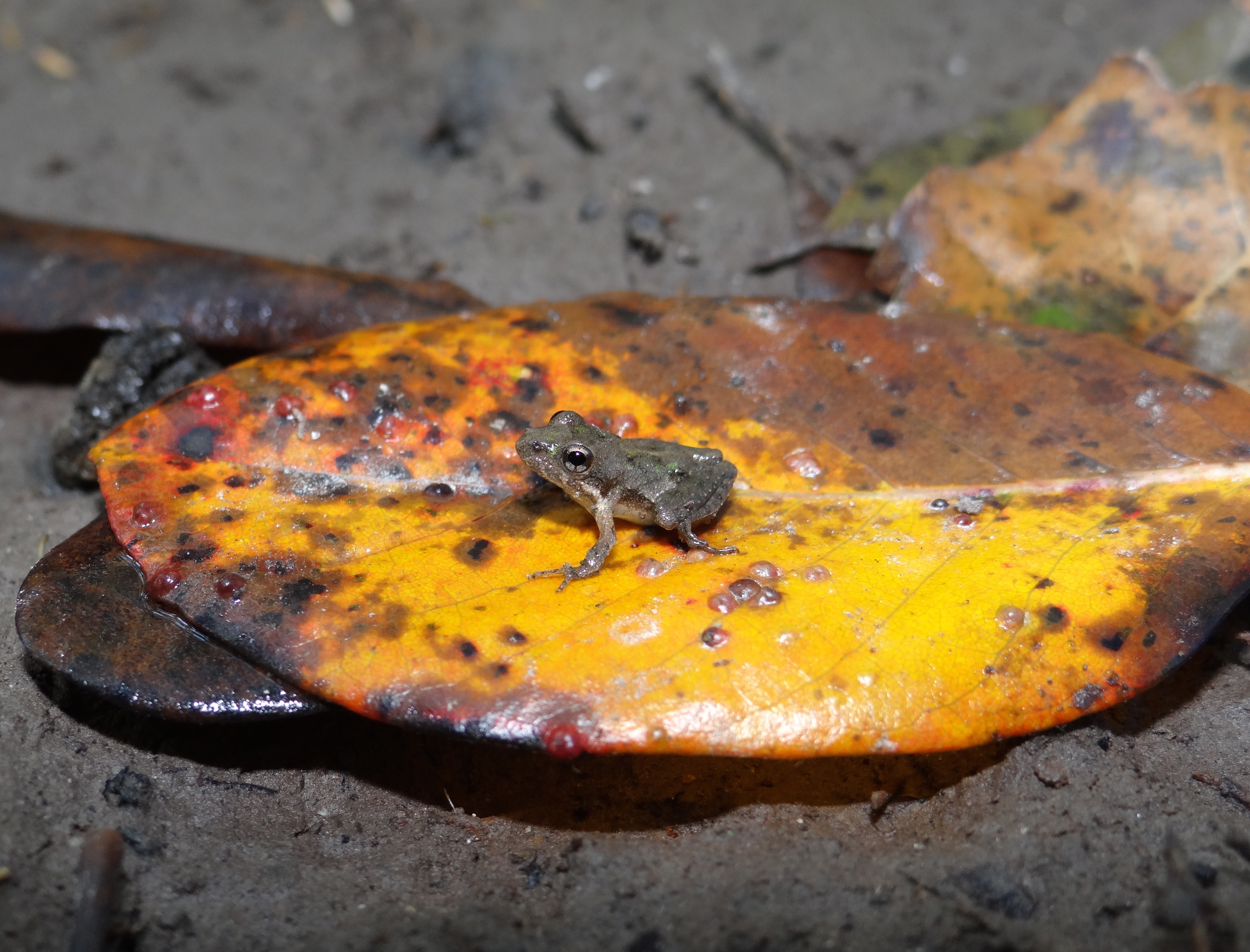
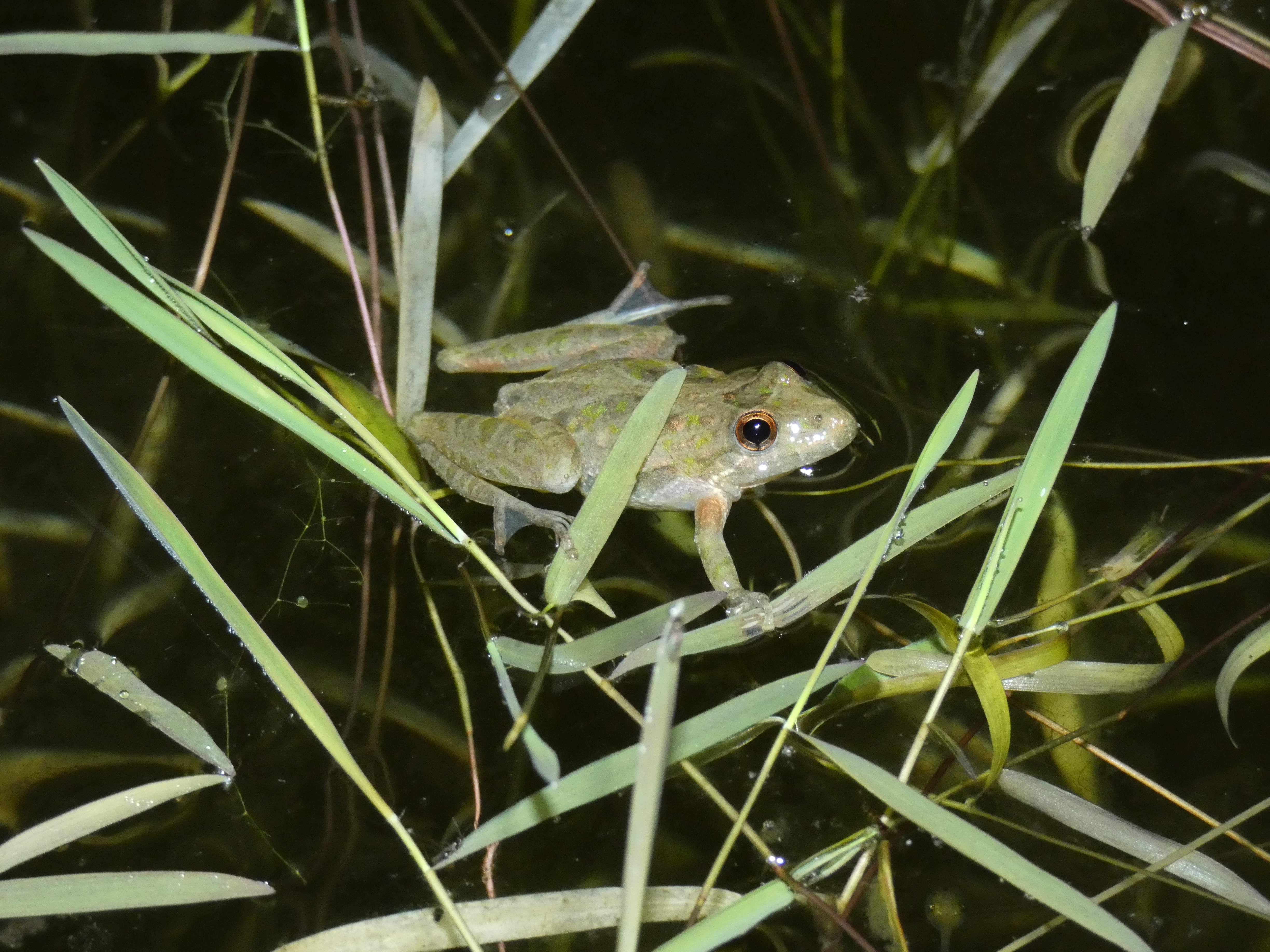
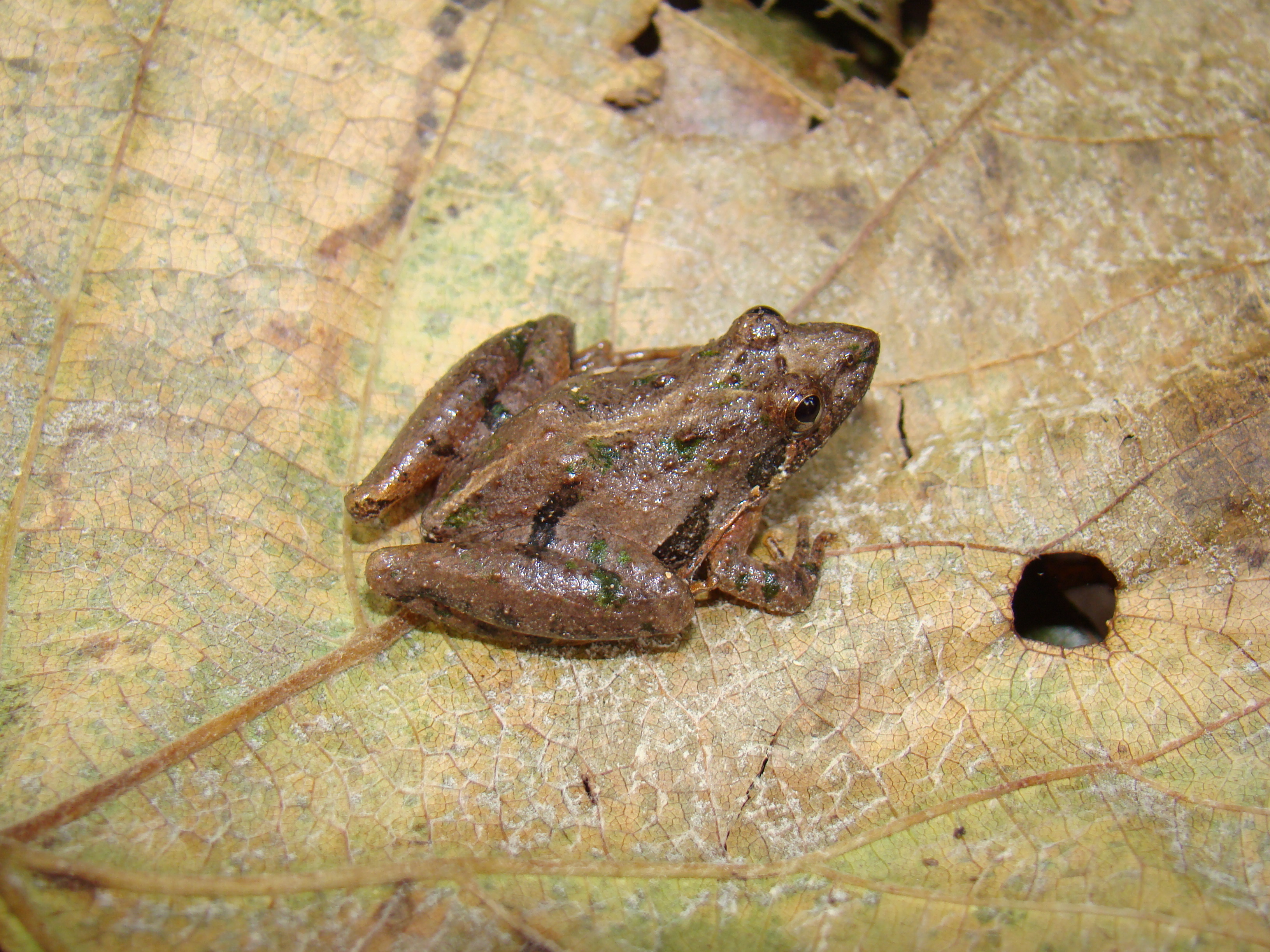
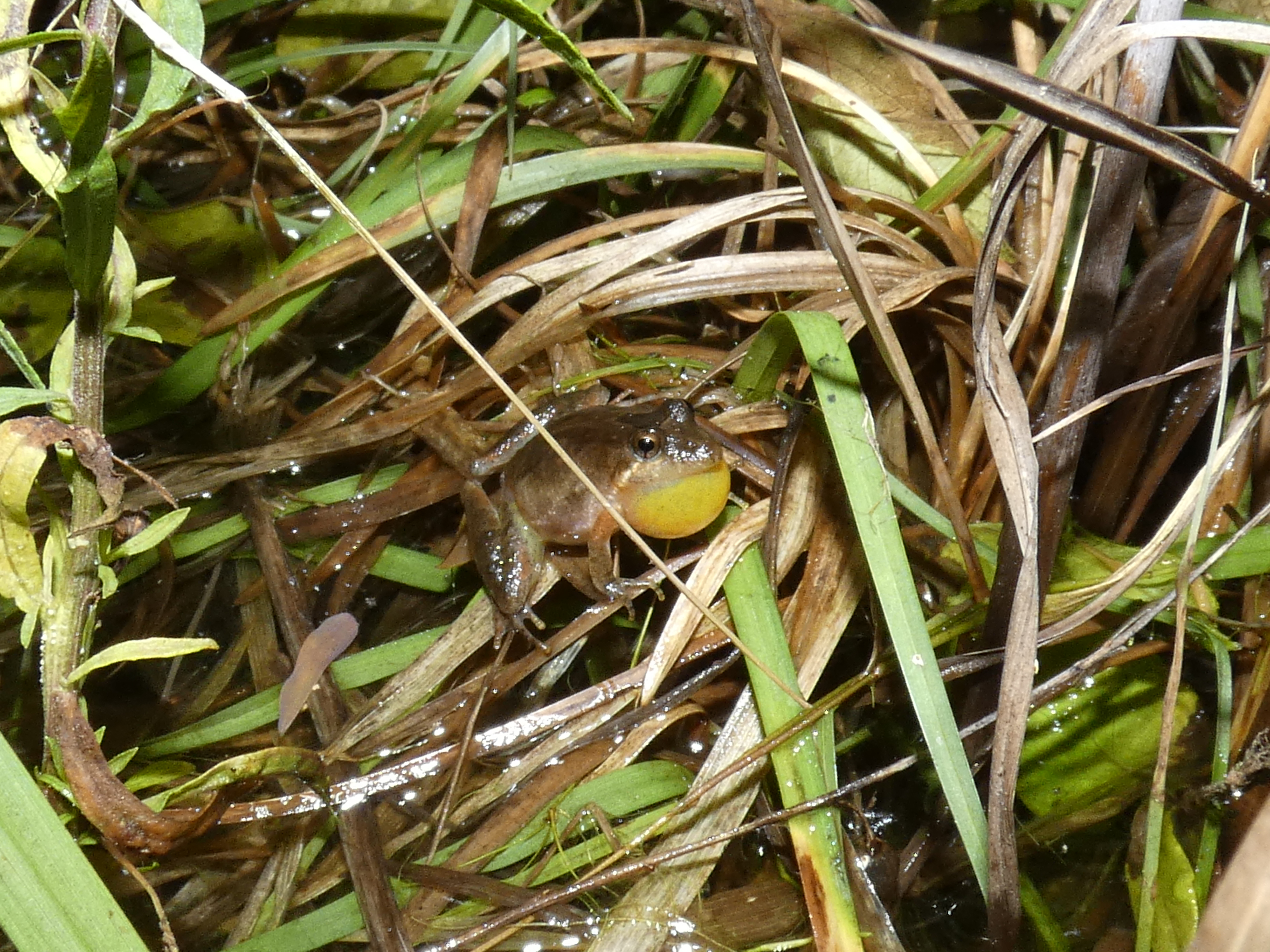
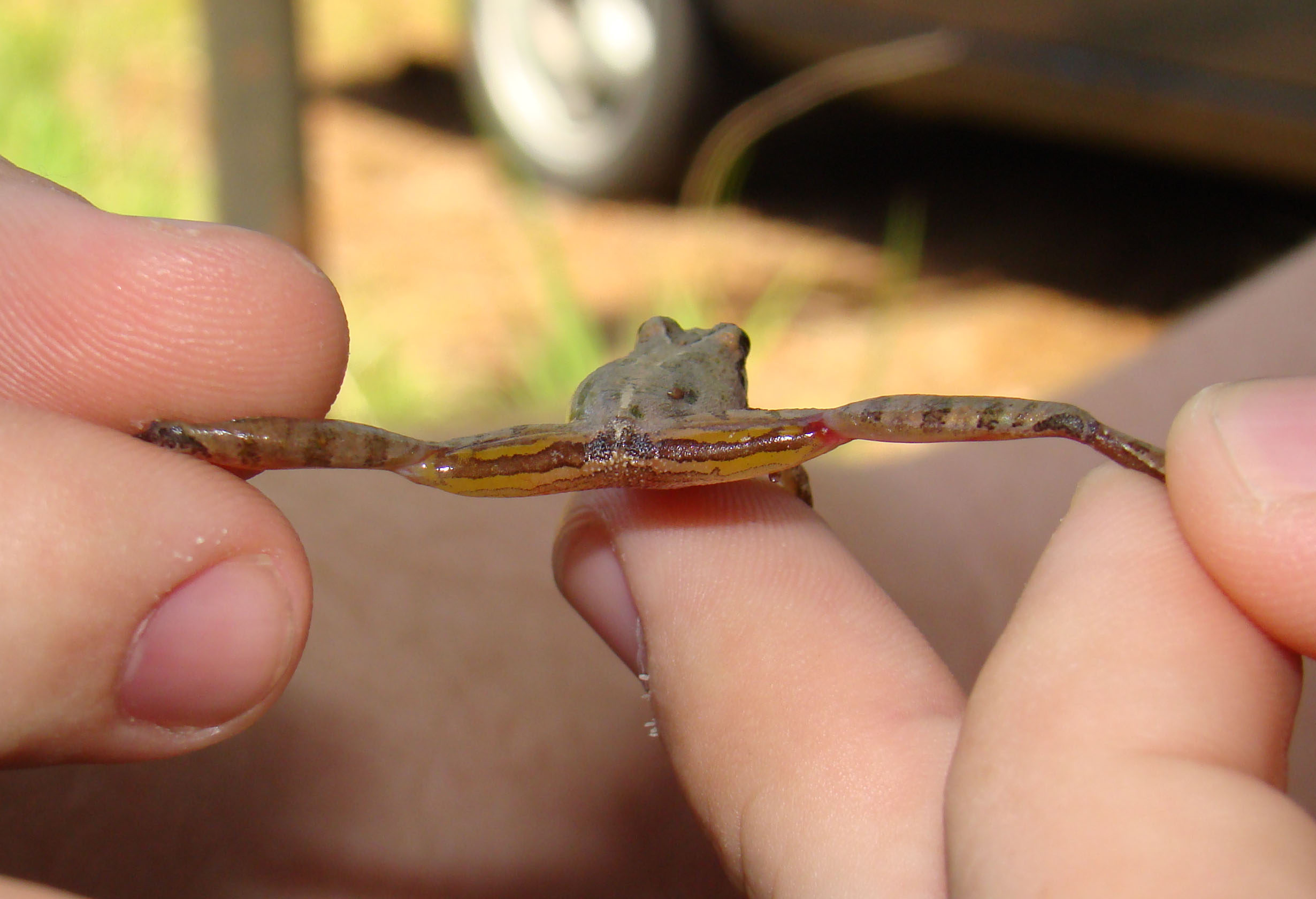
Adult Description: A small frog (maximum 1.3”) with extremely variable coloration. Their coloration may be primarily tan, brown, or gray and may possess a reddish, tan, or green stripe down middle of back. A white stripe is usually present at an angle from eye to jaw. They typically possess dark bars along mouth, crossbands on limbs, and a dark patch behind eardrum. A consistent character of cricket frogs is a posterior-facing triangle on their dorsum between their eyes, but this can be pale in some individuals. They possess warts on dorsum and hindlimbs. They have a more pointed snout, a cleaner thigh stripe, and less webbing on hind feet than Blanchard’s/Eastern Cricket Frogs. Belly is white.
Similar Species:
Species Range: Coastal Plain from southeast Virginia south through all of Florida and west through Gulf Coast states to Mississippi River in Louisiana.
Louisiana Range: Florida Parishes, with records also from Ascension Parish.
Adult Habitat: Open canopy pine flatwoods, bayheads, and mixed pine-hardwood forests.
Natural History: Southern Cricket Frogs are active during warmer days in cooler months and may be active day and night in warmer months. They are indiscriminate feeders, taking any small invertebrates available that they can ingest. Southern Cricket Frogs are preyed upon by some large invertebrates, particularly spiders, and by a whole host of vertebrate predators, including fish, other frogs, snakes, birds, and mammals. They are well known for their long jumps relative to their size combined with quick changes of direction which may disorient potential predators. They breed during warm weather from March to September, but especially in spring, in nearly any body of water from ephemeral to permanent. Females may lay over 300 eggs in small loose clusters of 7–10 eggs held together by gelatinous envelopes. Eggs hatch within 4 days and tadpoles metamorphose in 1–3 months. Maturity is rapid but not as quick as Blanchard’s/Eastern Cricket Frogs, with some individuals not breeding until their second year. Some individuals are known to live >3 years in wild.
Call: Steady paced, rapid, high-pitched repetitious clicks likened to the sound of a metal clicker. Vocalizations are often heard during the day as well as night, and even outside of breeding window.
Best Time and Place to Observe: This abundant frog can be easily found in warmer times of year near the edges of ephemeral or permanent water in the piney woods. Alternatively, one can often find males calling near their breeding sites at night during warmer months.
Global Conservation Status: Southern Cricket Frogs have a relatively wide distribution in the southeastern United States, a presumed large population, and tolerate a degree of habitat modification, and thus, are listed as Least Concern by the IUCN Red List. Their NatureServe Global Conservation Status Rank is G5 (Secure).
Federal Conservation Status: None.
Louisiana Conservation Status: Southern Cricket Frogs do not have any special status in Louisiana.
Author's Remarks: I have seen and/or heard this species at several pine-dominated sites in St. Tammany Parish, some private land in East Feliciana Parish, at the Mary Ann Brown Preserve in West Feliciana Parish, and in Washington Parish.
