

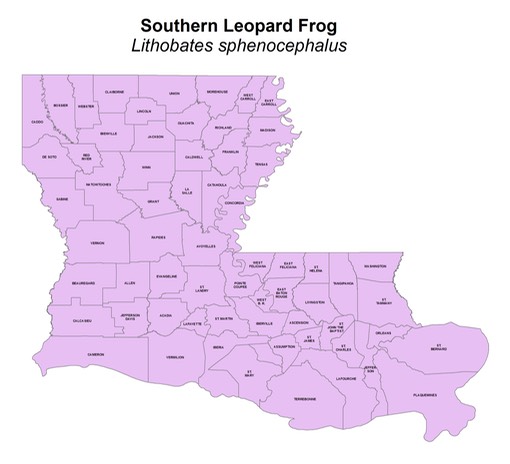
*The colored areas of the map above represent parishes with currently known records for the given species (Source: Jeff Boundy, LA Dept. of Wildlife and Fisheries). By no means does it represent the full range of the species in the state, nor does it necessarily mean that a species can be found throughout the parish with the record. This is provided as a guide to where you might be able to find these species in the state and to aid in identification. A descriptive explanation of the range of each species can be found in the text below.
Other Common Names:
Subspecies: Only the Coastal Plains Leopard Frog, Lithobates sphenocephalus utricularius, occurs within Louisiana.
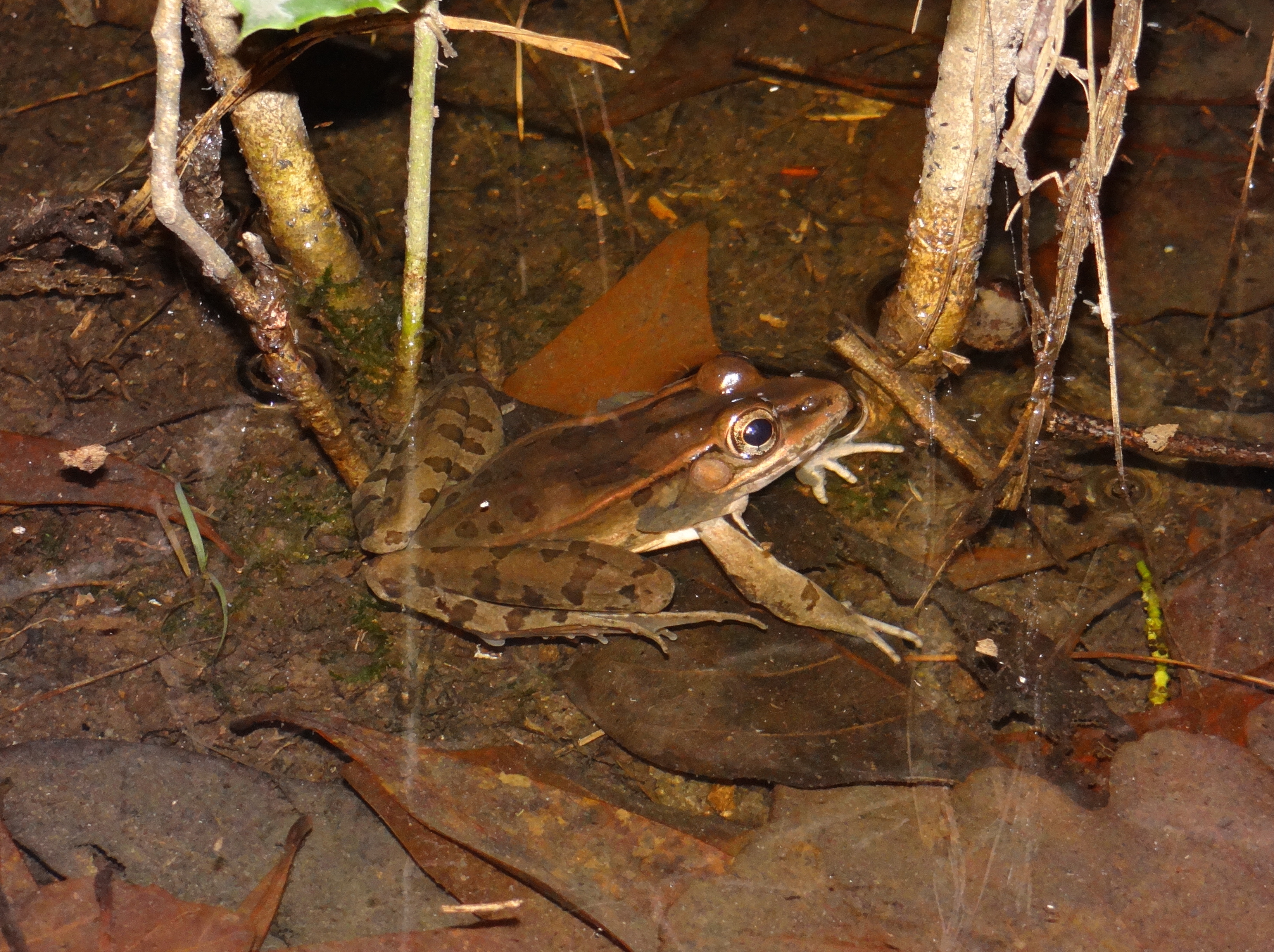
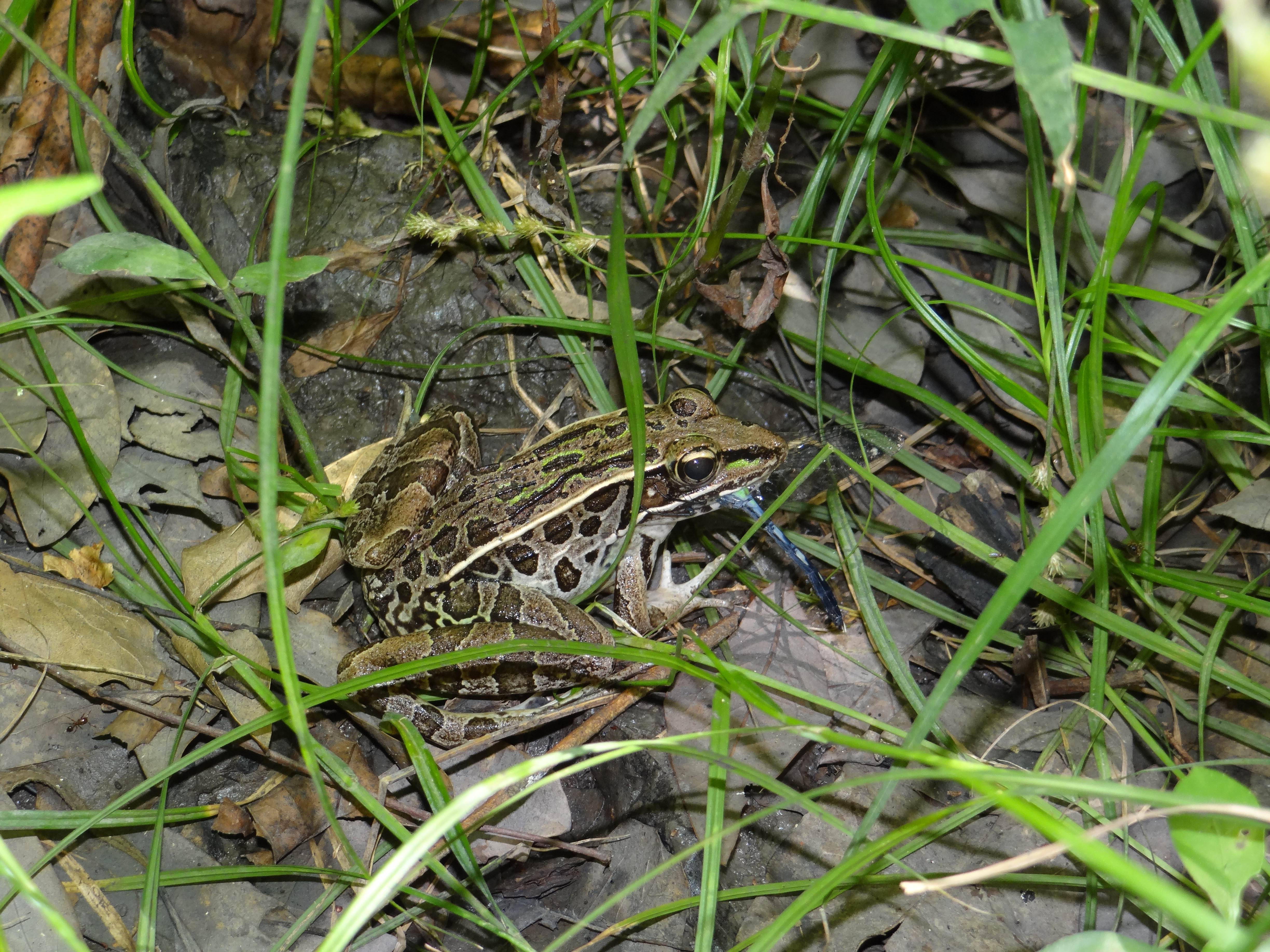
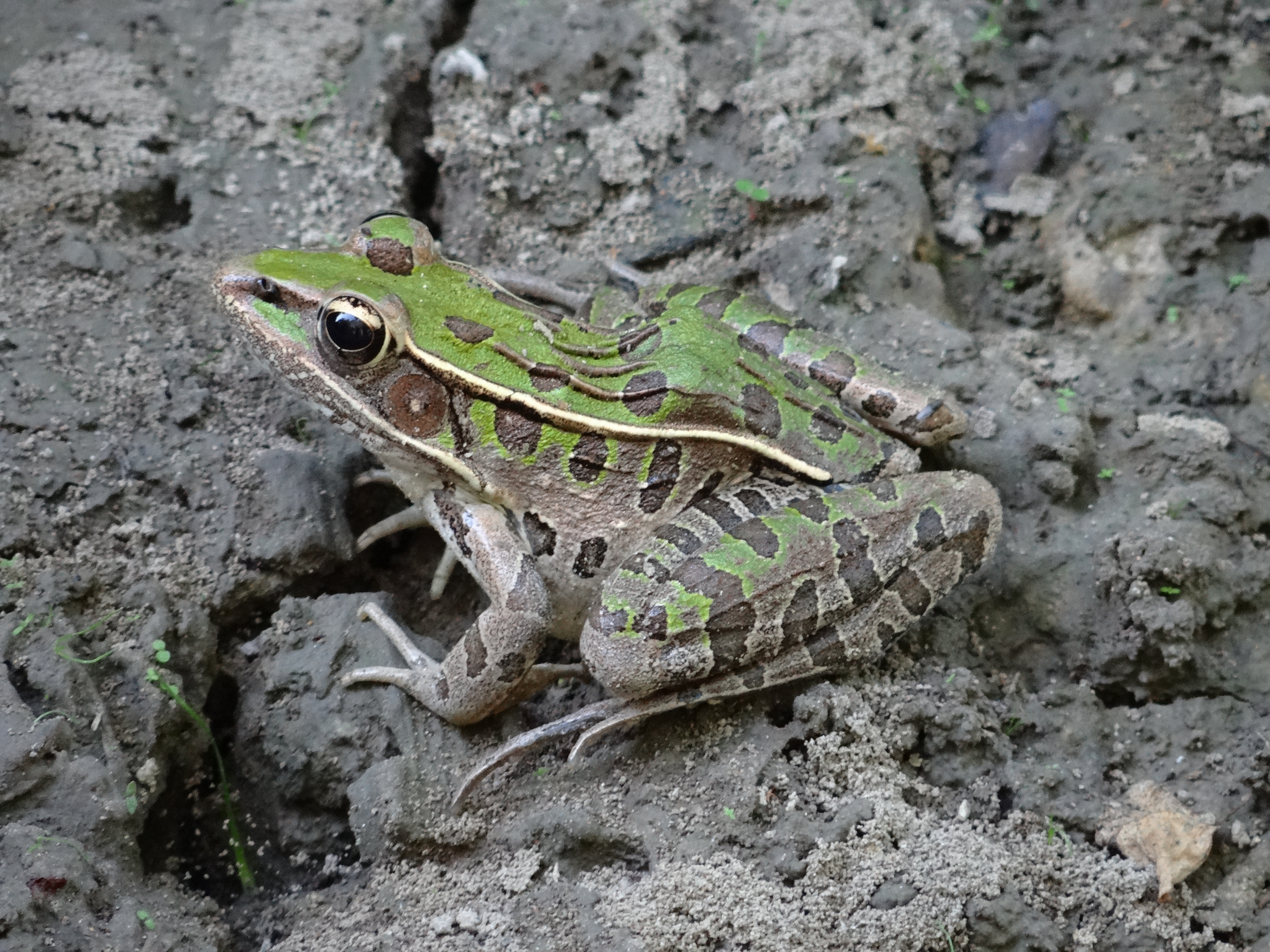
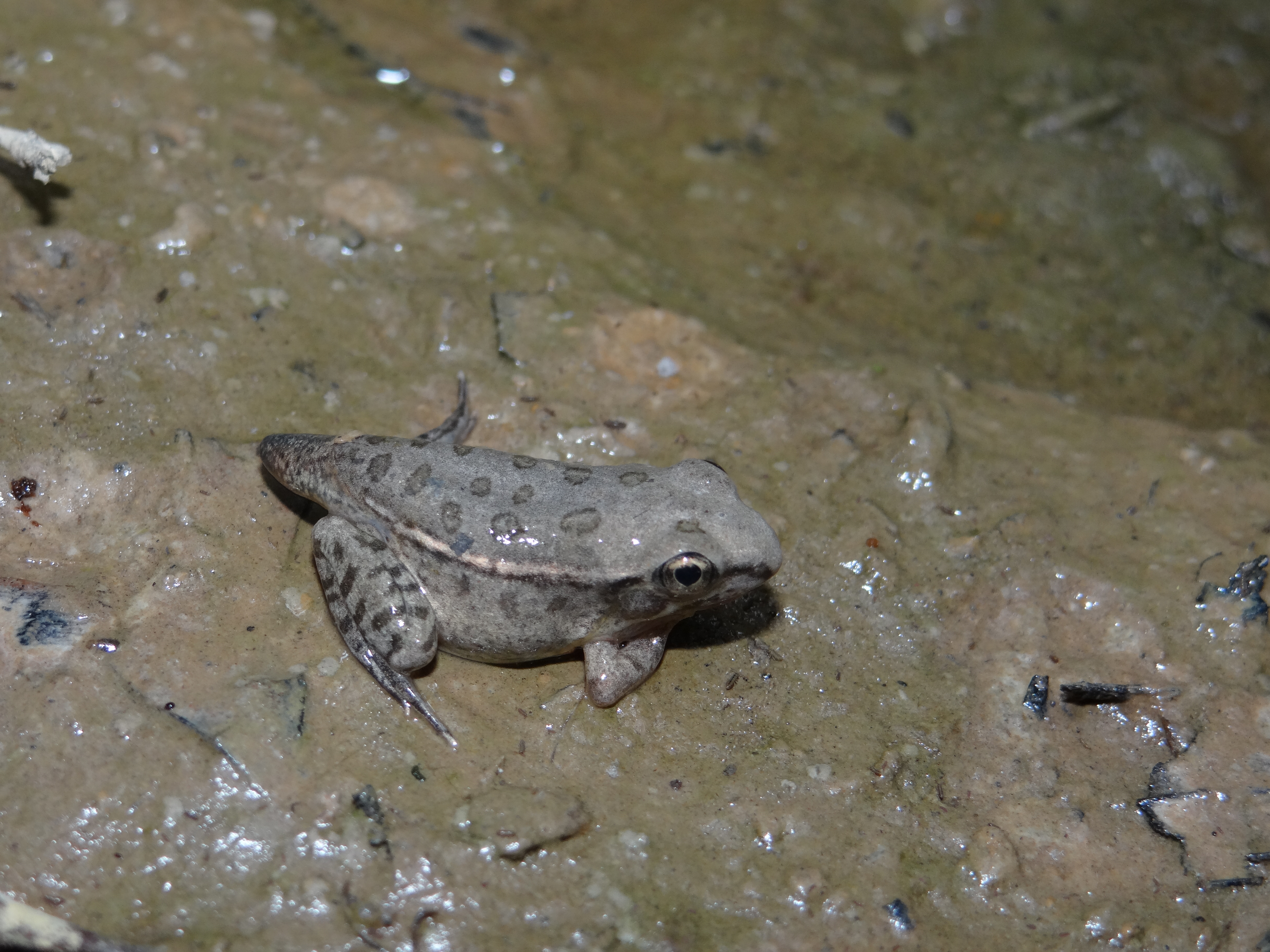
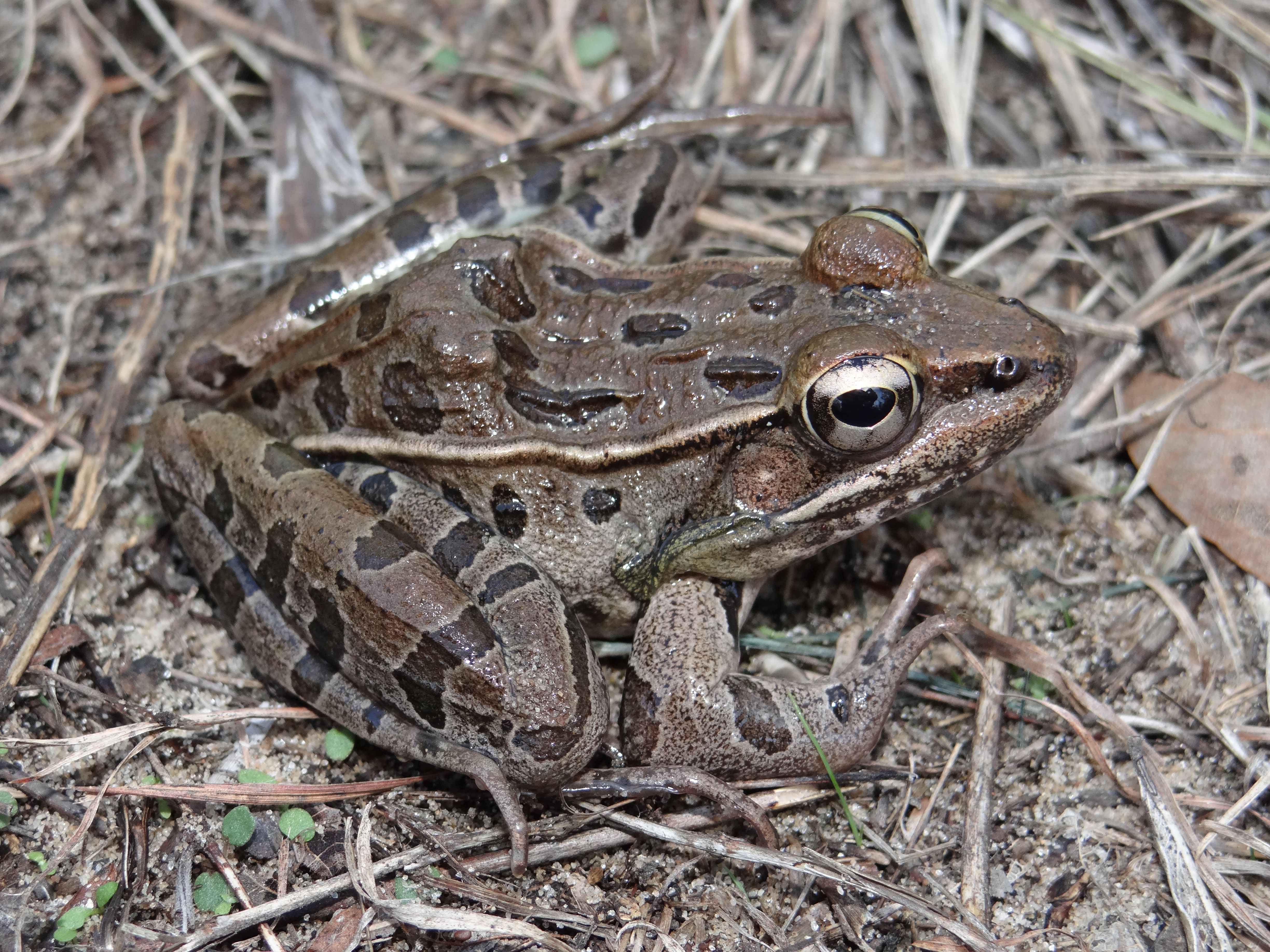
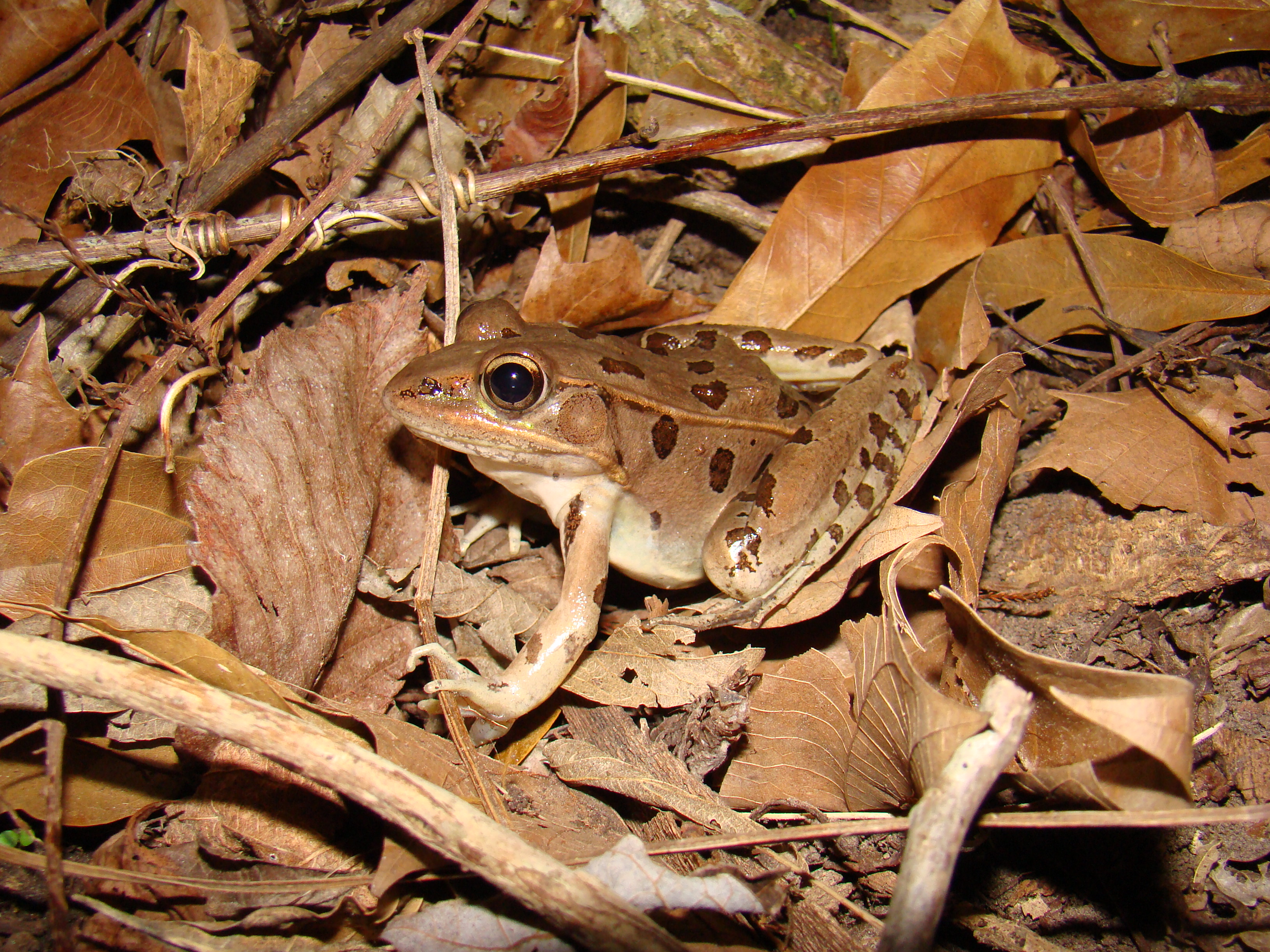
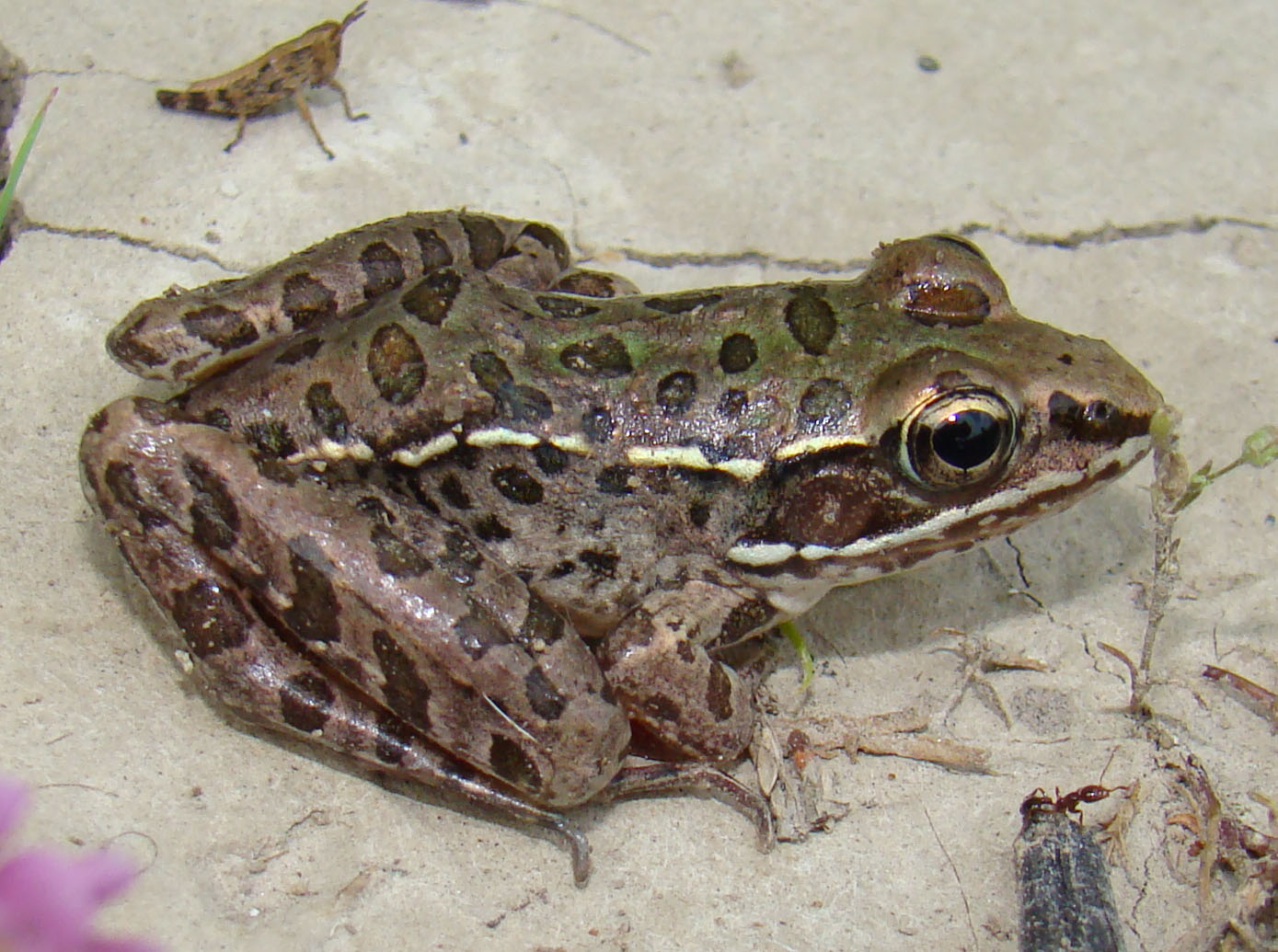
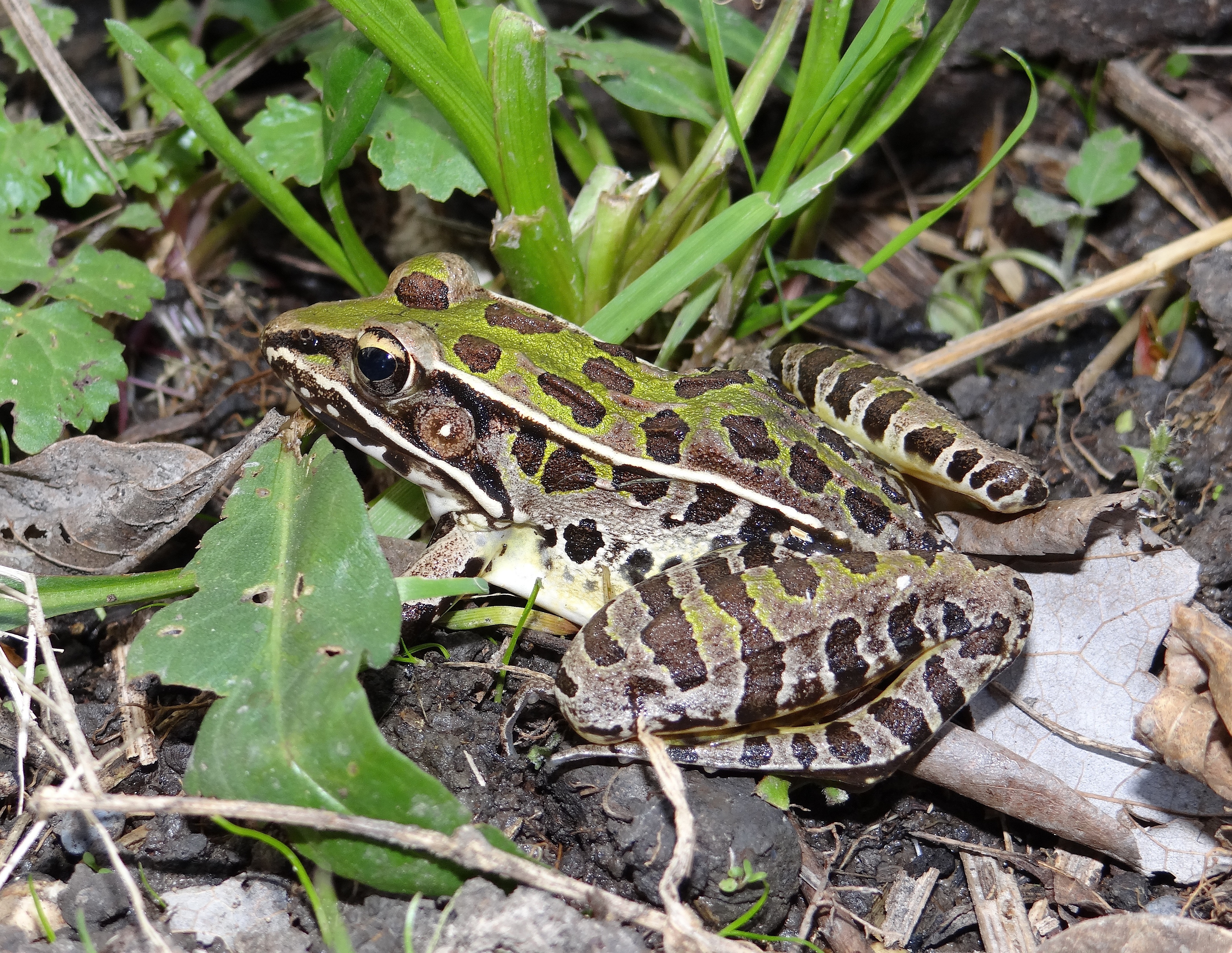
Adult Description: A medium-sized frog (maximum 5”) of variable coloration of shades of brown, gray, or green. Smooth skin with prominent raised area of pale to golden skin on each side of back extending from behind eye to groin. Occasionally other smaller and shorter raised areas of skin in middle of back with coloration not distinct from body. Dark round or oval spots, not squarish like Pickerel Frog, of varying sizes scattered randomly on back and sides. Round spot may be present on one or both sides of skin between eyes but not usually on top of snout. Pale stripe on upper lip extending at least to below eardrum and a dark patch behind eye and eardrum. Center of eardrum usually with white spot unlike Pickerel Frog. Hindlimbs with distinct dark crossbars. Belly is white with no yellowish wash like Pickerel Frog.
Similar Species:
Species Range: Southern New York, south to Florida Keys, west to eastern Texas, north to southeastern Kansas, east through most of Missouri, southern Illinois, and southern Indiana. Absent from higher elevations in Appalachians.
Louisiana Range: Statewide except salt marshes.
Adult Habitat: Nearly any habitat from brackish marshes to bottomland hardwood forests to upland pine-hardwood forests, particularly those with a variety of wetlands and grassy areas.
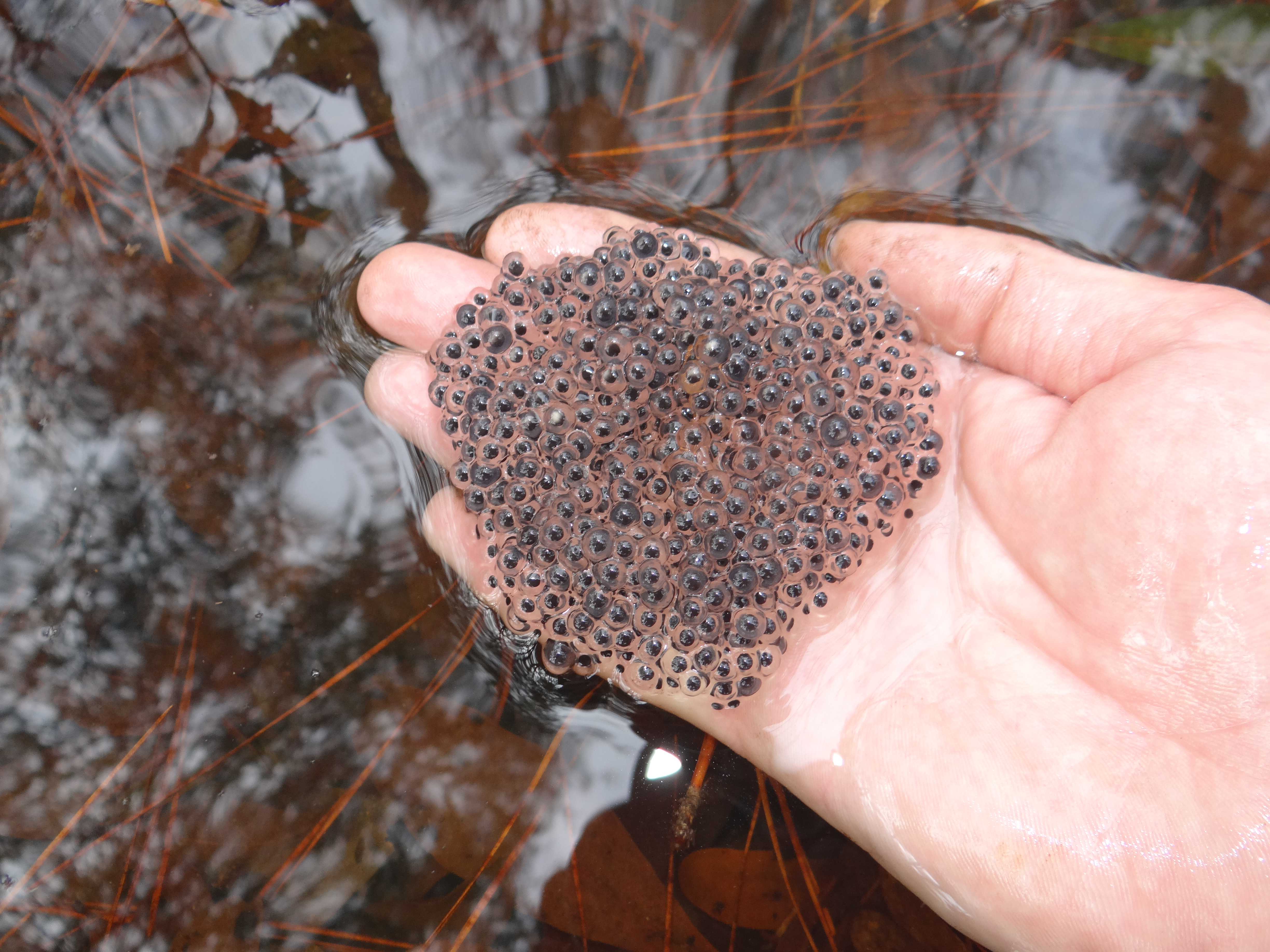
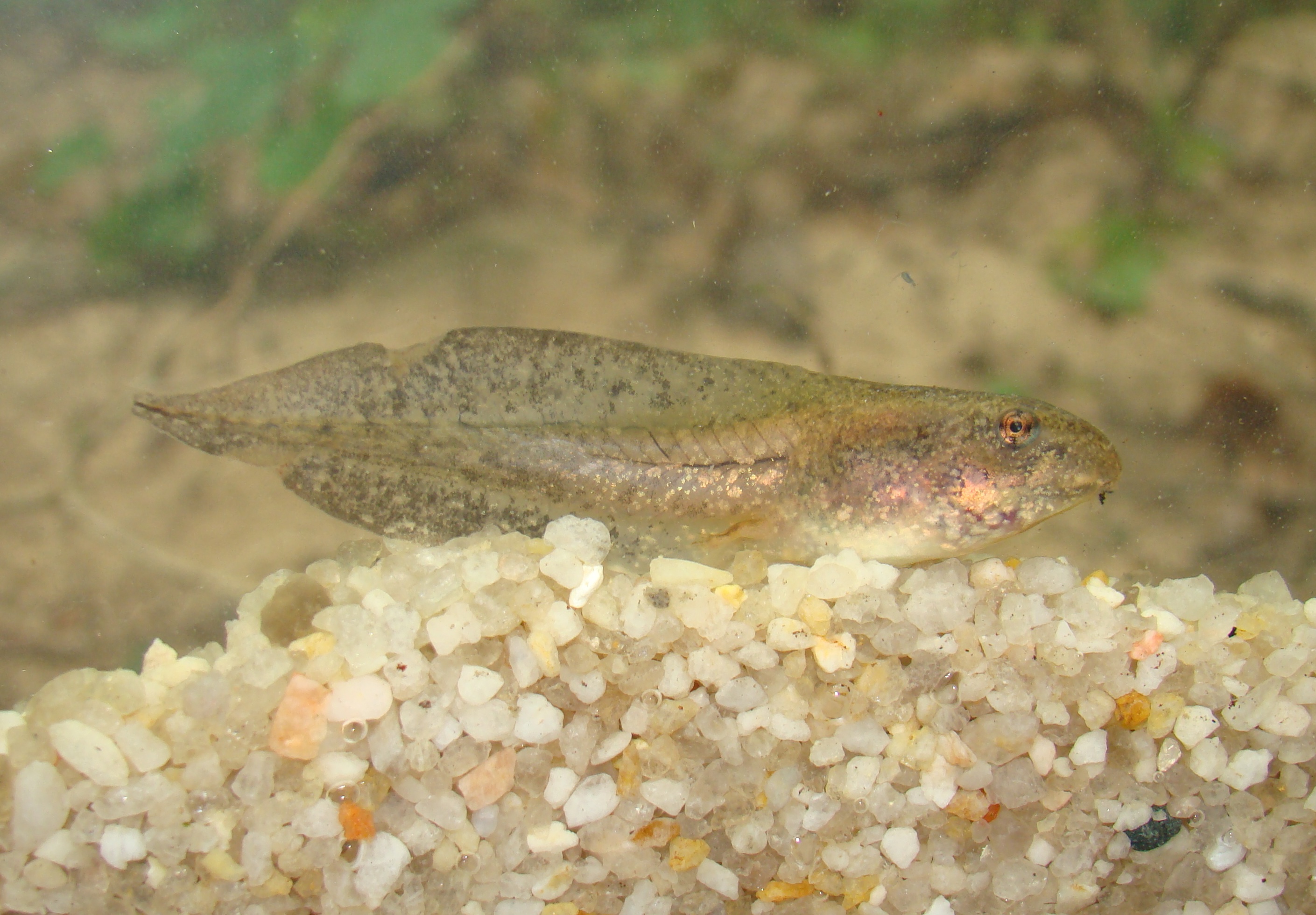
Natural History: Southern Leopard Frogs are primarily nocturnal, especially in warmer months, and may hide in grassy vegetation near water during the day. They will wander relatively far from water to feed if there is enough cover and moisture. Documented prey includes a variety of arthropods and invertebrates as well as fish, salamanders, and frogs. Snakes, turtles, birds, and mammals are known predators. They can breed nearly any time of year, but the bulk of reproduction typically occurs in fall and winter. They use a variety of wetland habitats to breed but prefer ephemeral ponds and other fishless water bodies. Females lay 900–6,000 eggs in firm, globular clusters that may be attached to vegetation near the surface or rest on the shallow substrate. Eggs hatch in about 7–10 days and tadpoles metamorphose in about 2–3 months. Maturity may be less than 1 year. Wild longevity is unknown but may be up to 3 years.
Call: A series of up to 10 or more guttural chuckles often followed by 2–3 grunting or scraping sounds likened to the sound of rubbing an inflated balloon and repeated several times.
Best Time and Place to Observe: This frog is often encountered during warmer days in grassy areas near water, but leopard frogs often sense perceived danger before being seen and escape quickly by making several massive leaps. Though their breeding choruses can be impressively loud they are quick to silence when approached, making observing them calling difficult. It is typically easier to find and approach them without them jumping away at night in many of the same areas where it may be difficult during the day.
Global Conservation Status: Southern Leopard Frogs have a relatively wide distribution in the eastern United States and a presumed large population, and thus, are listed as Least Concern by the IUCN Red List. Their NatureServe Global Conservation Status Rank is G5 (Secure).
Federal Conservation Status: None.
Louisiana Conservation Status: Southern Leopard Frogs do not have any special status in Louisiana.
Author's Remarks: I have found this species in most areas I have herped in the state.
