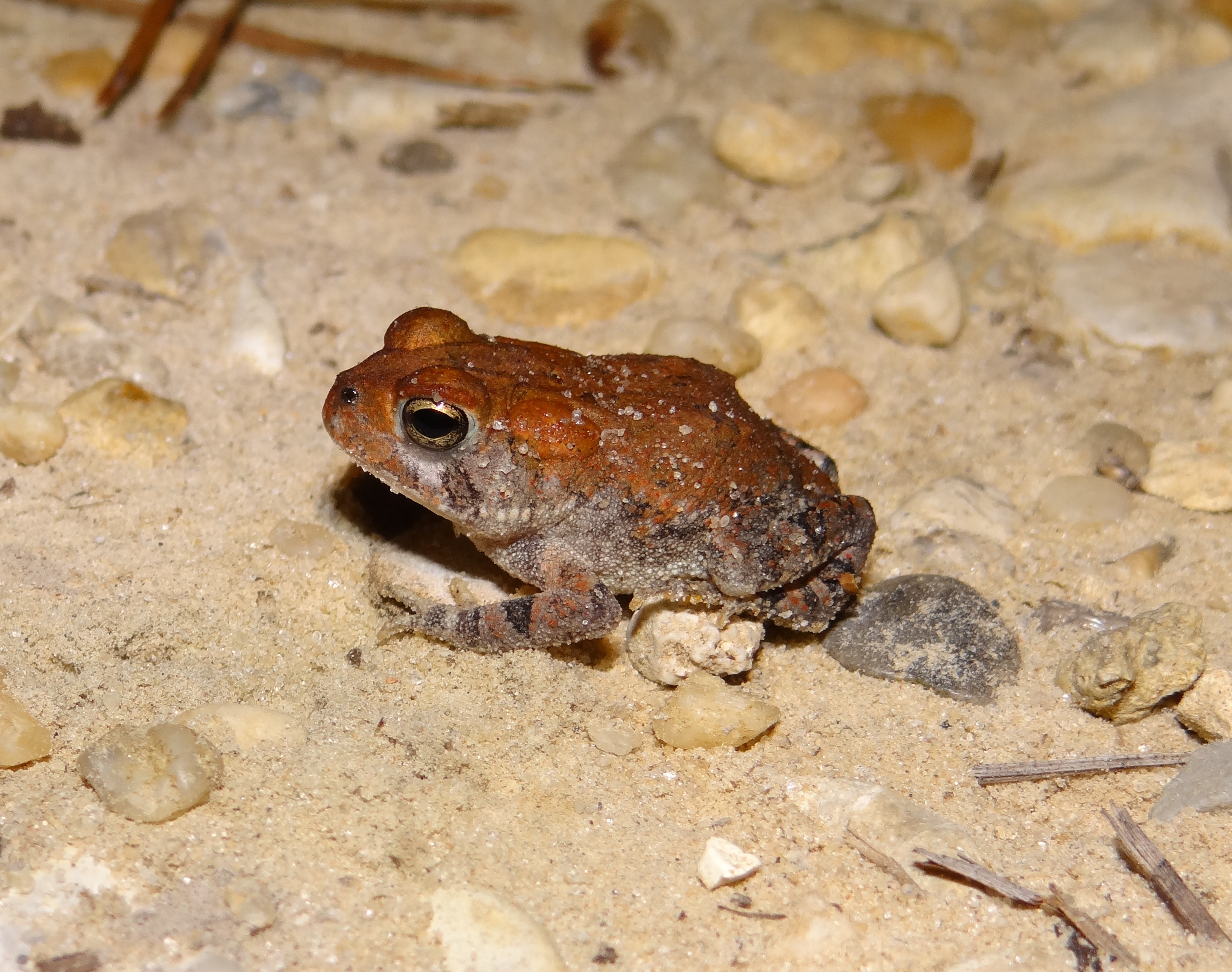
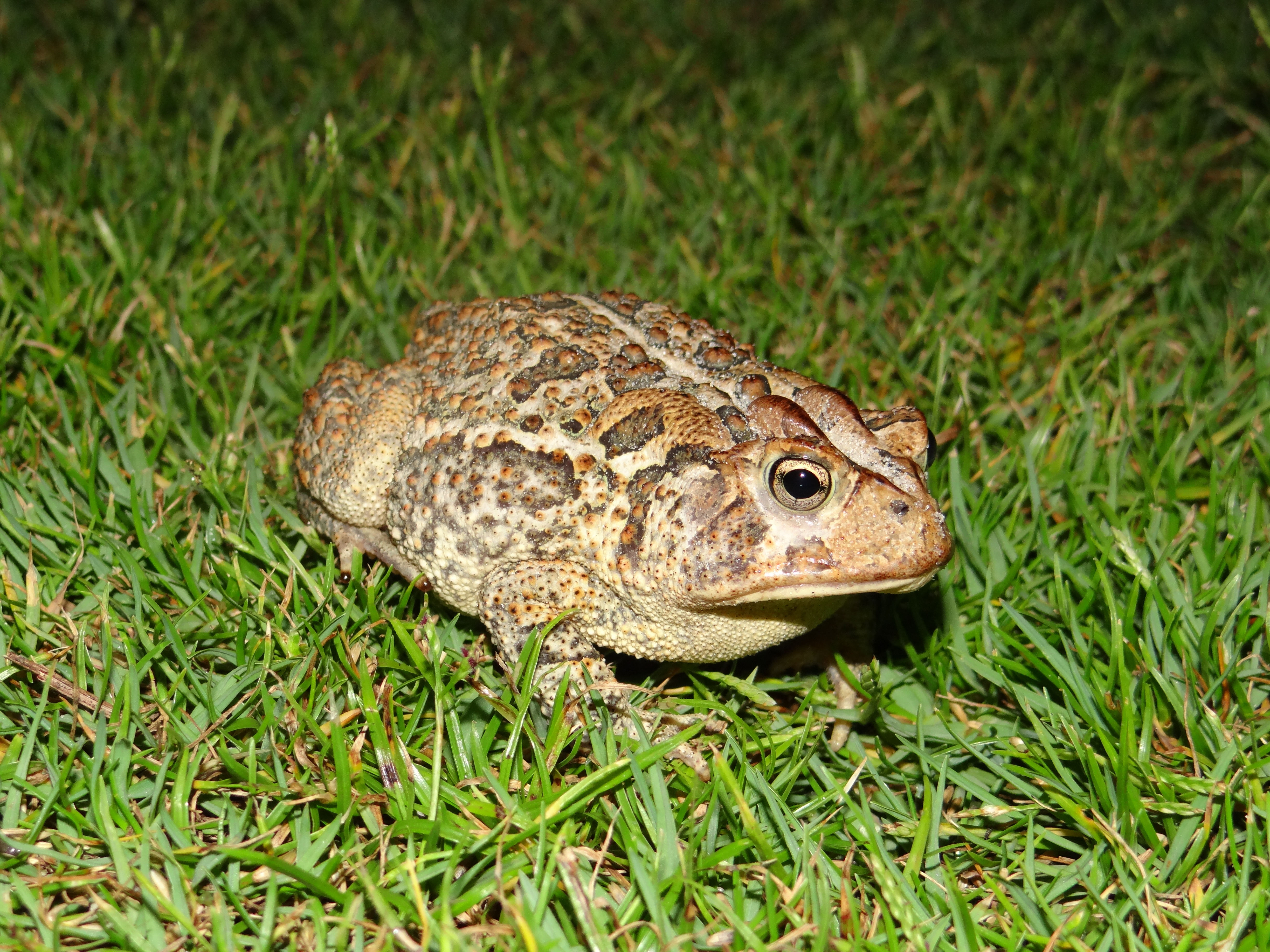

*The colored areas of the map above represent parishes with currently known records for the given species (Source: Jeff Boundy, LA Dept. of Wildlife and Fisheries). By no means does it represent the full range of the species in the state, nor does it necessarily mean that a species can be found throughout the parish with the record. This is provided as a guide to where you might be able to find these species in the state and to aid in identification. A descriptive explanation of the range of each species can be found in the text below.
Other Common Names:
Subspecies: No subspecies recognized.
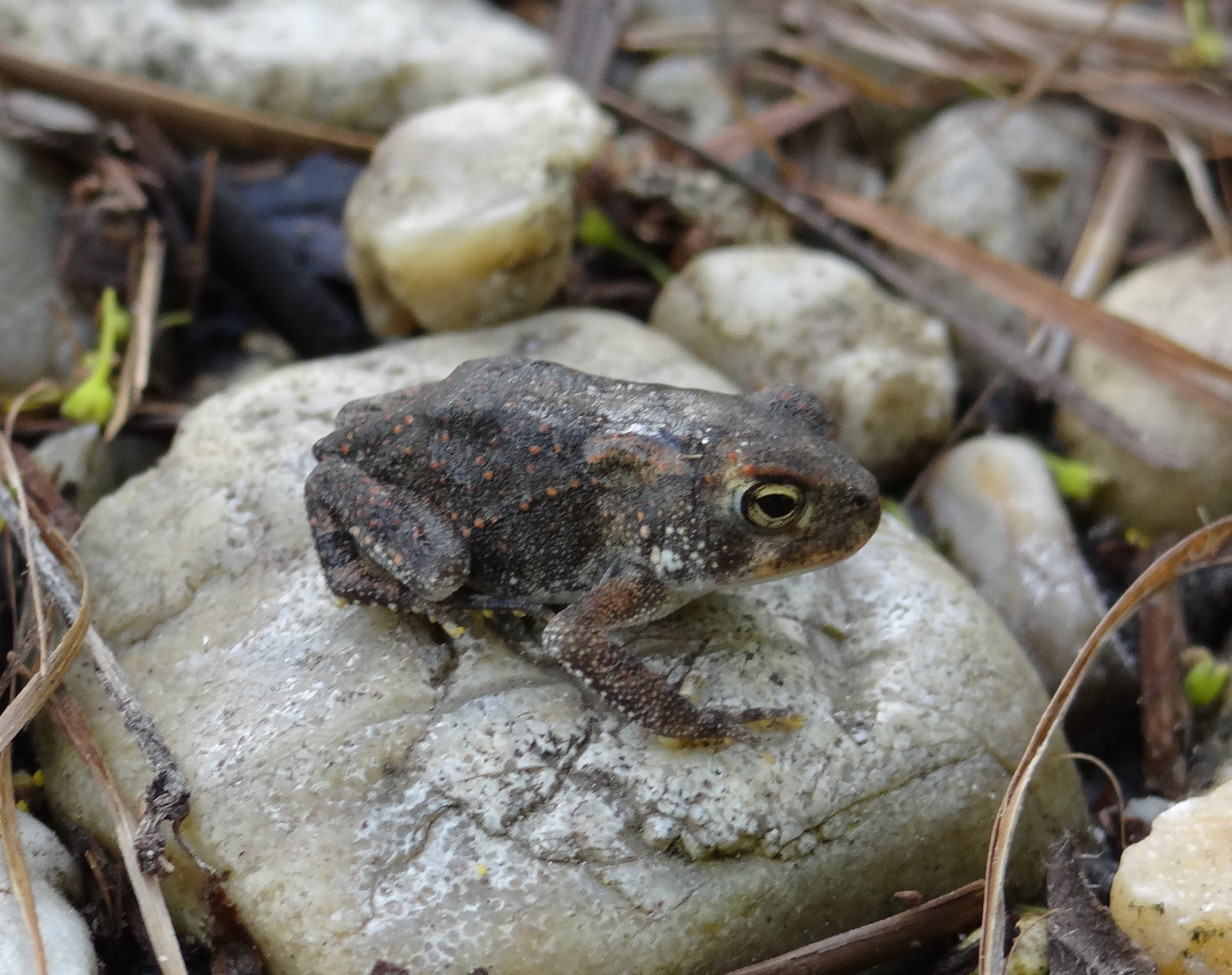
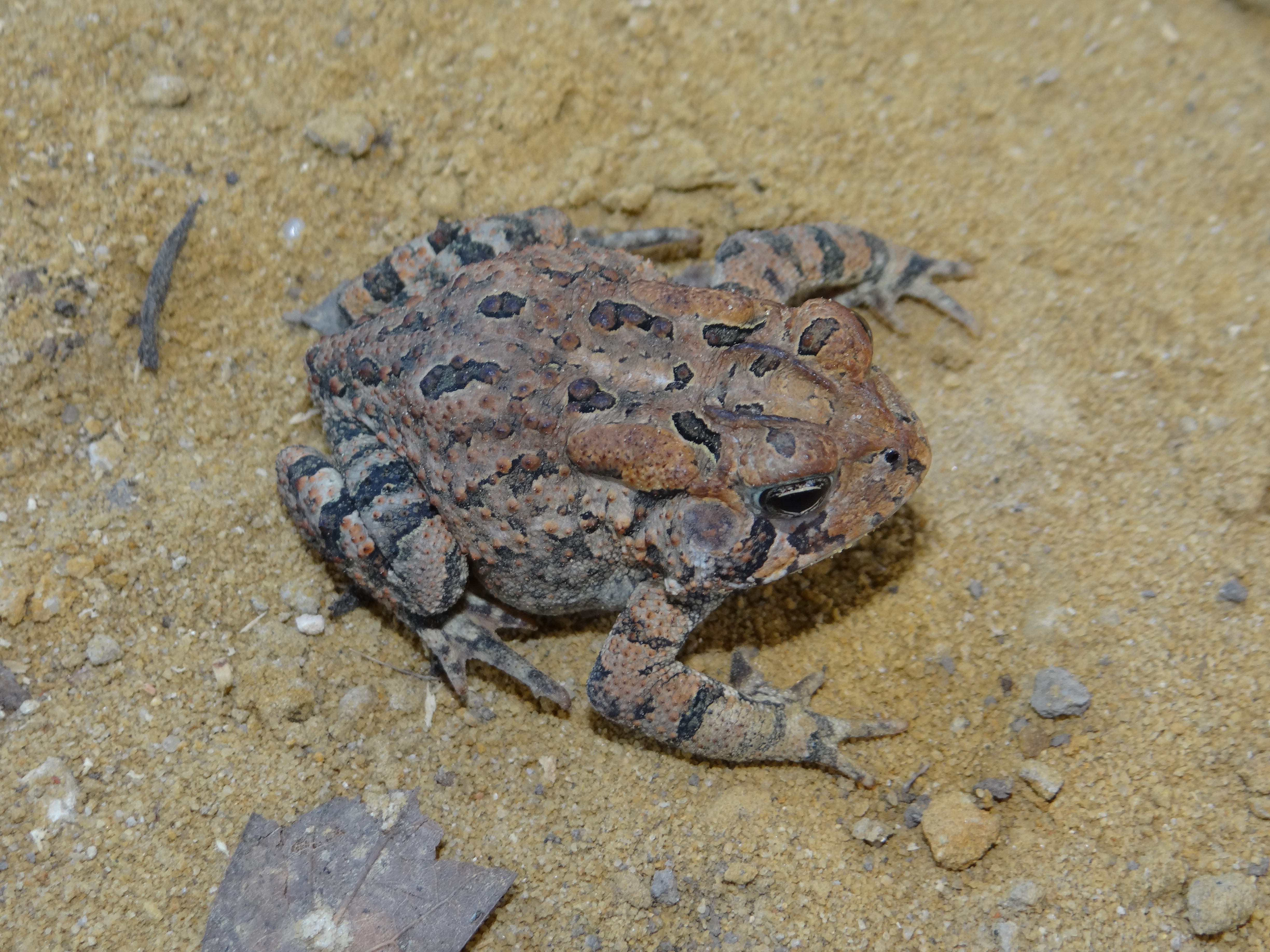
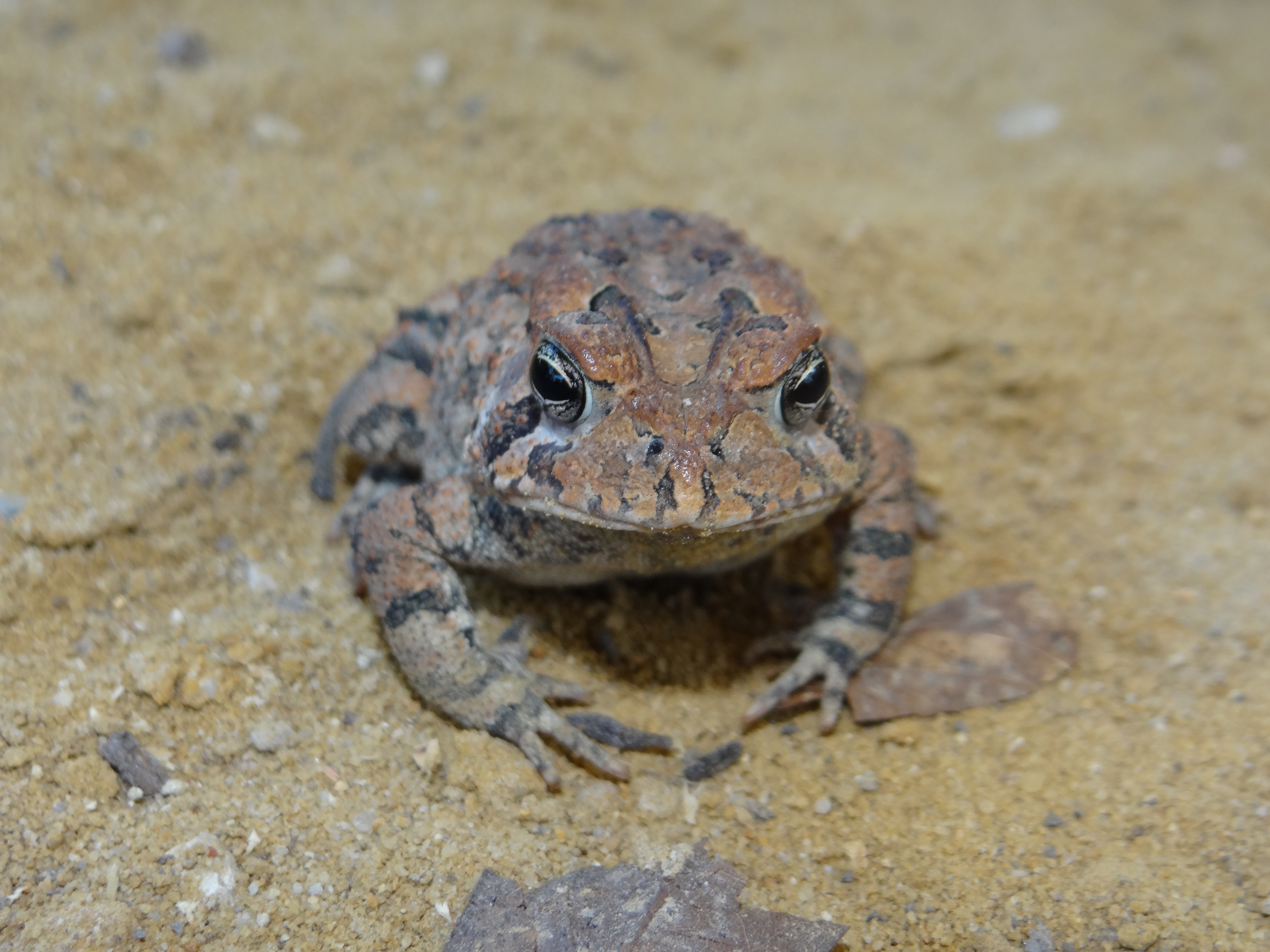
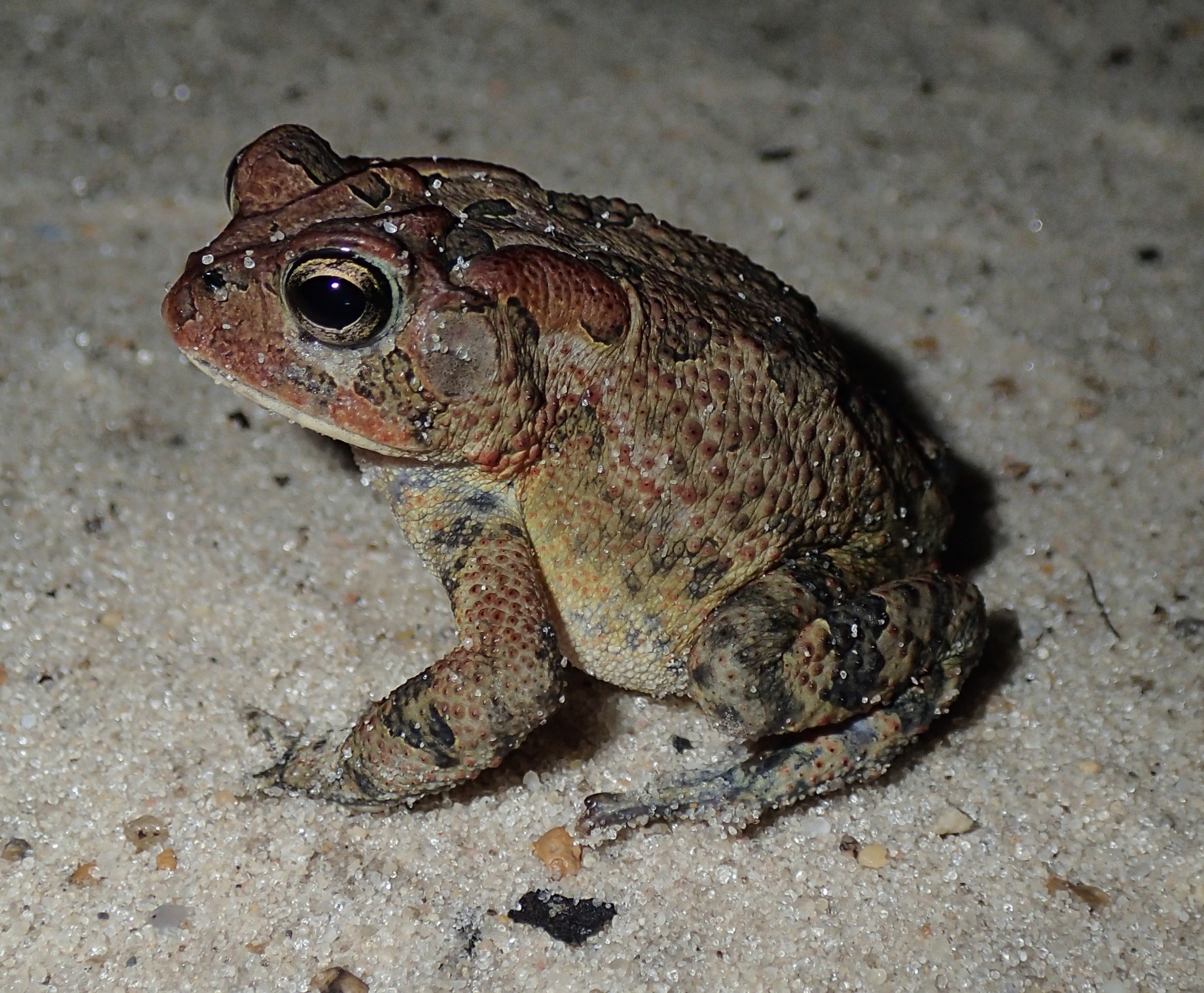
Adult Description: A medium-sized toad in Louisiana (maximum 3.1”) with variable coloration, generally brown, but ranging from red to dark brown. A pale line often occurs down middle of back but may get obscured towards groin. May have multiple dark spots on back, each with one or more warts. Poison glands variably shaped, from oval to elongate to kidney shaped. Cranial crests are conspicuous with well-developed enlarged knobs at posterior ends in adults. Enlarged warts are present on tibia of each leg. Belly is gray and chest may be spotted.
Similar Species:
Species Range: Coastal Plain from southeast Virginia to eastern Louisiana, south through peninsular Florida to Florida Keys.
Louisiana Range: Florida Parishes from Pearl River westward to near Amite River in East Feliciana and East Baton Rouge parishes.
Adult Habitat: Open canopy pine flatwoods and mixed pine-hardwood forests.
Natural History: Southern Toads can be active during the day, but are most often active between dusk and dawn, particularly during warm weather. They are indiscriminate feeders, taking any moving prey they can fit into their mouths. Snakes are the most significant predators. They breed primarily from late March to mid-August, but even outside these times if nighttime temperatures are warm enough. They may use ephemeral water or shallows of permanent water to breed. Most sources report a clutch size of 2,500–4,000 eggs, but there are reports of clutch sizes up to 16,500 eggs. Fertilized eggs are deposited in long strings placed around vegetation or debris. Eggs hatch in 2–4 days and tadpoles metamorphose in about 1–2 months. Maturity may take 2–3 years. Wild longevity is at least 10 years.
Call: A trill described by some as melodic and others as shrill that lasts up to 9 seconds.
Best Time and Place to Observe: Observations of this toad in Louisiana are limited but listen for their calls after warm spring rains in sandy habitats in the eastern Florida Parishes.
Global Conservation Status: Southern Toads have a relatively wide distribution in the southeastern United States, a presumed large population, and tolerate a broad range of habitats, and thus, are listed as Least Concern by the IUCN Red List. Their NatureServe Global Conservation Status Rank is G5 (Secure).
Federal Conservation Status: None.
Louisiana Conservation Status: Southern Toads have a ranking of S3 (rare and local throughout the state – 21-100 known extant populations) in Louisiana.
*** If you live in the range of this species in Louisiana and believe you may have observed this species please let me know (take a picture or audio recording if possible), as there may be more unknown populations in the state.***
Author's Remarks: I found my first Louisiana Southern Toad in 2015. It was a toadlet in St. Tammany Parish, and finally an adult near Pearl River in 2019. I have not spent much time where they have been found in Louisiana. I have found them just across the Pearl River in Mississippi, however, as well as in the panhandle of Florida.
