
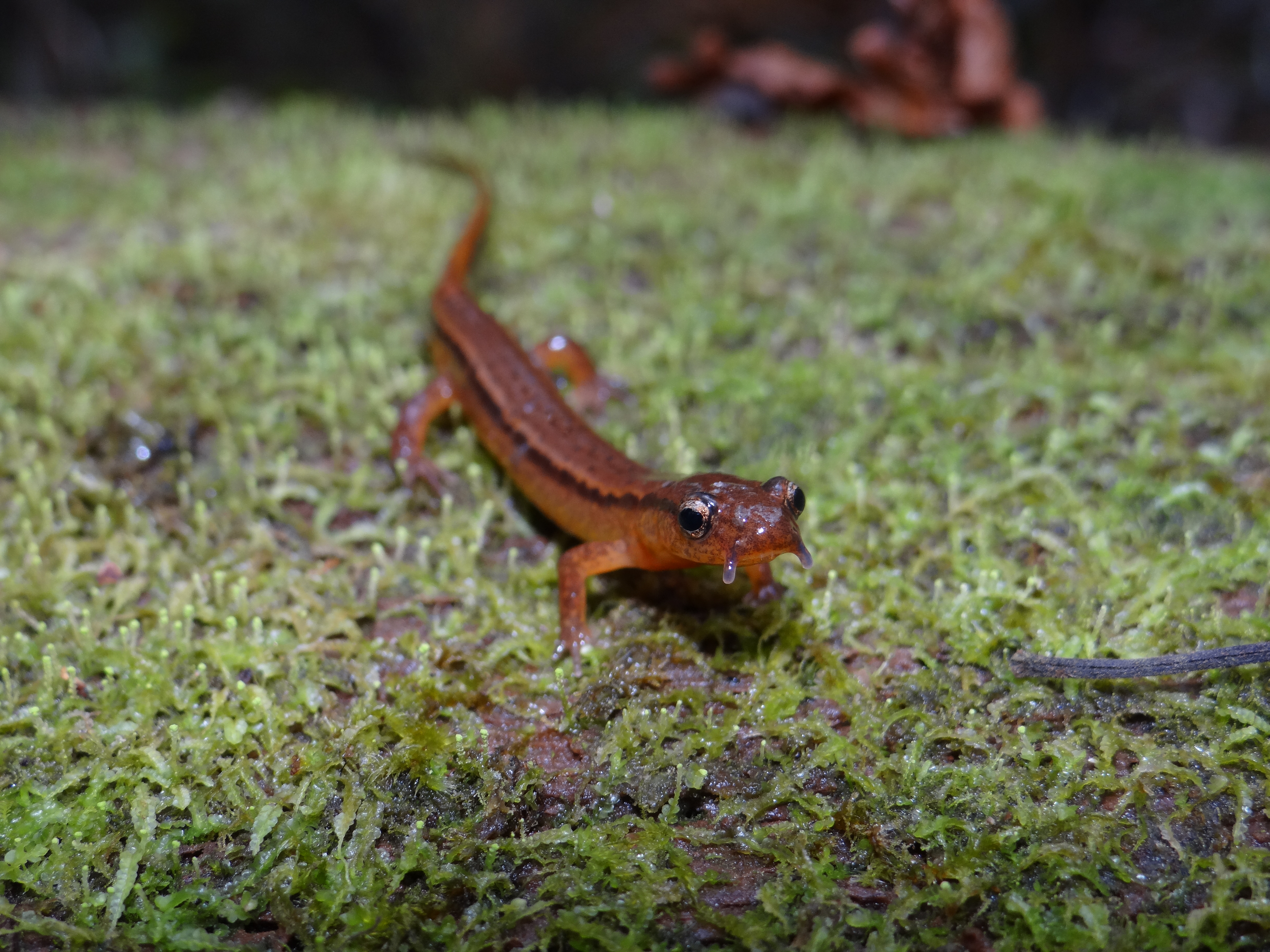
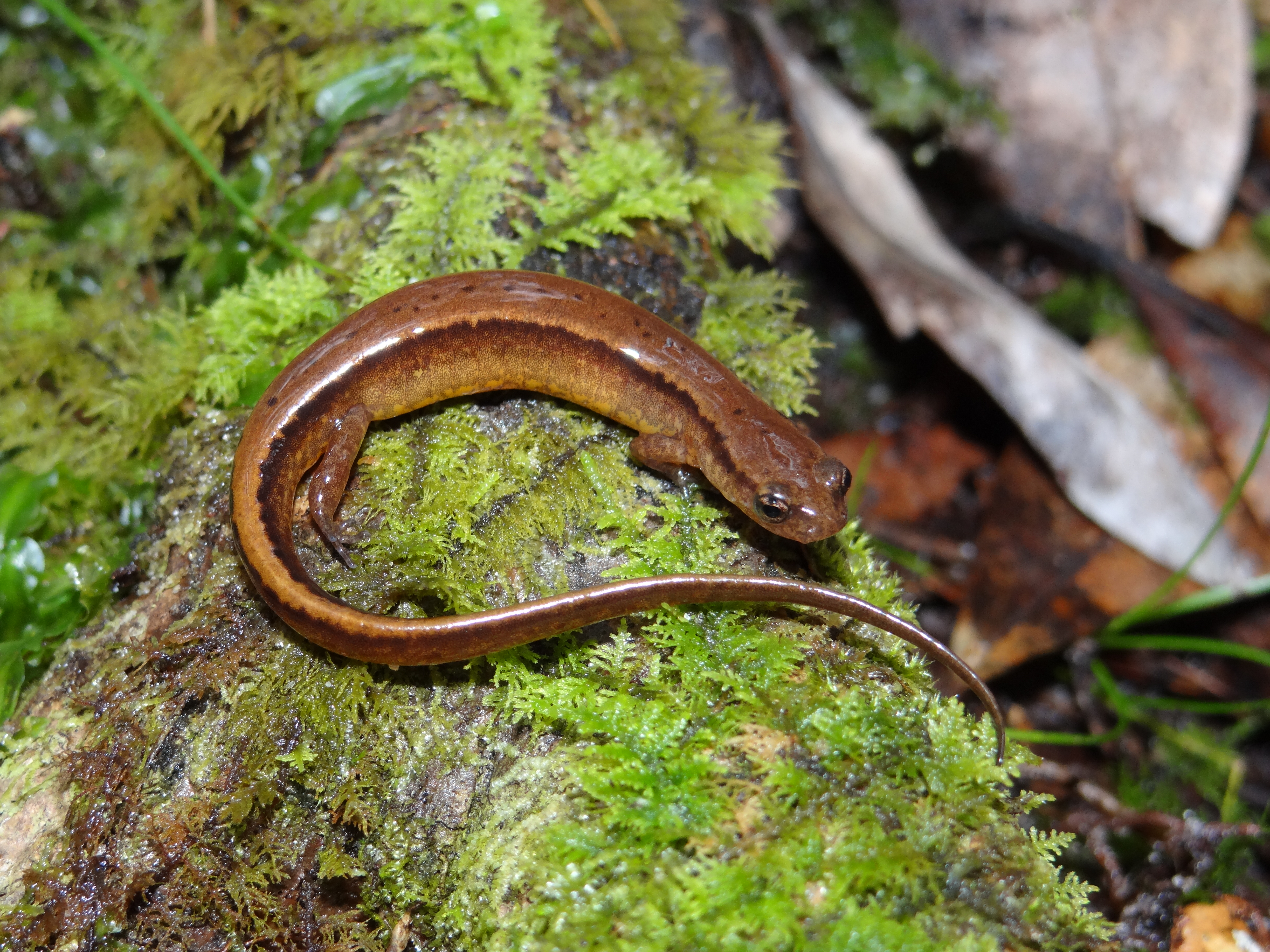
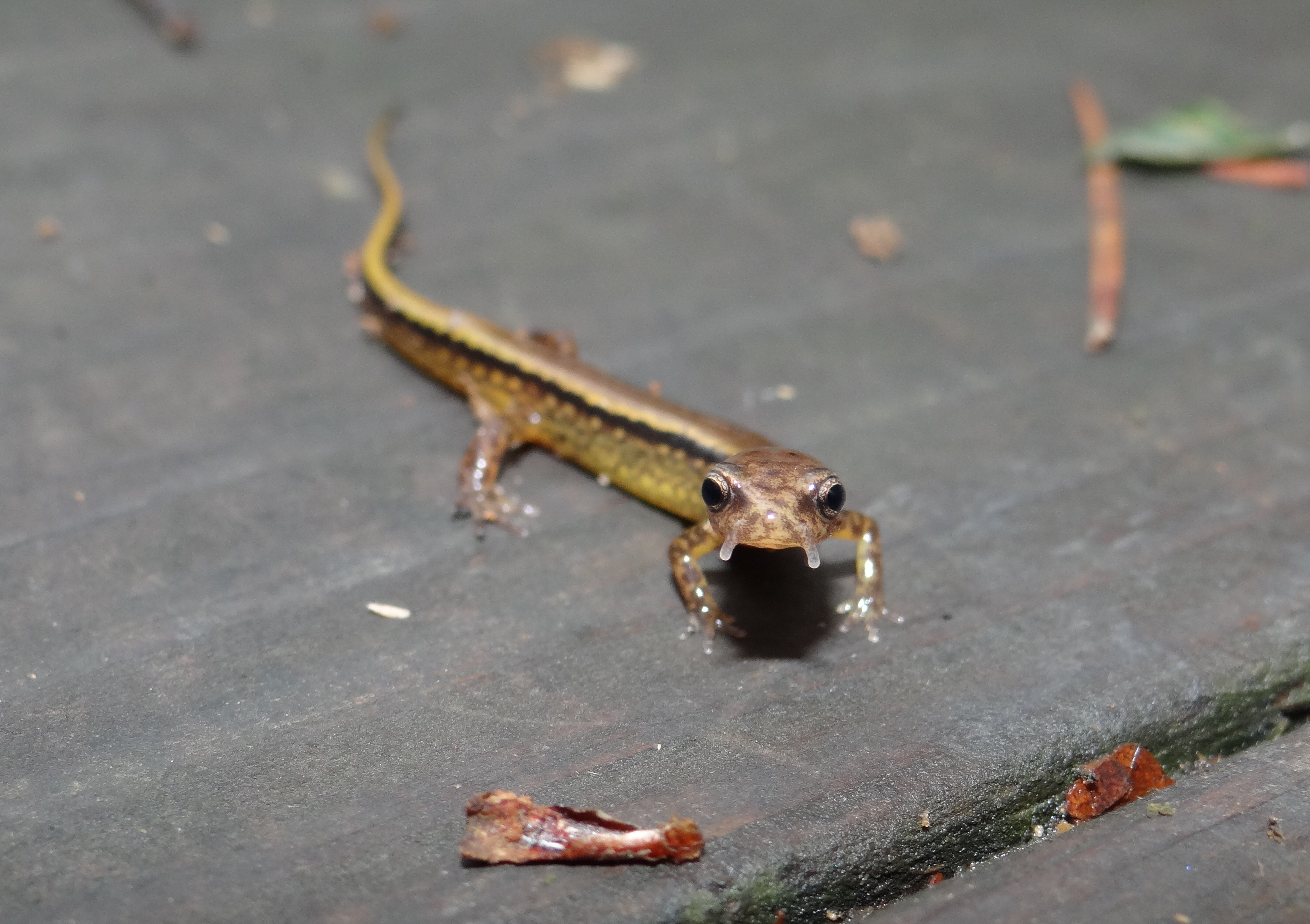
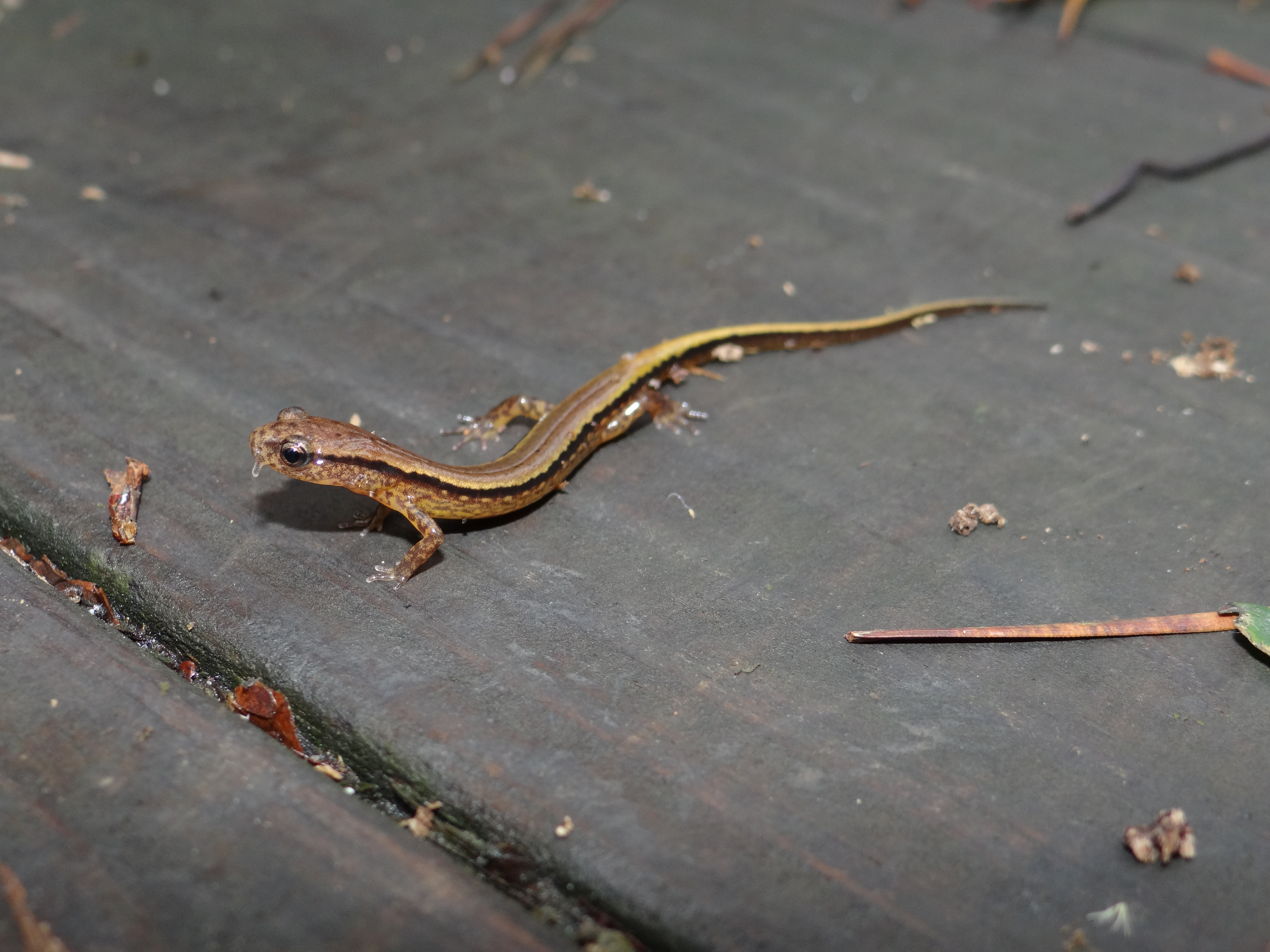
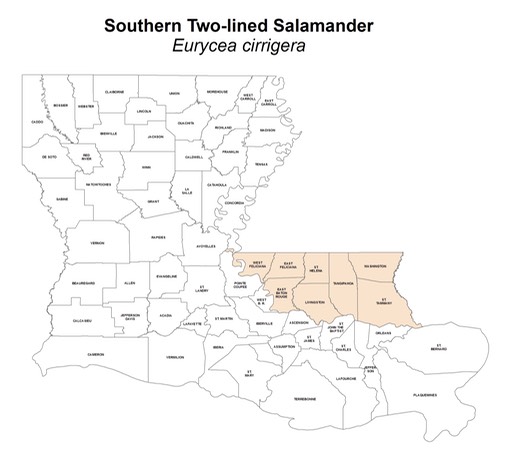
*The colored areas of the map above represent parishes with currently known records for the given species (Source: Jeff Boundy, LA Dept. of Wildlife and Fisheries). By no means does it represent the full range of the species in the state, nor does it necessarily mean that a species can be found throughout the parish with the record. This is provided as a guide to where you might be able to find these species in the state and to aid in identification. A descriptive explanation of the range of each species can be found in the text below.
Other Common Names:
Subspecies: No subspecies recognized.
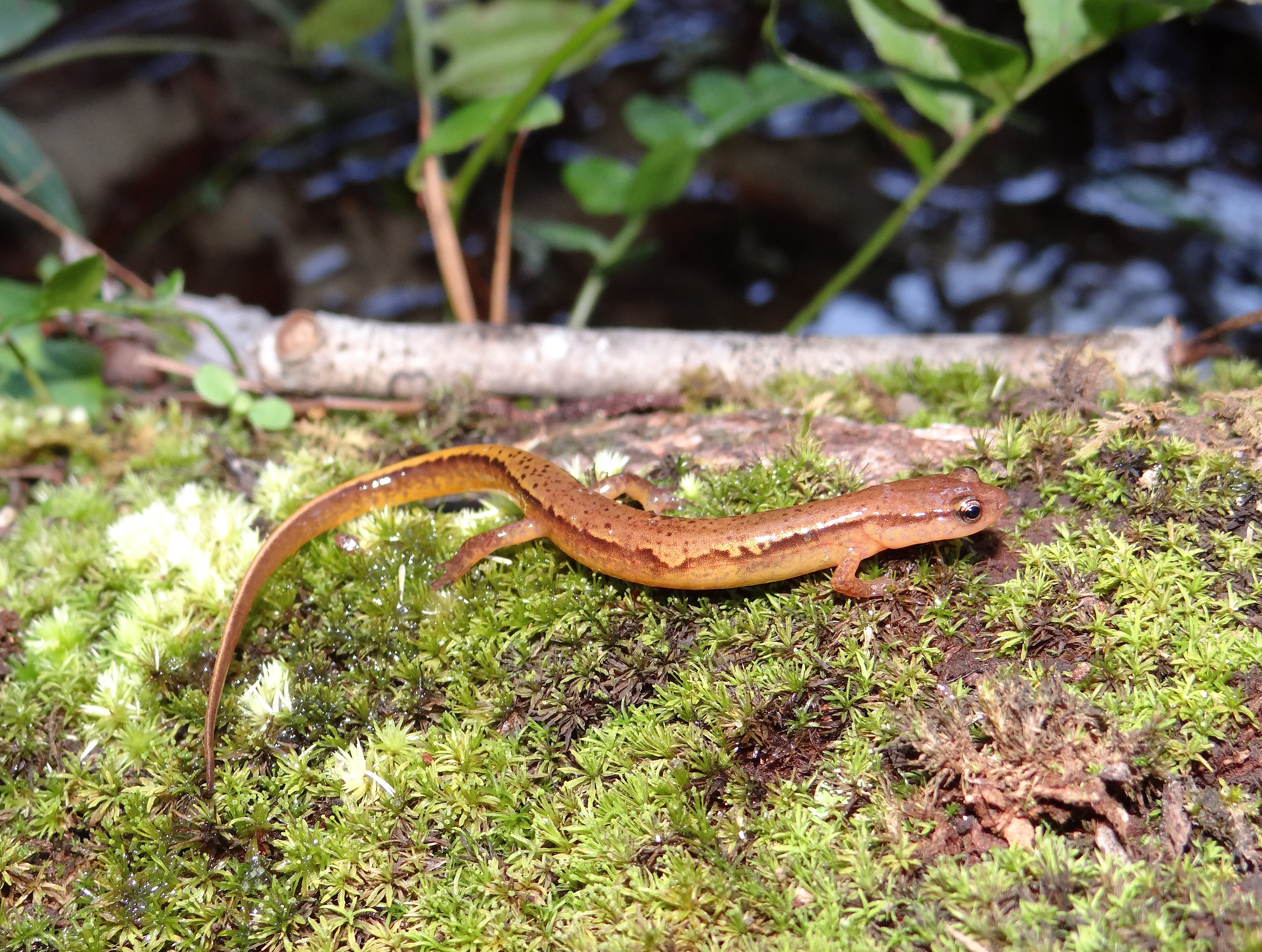
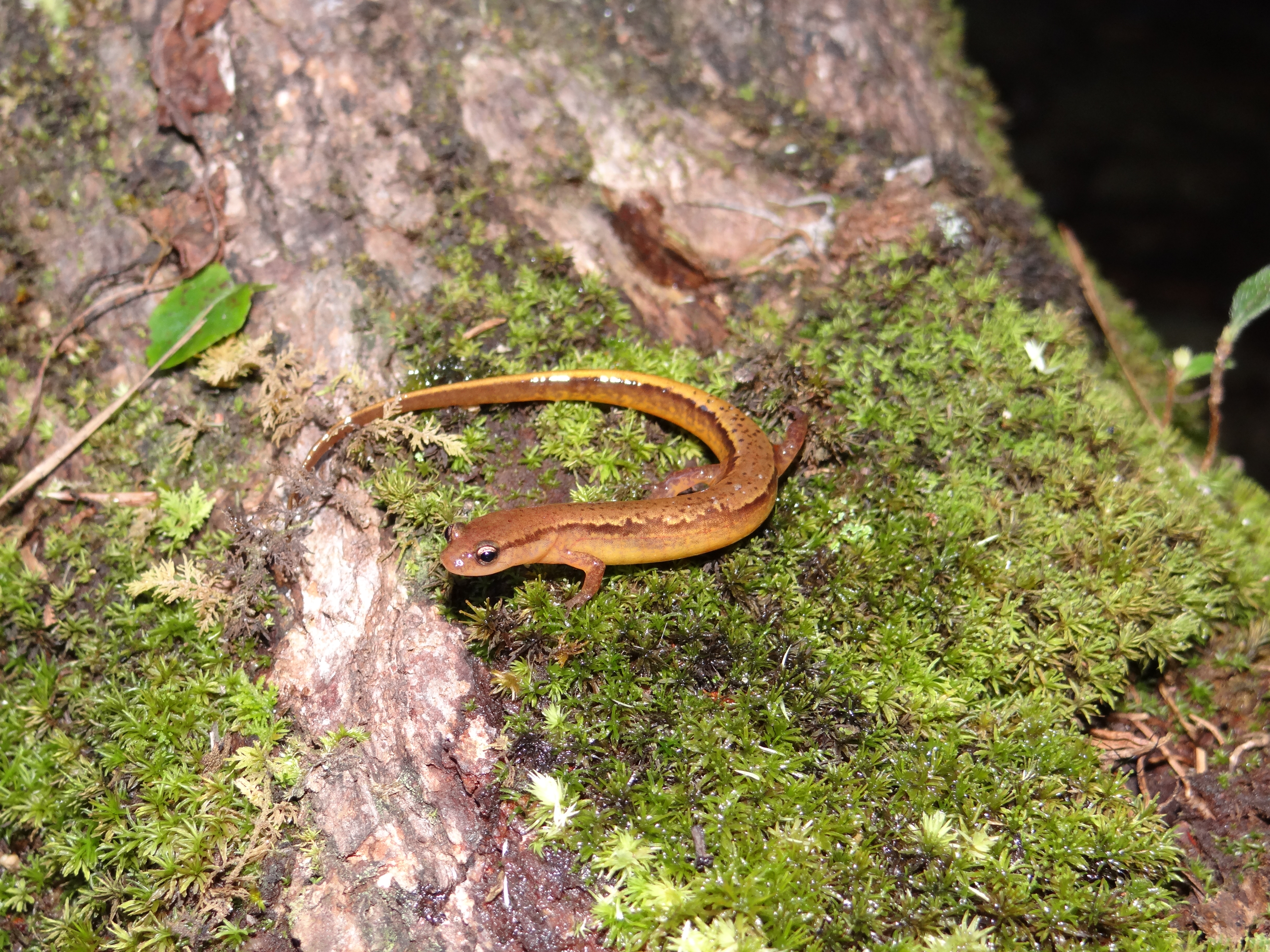
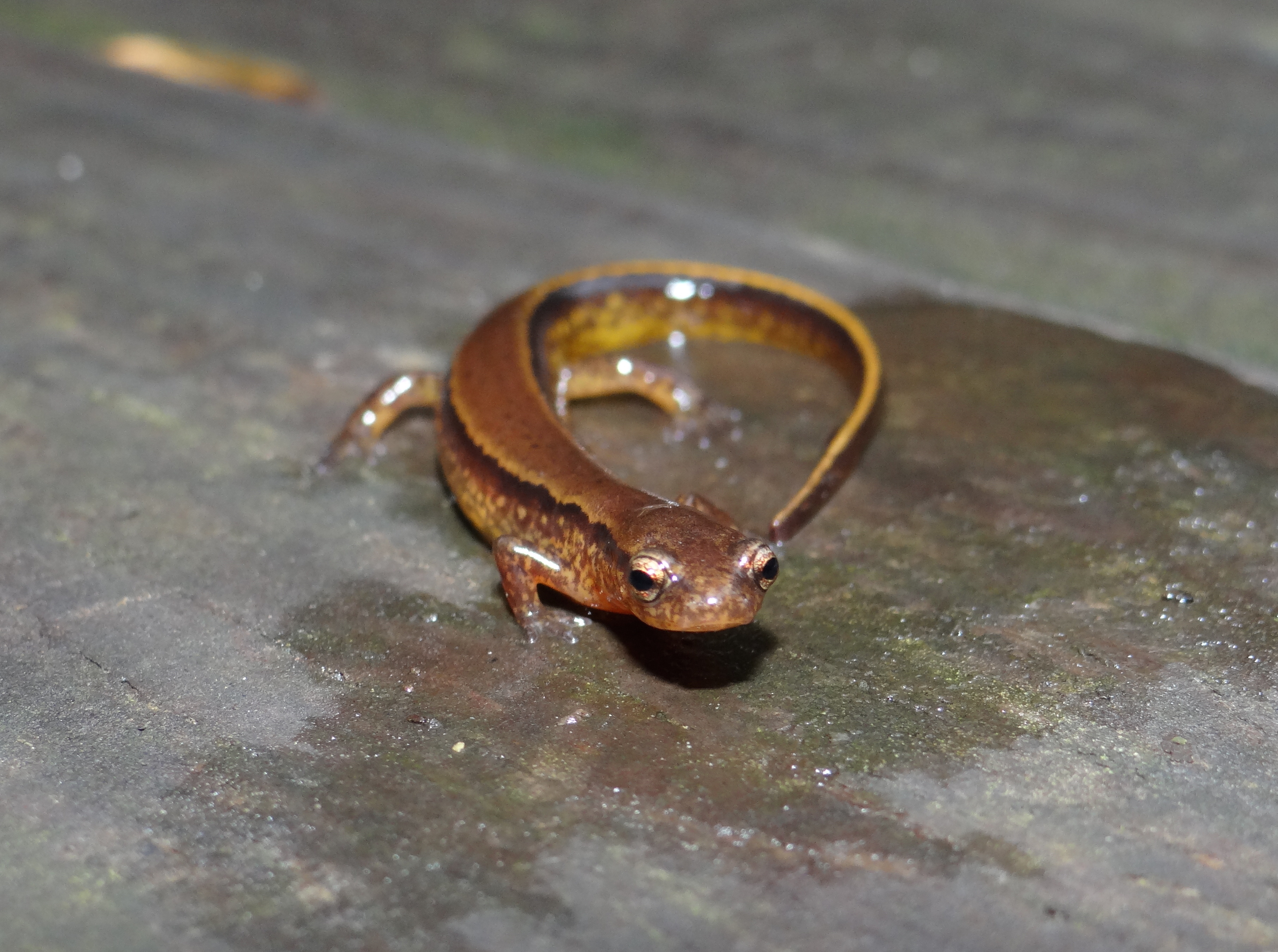
Adult Description: Small, slender salamander (maximum 4.3”) of yellow, gold, or tan coloration, with a black or brown line extending on each side from back of eye through most of tail. Few to many black or brown flecks may be present on top of head and middle of back between lines. On sides below dark lines usually dull yellow without dark markings. Tail becomes more laterally compressed towards tip. 13–14 costal grooves. Five toes on hindlimbs can help differentiate them from Dwarf Salamanders, which have four. During breeding season adult males often have a pair of cirri extending downward from outer edge of upper lip. Belly is yellow and somewhat translucent.
Similar Species:
Species Range: Throughout southeastern United States east of Mississippi River excluding peninsular Florida, extending north into much of Indiana and Ohio.
Louisiana Range: Florida Parishes.
Adult Habitat: In and around clear, flowing streams and seeps in upland forests and along riparian areas in flatwoods.
Natural History: Southern Two-lined Salamanders are surface-active at night, spending the day concealed under surface cover objects, or in the soft bottoms themselves, but retreating further underground in dry and cold extremes. They prey upon a wide variety of terrestrial and aquatic invertebrates. Known predators of Southern Two-lined Salamanders include snakes, owls, and larger salamanders. Females deposit clutches of up to 115 eggs, but typically less than half of that, often attached to the underside of submerged logs, leaves, or other debris. Egg laying occurs in winter, and females usually guard their nests until hatching, which may take about 0.5–2.5 months. There is a prolonged larval period, with metamorphosis taking 1–3 years. Age at maturity is unknown and highly variable but took 2–4 years in an Ohio population. Maximum wild longevity is unknown, but a captive lived over 9 years.
Best Time and Place to Observe: Southern Two-lined Salamanders can be found year-round by uncovering objects, like rocks, logs, or leaf litter in appropriate habitat.
Global Conservation Status: Southern Two-lined Salamanders have a relatively wide distribution in the southeastern United States and a presumed large population, and thus, are listed as Least Concern by the IUCN Red List. Their NatureServe Global Conservation Status Rank is G5 (Secure).
Federal Conservation Status: None.
Louisiana Conservation Status: Southern Two-lined Salamanders have a ranking of S3 (rare and local throughout the state – 21-100 known extant populations) in Louisiana.
*** If you live in the range of this species in Louisiana and believe you may have observed this species please let me know (take a picture if possible), as there may be more unknown populations in the state.***
Author's Remarks: I had only found this species in Louisiana in Washington Parish, both at Bogue Chitto State Park and Lee Memorial Forest, until 2024 when I found some at a site in Tangipahoa Parish.
