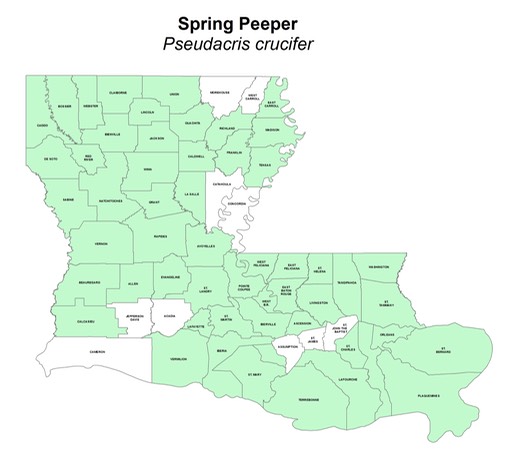
*The colored areas of the map above represent parishes with currently known records for the given species (Source: Jeff Boundy, LA Dept. of Wildlife and Fisheries). By no means does it represent the full range of the species in the state, nor does it necessarily mean that a species can be found throughout the parish with the record. This is provided as a guide to where you might be able to find these species in the state and to aid in identification. A descriptive explanation of the range of each species can be found in the text below.
Other Common Names:
Subspecies: No subspecies recognized.
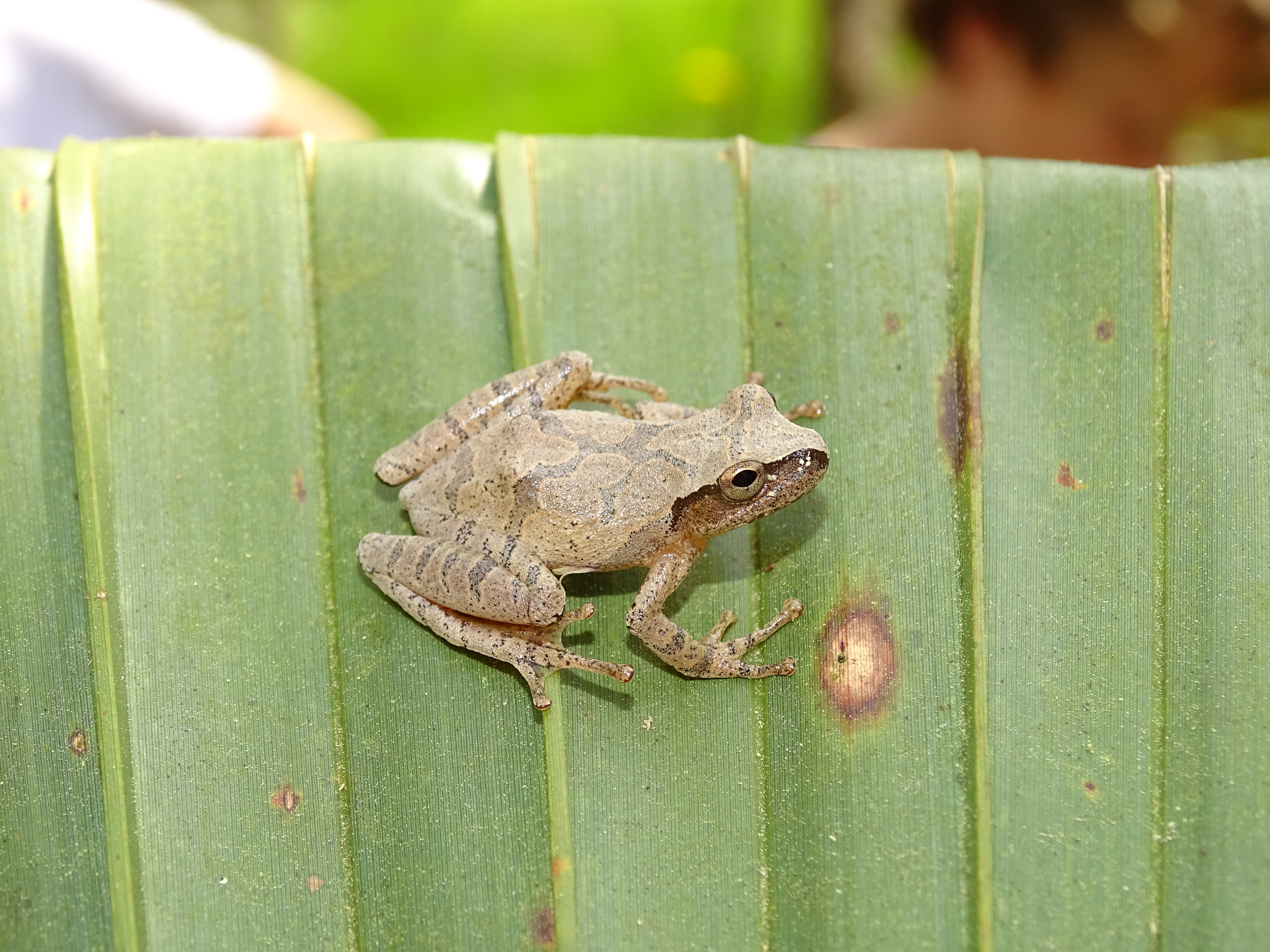
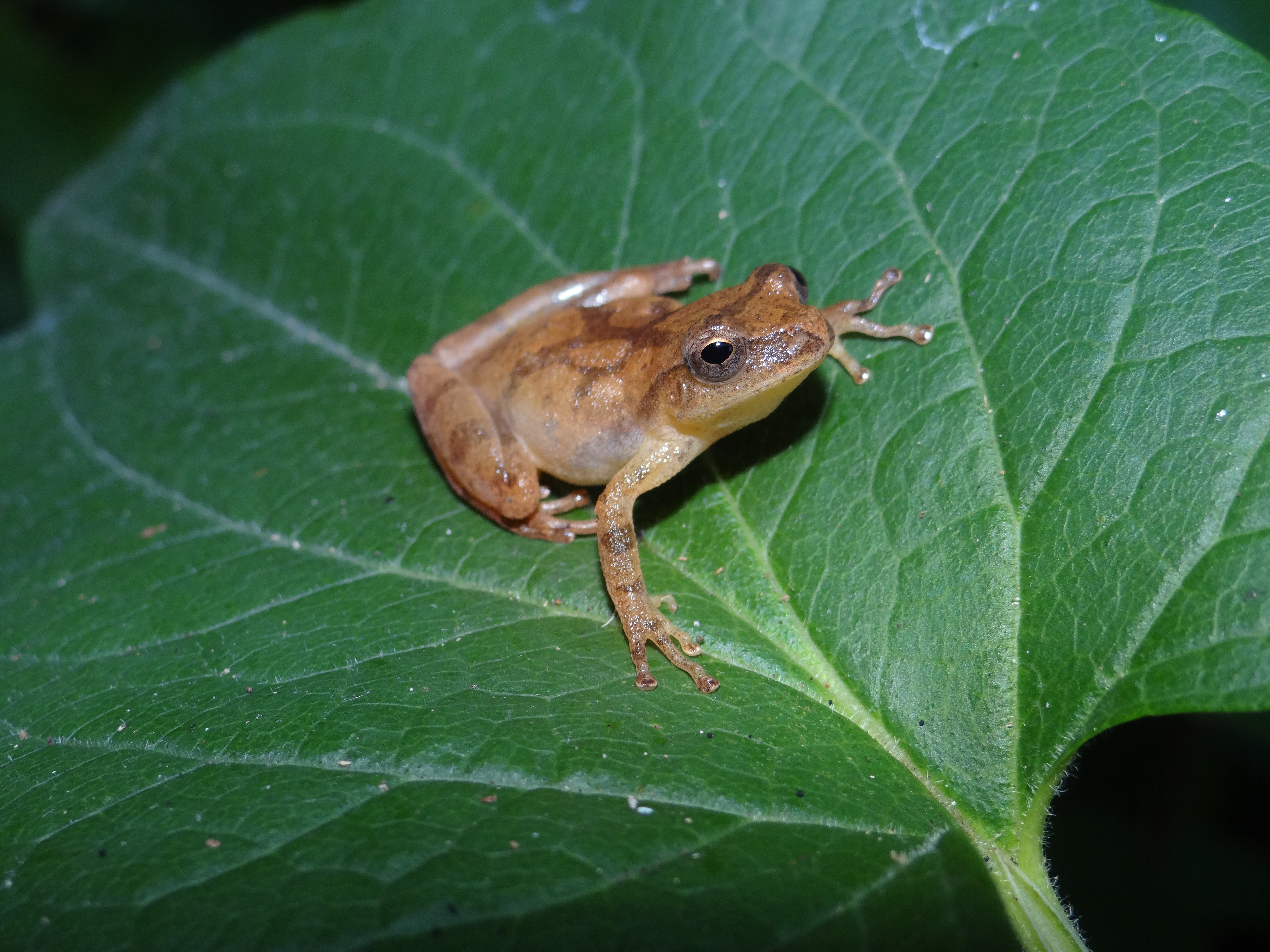
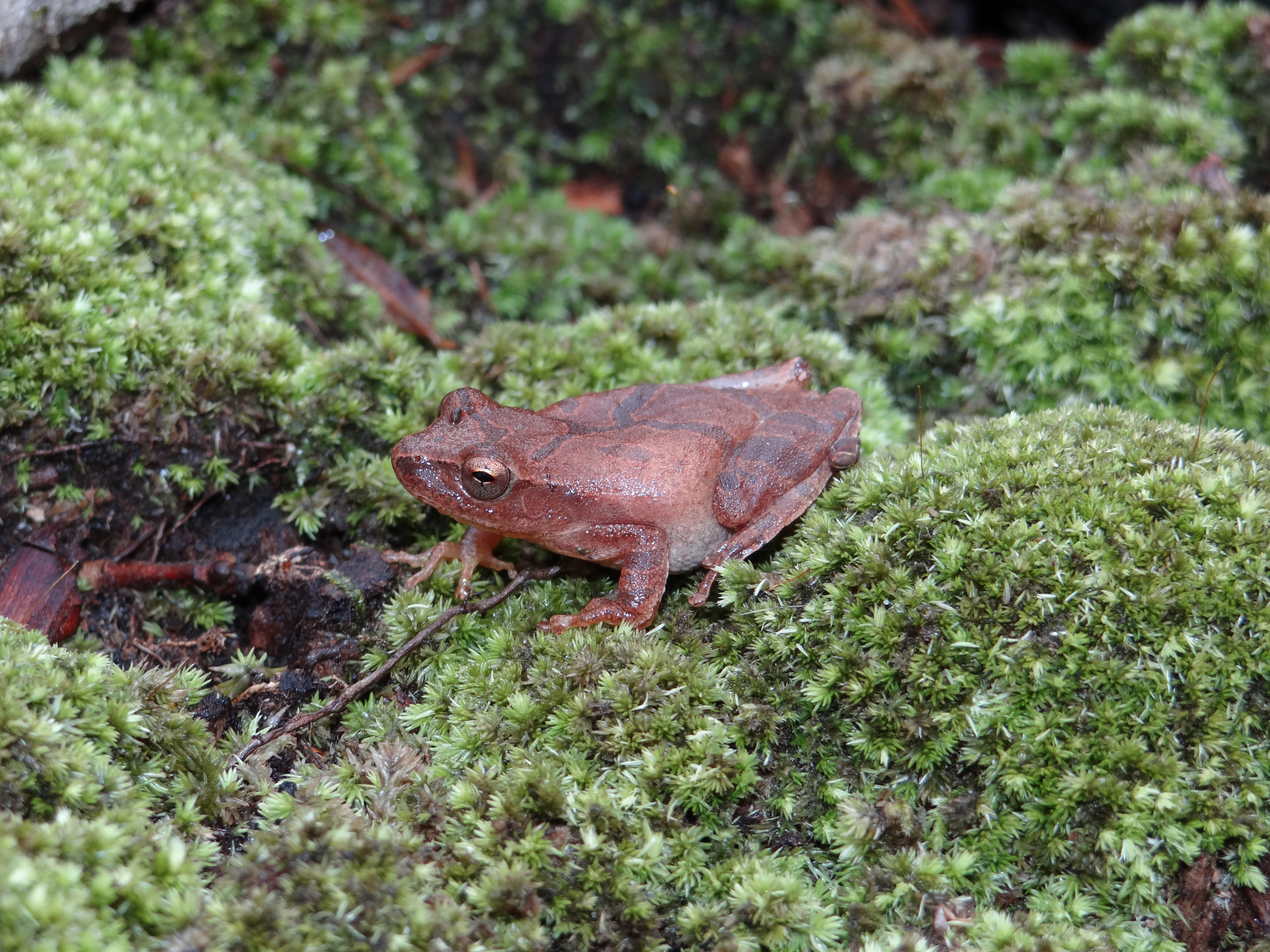
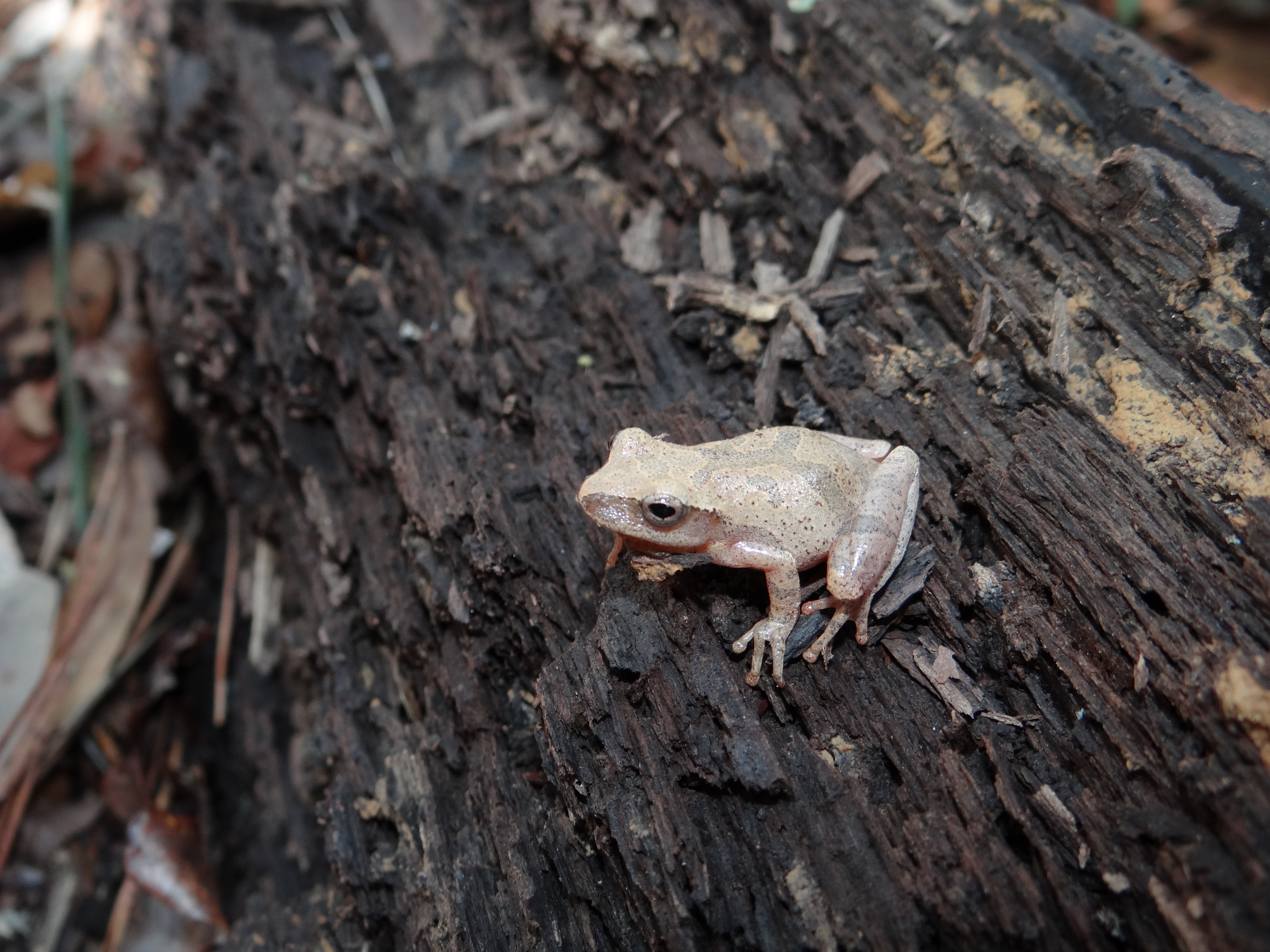
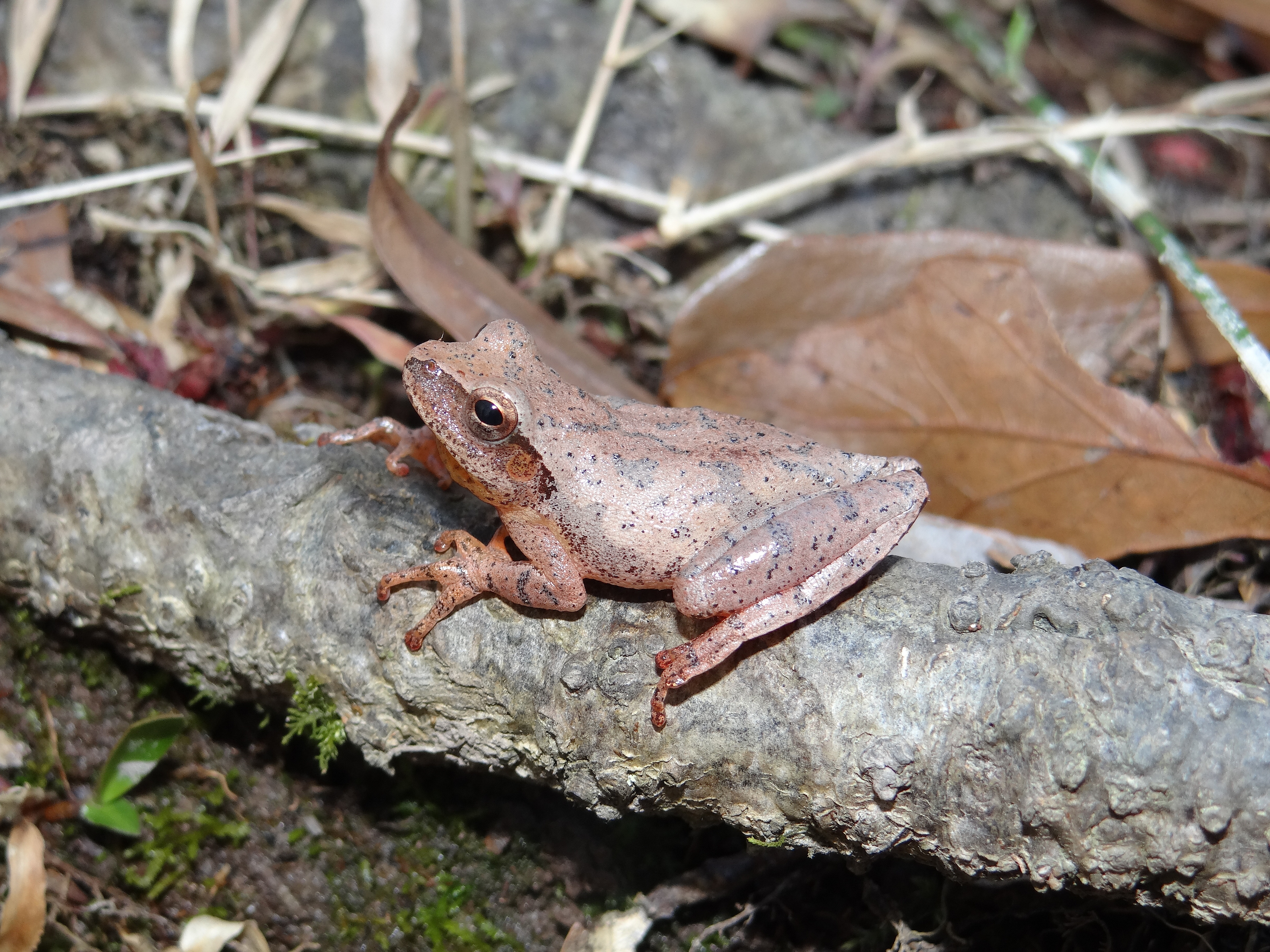
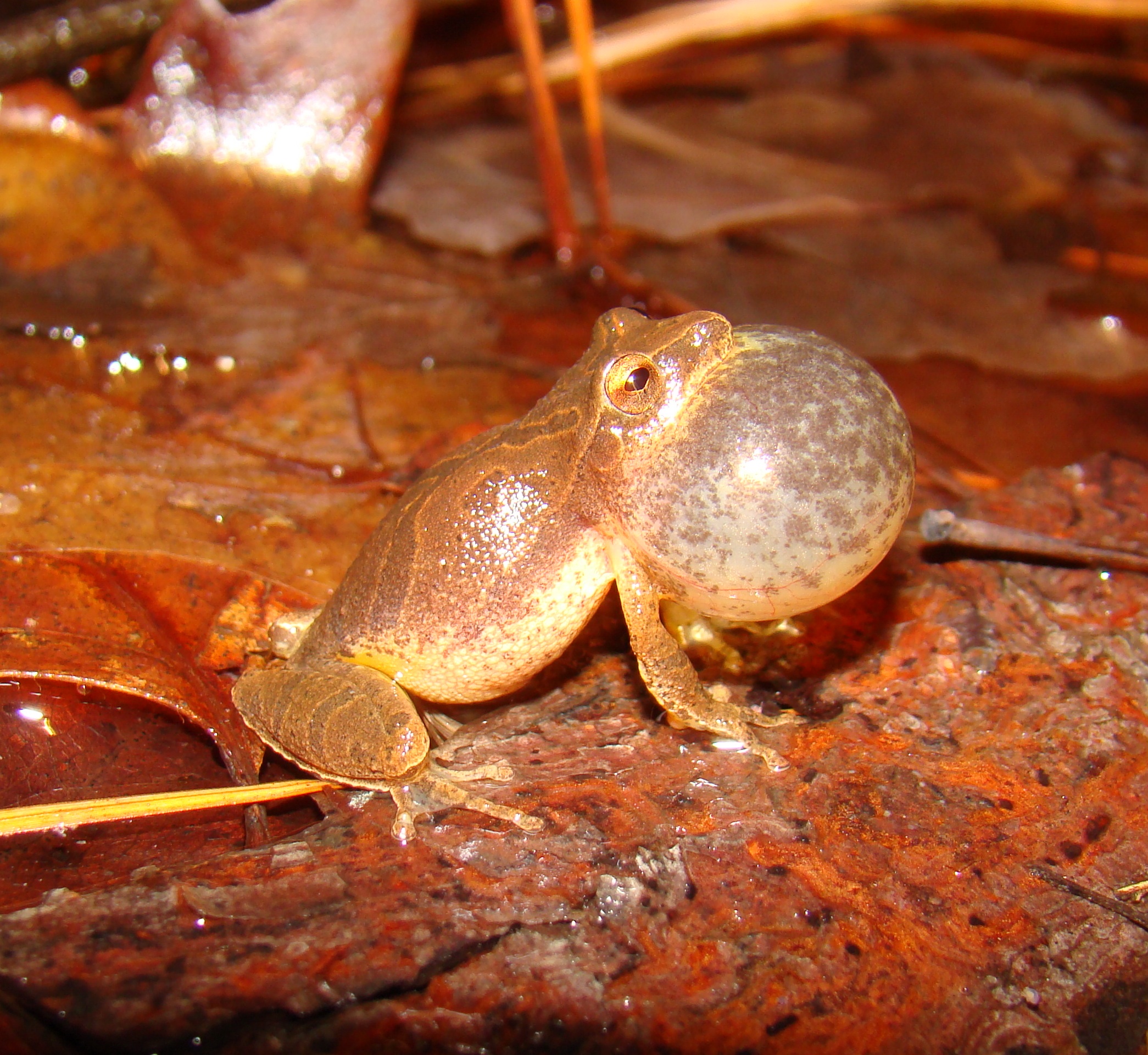
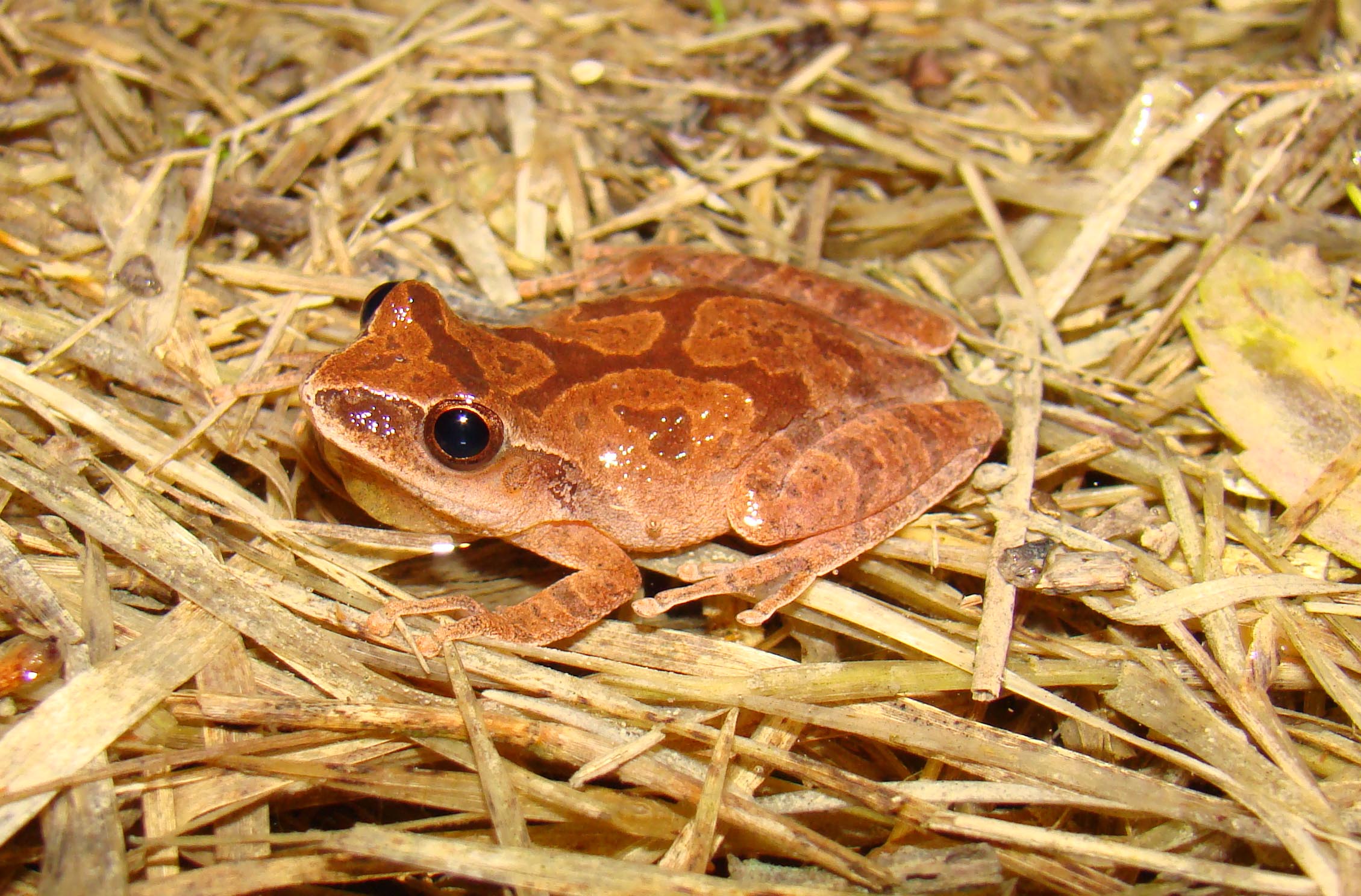
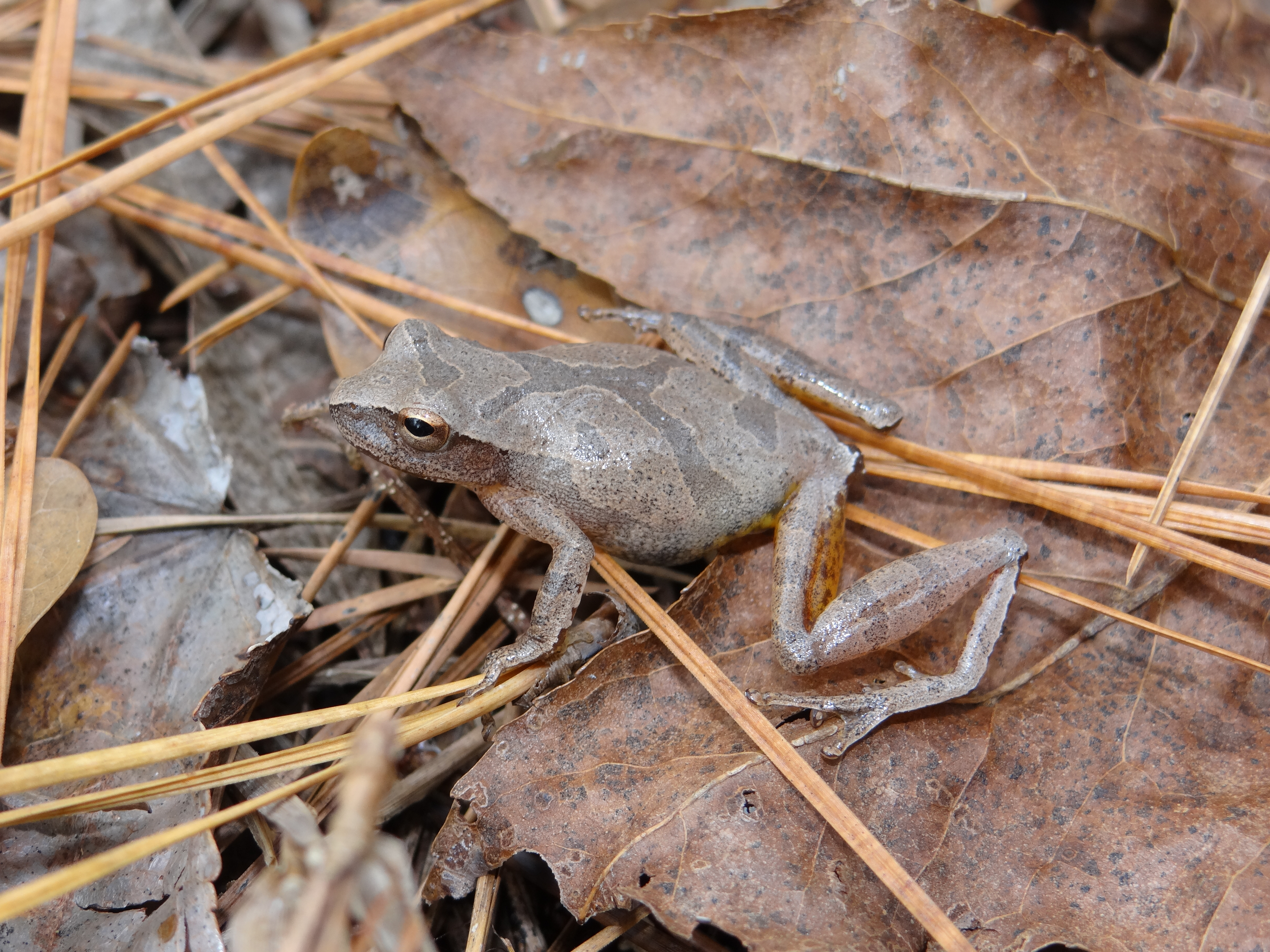
Adult Description: A small frog (maximum 1.6”) with variable coloration, usually some degree of tan but can be pale gray or reddish. Slightly expanded, adhesive toe pads used for climbing. Usually a dark X-shaped mark across back but can be irregular or broken. A V-shaped dark marking between eyes, and a dark band across back near groin. A dark mask extends from snout past eye and eardrum and over forelimb onto side. Dark crossbars on limbs. Belly is dull white.
Similar Species:
Species Range: Southeast Manitoba, Canada, east to Nova Scotia, Canada, south to northern Florida, west to east Texas, and north in eastern Oklahoma, Kansas, Iowa, and Minnesota.
Louisiana Range: Nearly statewide but absent from prairie region in southwest Louisiana and coastal marshlands.
Adult Habitat: Nearly any forested habitat, except coastal cheniers.
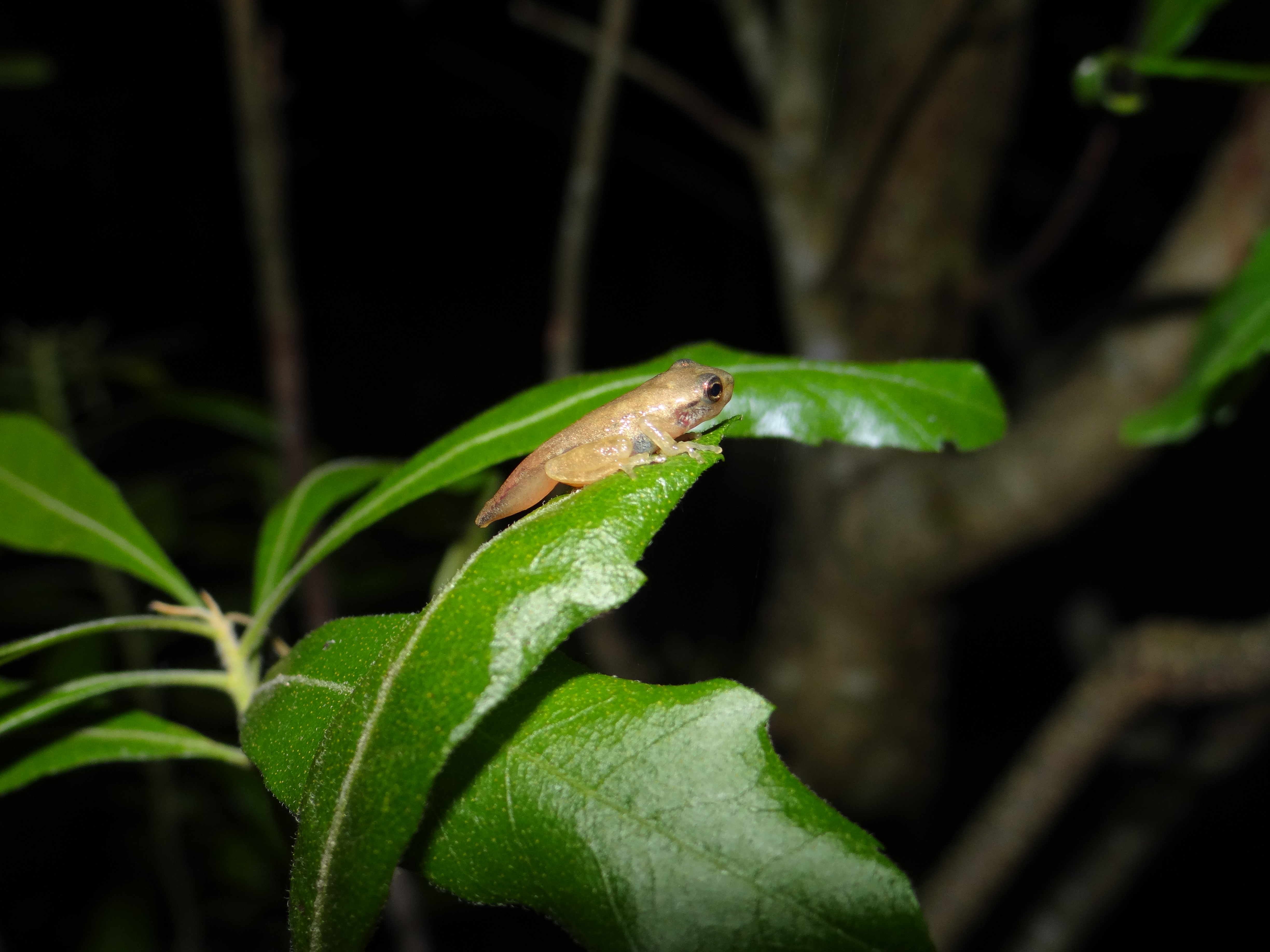
Natural History: Spring Peepers are often active during the day where they may be found on the forest floor, usually by chance rather than targeted searches. Diurnal activity can occur anytime on mild winter days but in the hottest parts of summer daytime activity is likely restricted to early morning and evening hours. Outside of the breeding season they are notoriously difficult to find. They feed upon a wide variety of small invertebrates. Predators include snakes, birds, mammals, and even some large invertebrates. They breed from mid-November to April in a wide variety of wetlands with varied hydroperiods, but ephemeral or semi-permanent open canopy wetlands are preferred. Females lay up to 1,650 eggs which are deposited singly in shallow water attached to vegetation or leaves. Eggs hatch in 2–7 days and tadpoles metamorphose in about 1.5–2 months. Maturity takes 1–2 years. Wild longevity is 4 years.
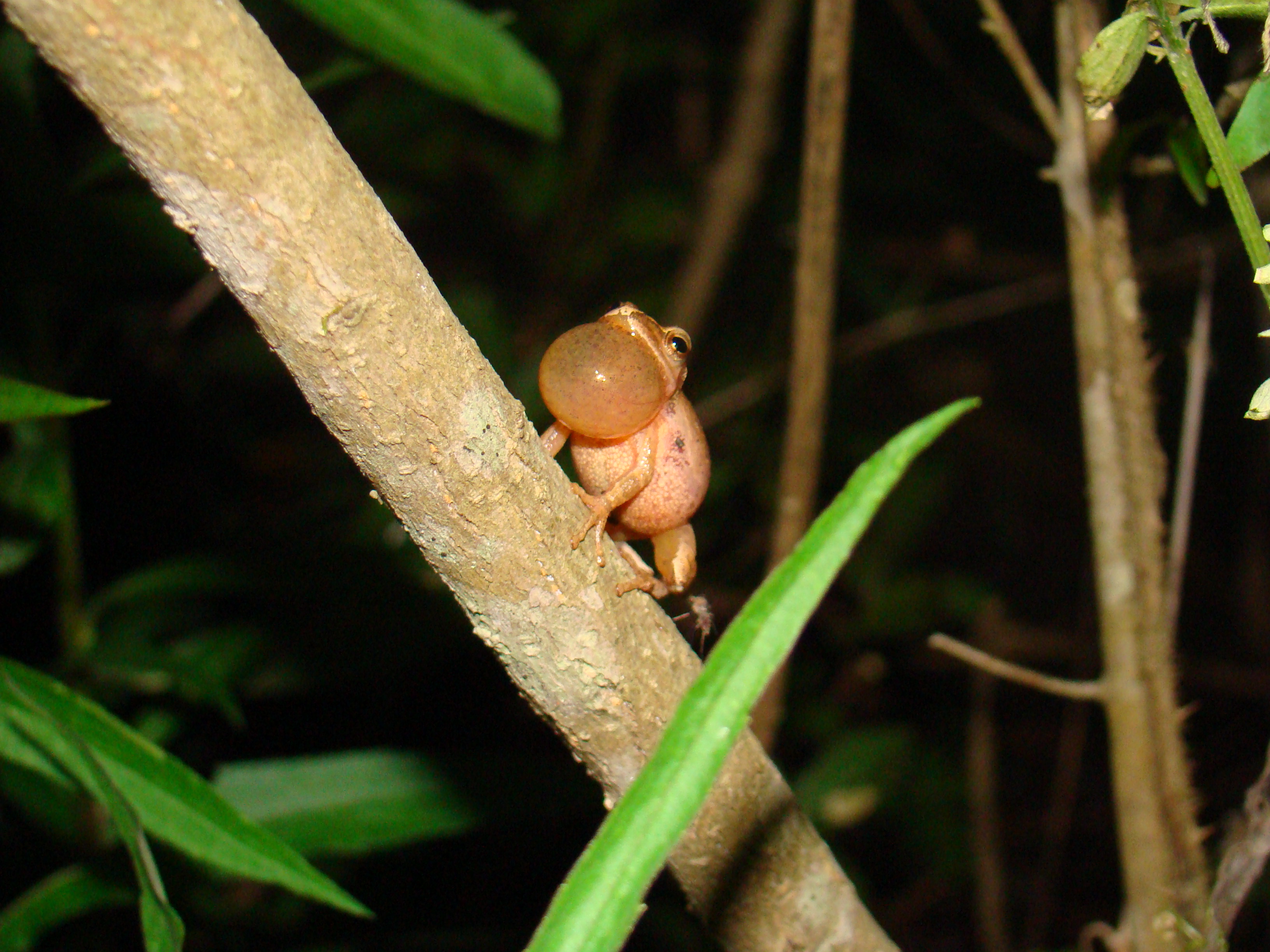
Call: A whistle or ‘peep’ that rises slightly in pitch given about once per second or faster.
Best Time and Place to Observe: Listen for their deafening winter choruses at night in forested wetlands where they typically call on vegetation or woody debris near the ground.
Global Conservation Status: Spring Peepers have a relatively wide distribution in eastern North America, a presumed large population, and tolerate a degree of habitat modification, and thus, are listed as Least Concern by the IUCN Red List. Their NatureServe Global Conservation Status Rank is G5 (Secure).
Federal Conservation Status: None.
Louisiana Conservation Status: Spring Peepers do not have any special status in Louisiana.
Author's Remarks: I have seen or heard this species routinely in forested habitats in late winter and early spring during its breeding season. Outside of the breeding season I have still come across individuals here and there in the Atchafalaya Basinand other areas, usually in areas of thick vegetation, especially horsetail.
