
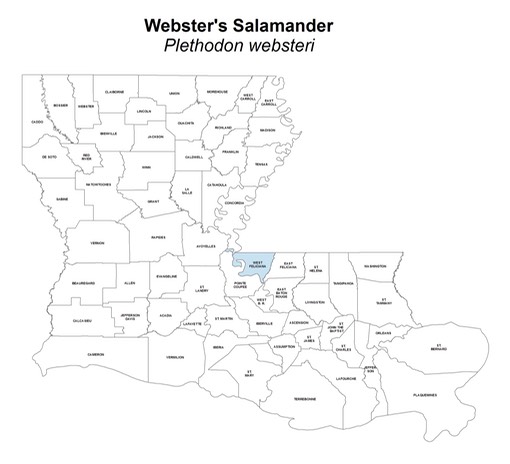
*The colored areas of the map above represent parishes with currently known records for the given species (Source: Jeff Boundy, LA Dept. of Wildlife and Fisheries). By no means does it represent the full range of the species in the state, nor does it necessarily mean that a species can be found throughout the parish with the record. This is provided as a guide to where you might be able to find these species in the state and to aid in identification. A descriptive explanation of the range of each species can be found in the text below.
Other Common Names:
Subspecies: No subspecies recognized.
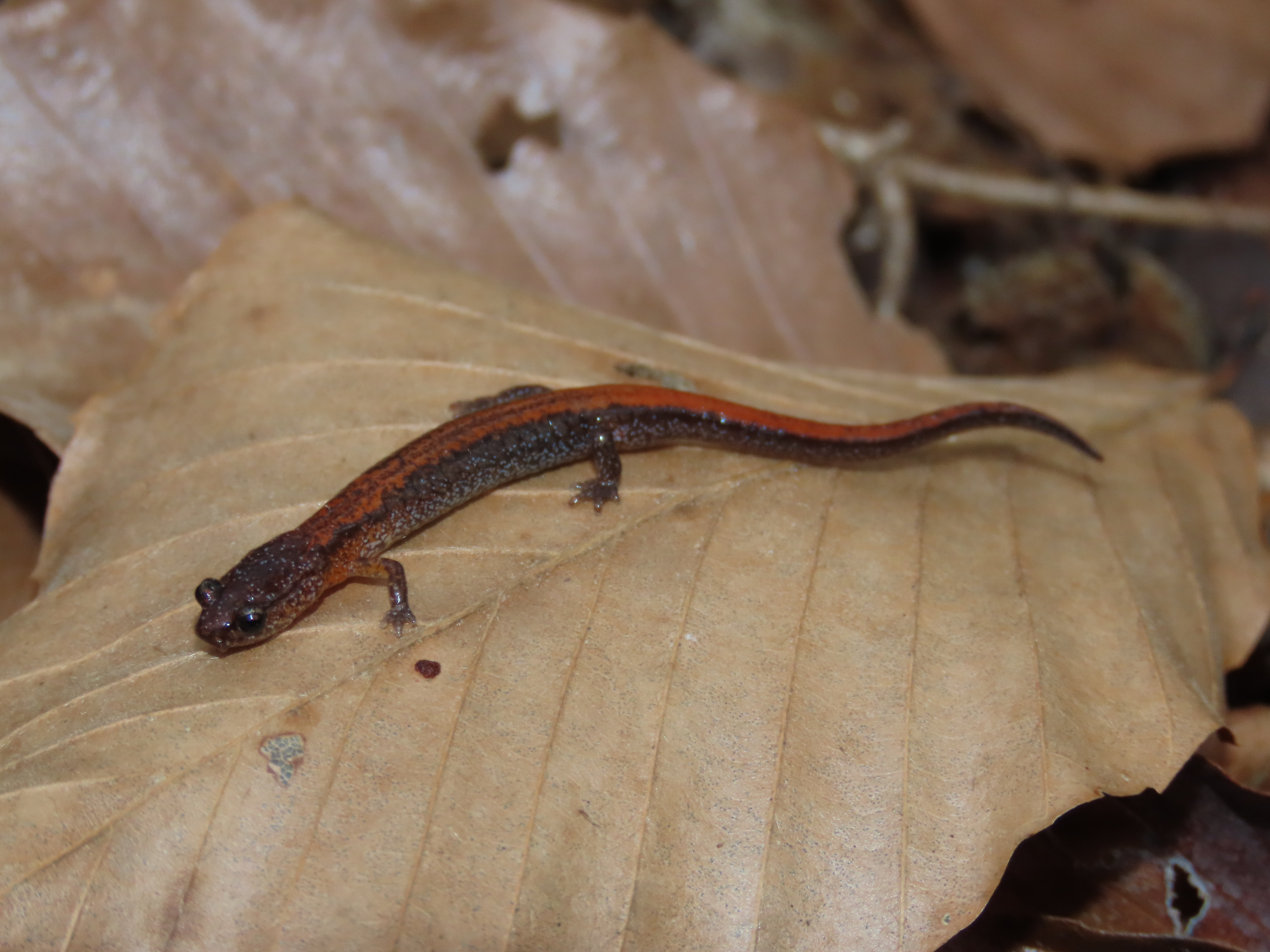
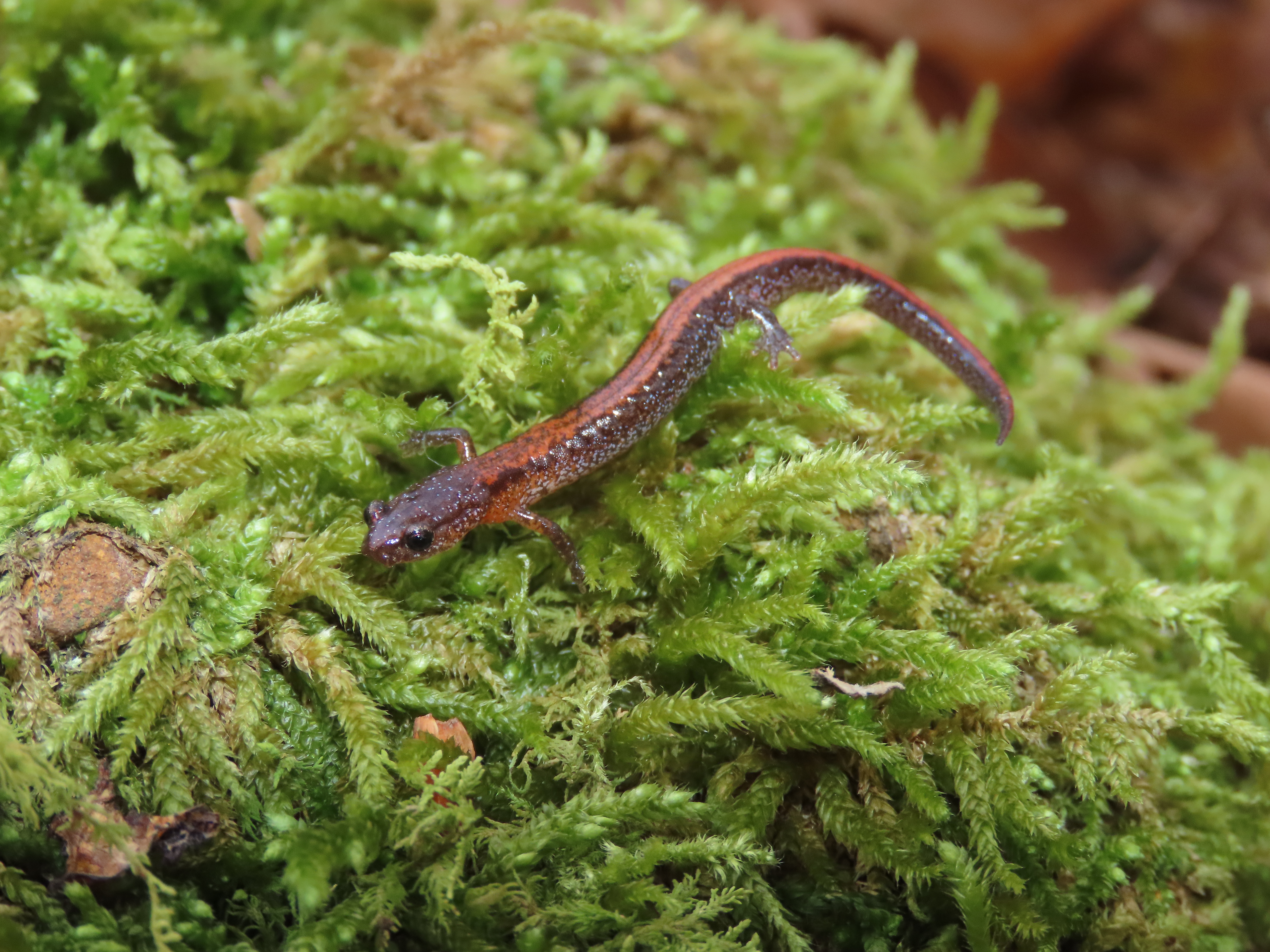
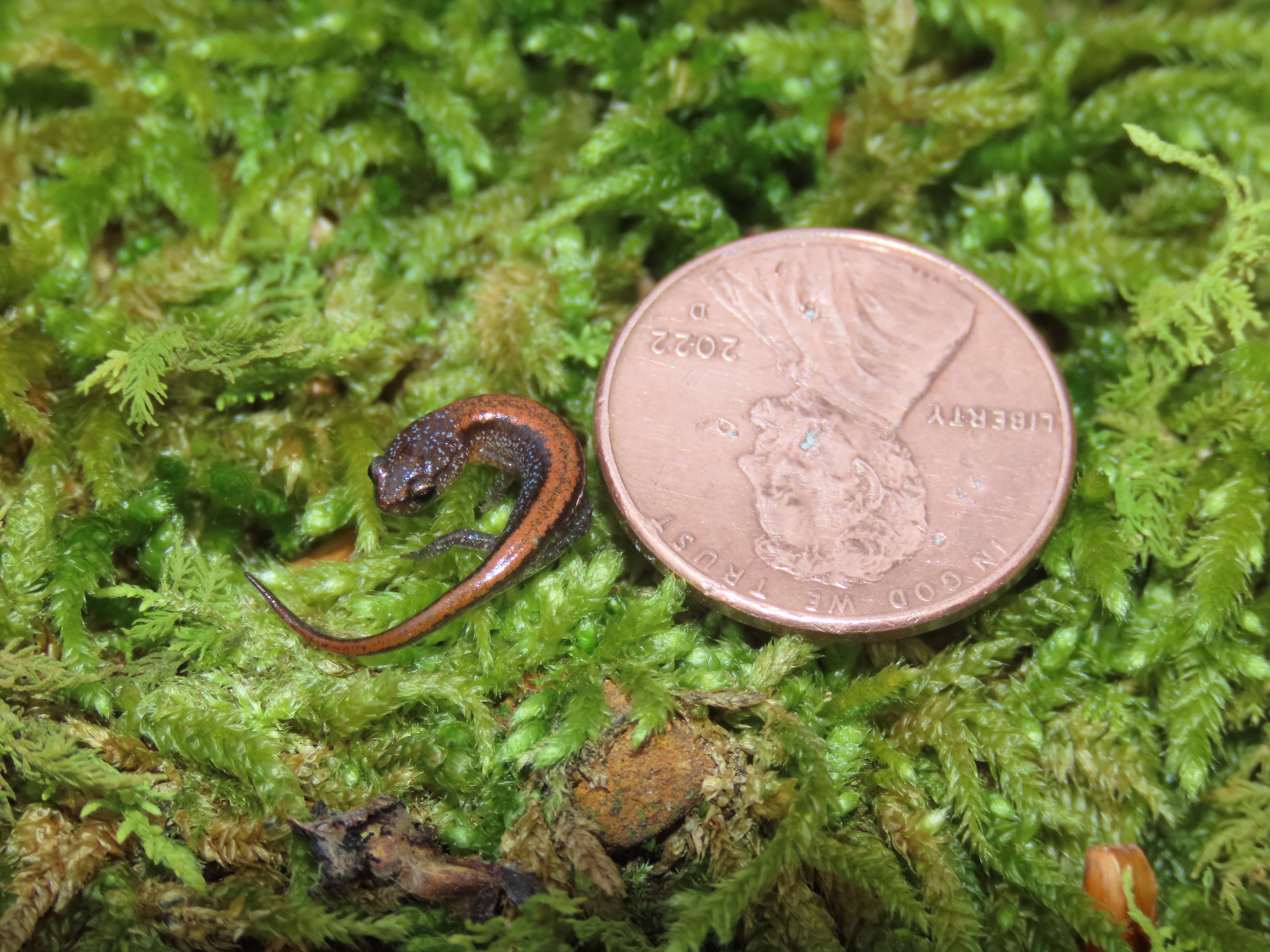
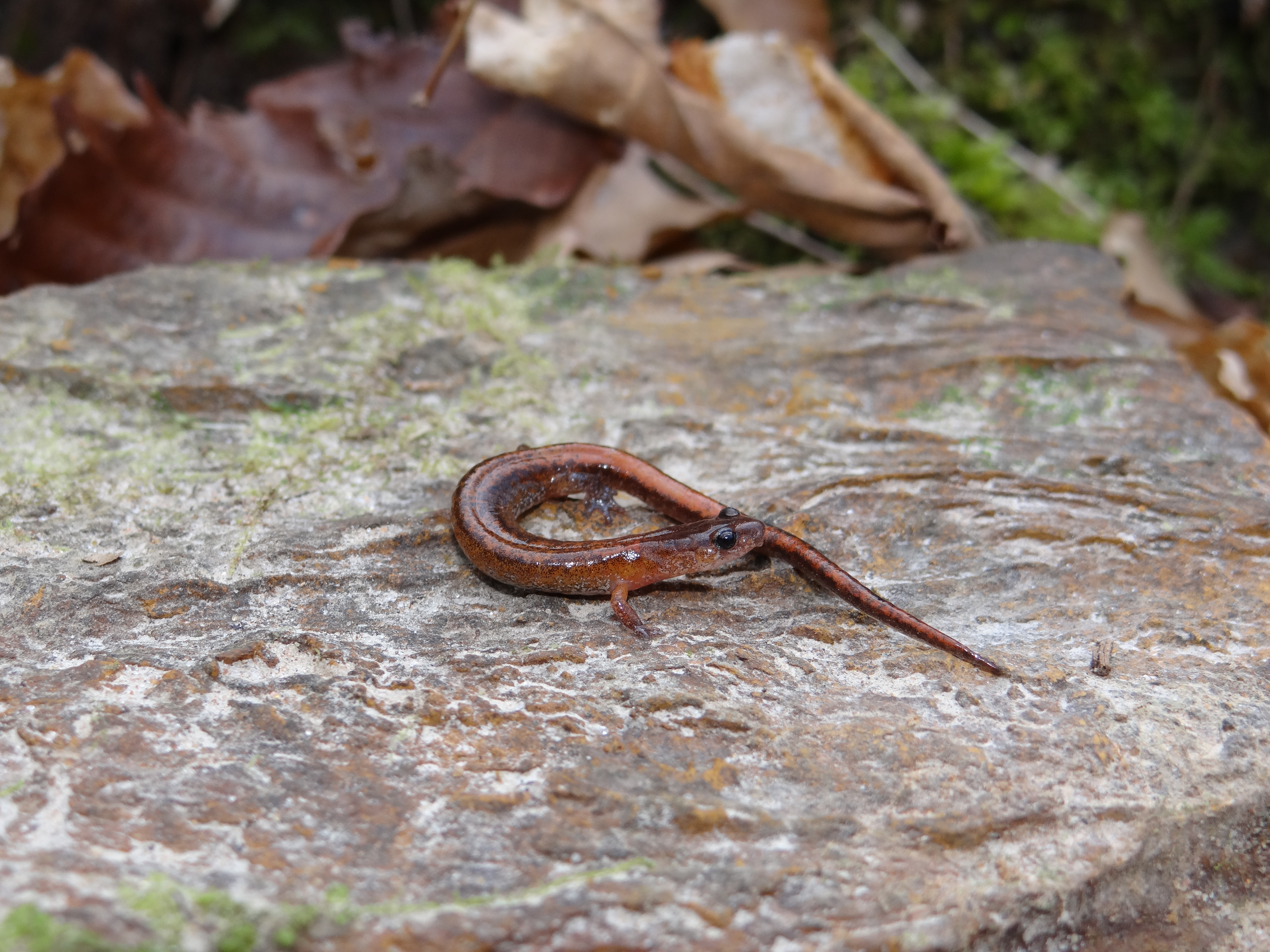
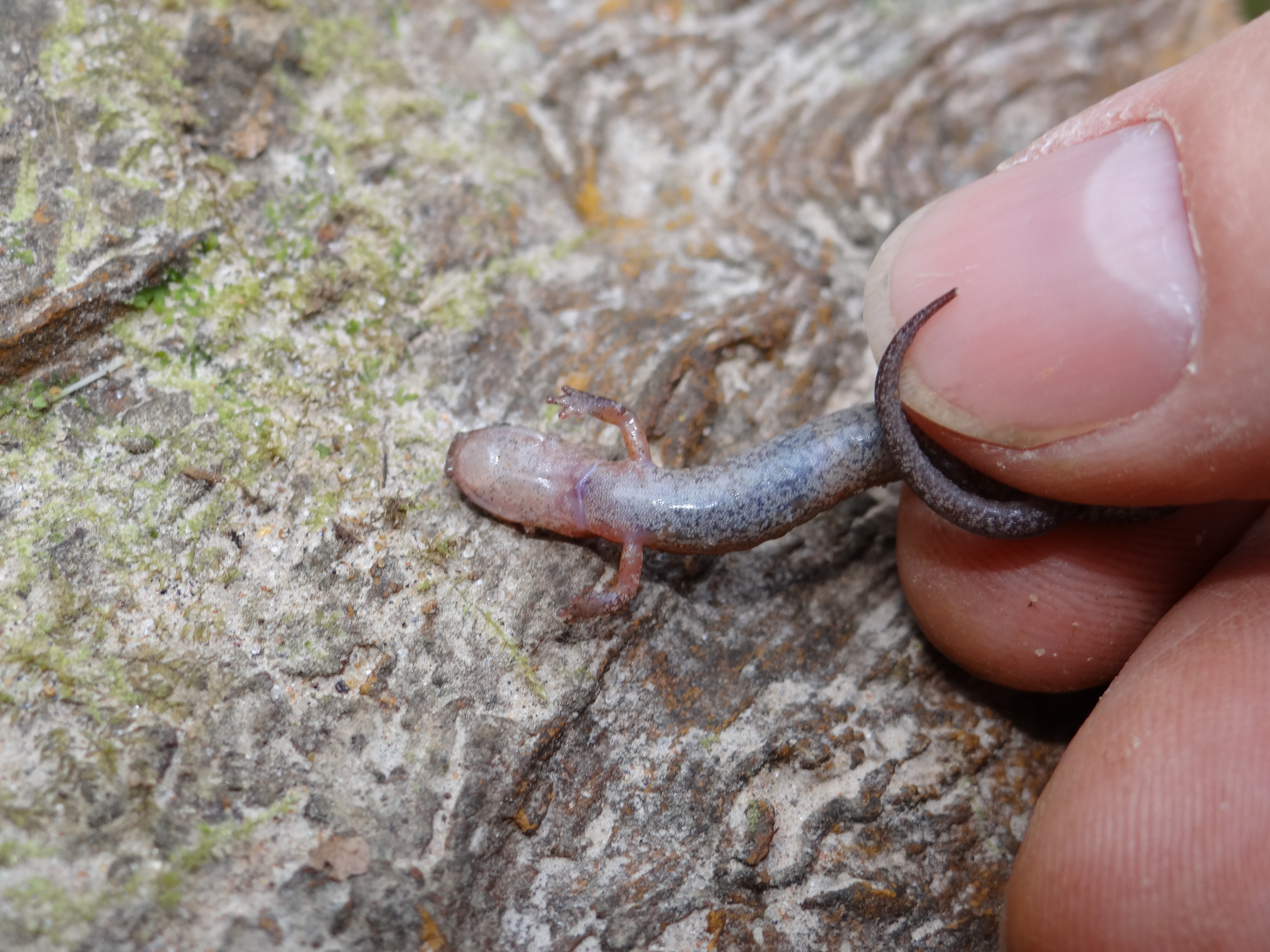
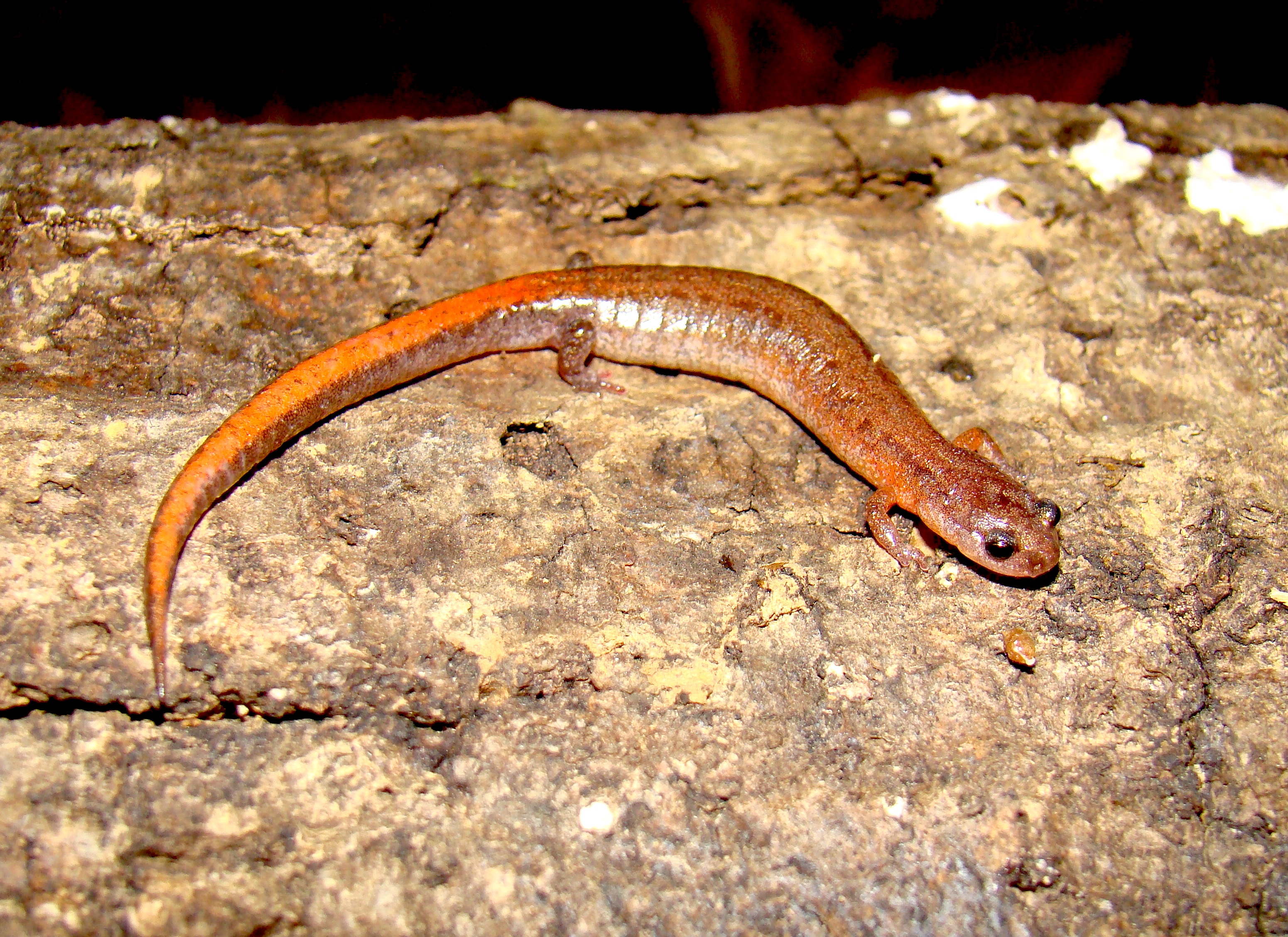
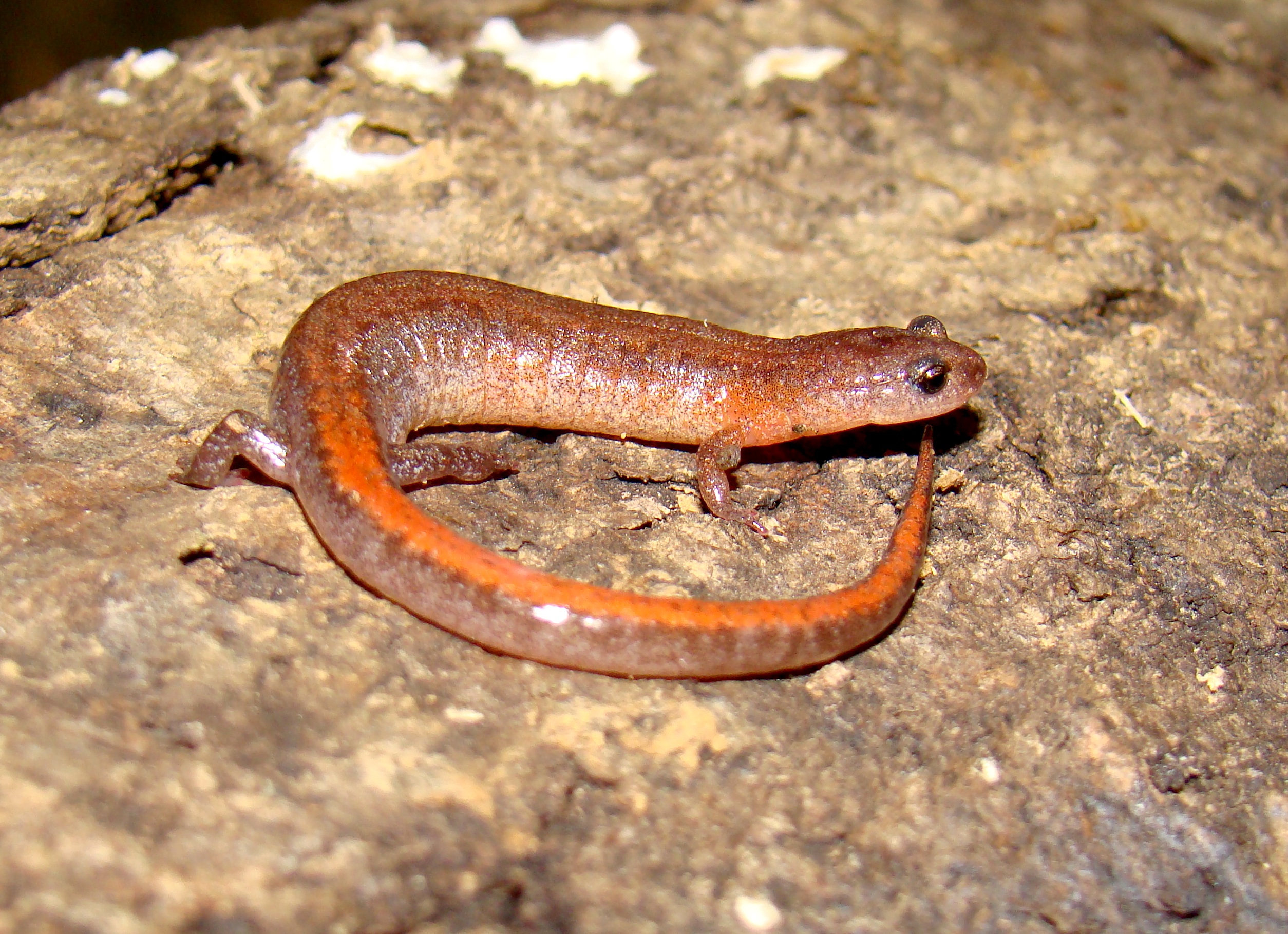
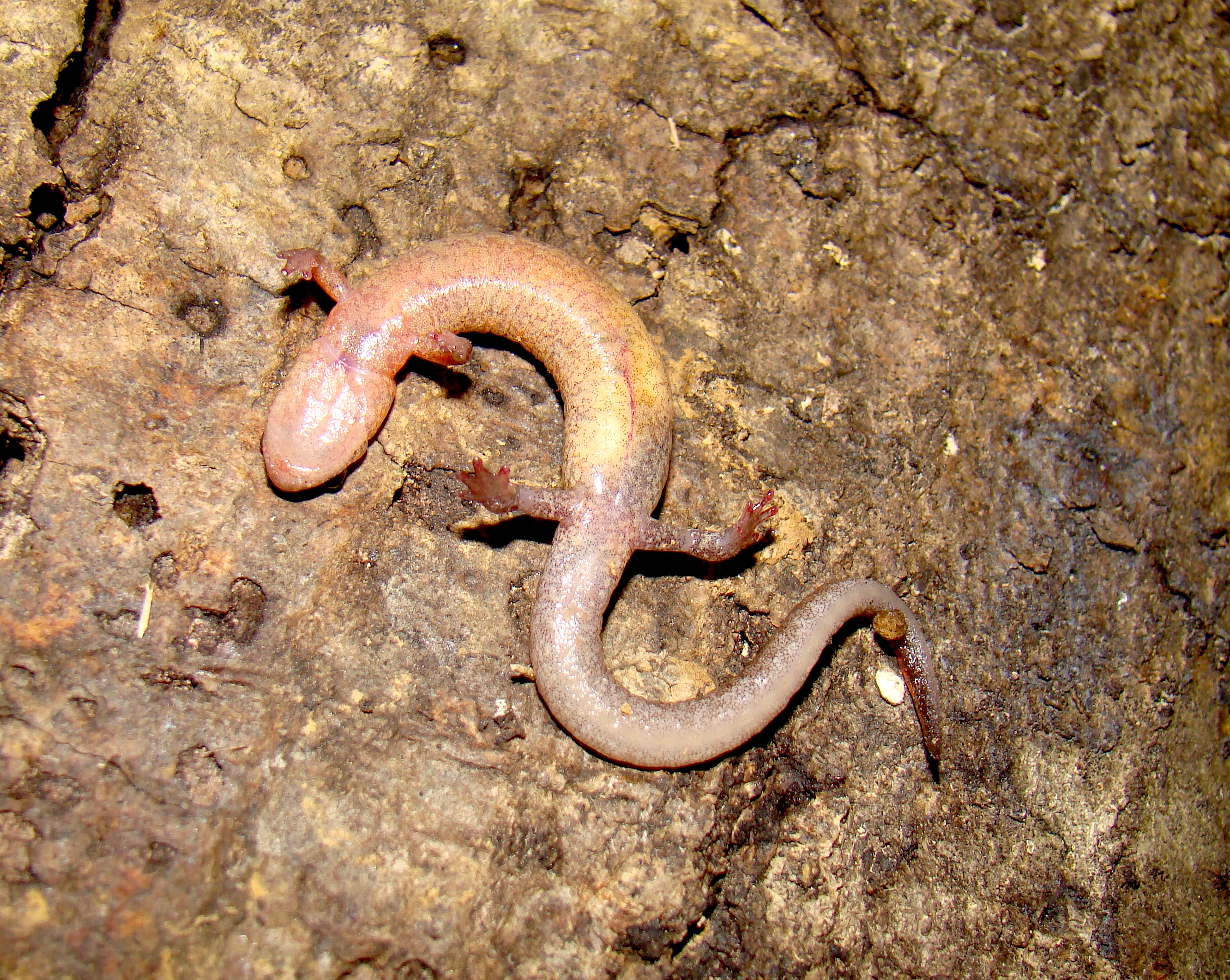
Adult Description: Small, slender salamander (maximum 3.2”) with short legs, a round tail in cross section, and an orange to reddish stripe on top from neck to tail tip, usually more vibrant towards tail, often with dark margins. Orange coloration may also be found on neck and base of forelimbs. Sides are dark gray with scattered pale flecks. 18 costal grooves. Adult males possess mental glands. Belly is somewhat translucent and mottled with gray and pale markings.
Similar Species:
Species Range: Lower Piedmont of eastern Alabama and western Georgia with isolated records from western South Carolina. Isolated records also in southern Alabama, central Mississippi, and Louisiana.
Louisiana Range: Known only from Tunica Hills area of West Feliciana Parish.
Adult Habitat: Moist upland hardwood forests bordering spring-fed streams, often where stone outcroppings are present at or near surface.
Natural History: Webster’s Salamanders are nocturnal and spend most of their lives underground. They prey upon a wide variety of invertebrates. Predators are unknown, but despite noxious skin secretions, they are likely taken occasionally by snakes, birds, and small mammals. Egg-laying presumably occurs underground in summer when females may lay 3–8 eggs in a globular cluster. Females likely guard their nests by coiling around their eggs like other Plethodon. Eggs likely hatch in about 2 months, and the female and her offspring may stay near the nest site for several weeks or longer before coming to the surface in fall. Maturity may occur in 2 years in both sexes. Longevity is unknown.
Best Time and Place to Observe: Webster’s Salamanders are prohibited from take in Louisiana, and all records have come from a very small area in the Tunica Hills. Look for them in moist winter conditions under logs, rocks, or other cover.
Global Conservation Status: Webster’s Salamanders have a relatively wide distribution in the southeastern United States and a presumed large population, and thus, are listed as Least Concern by the IUCN Red List. Their NatureServe Global Conservation Status Rank is G3G4 (Vulnerable to Apparently Secure).
Federal Conservation Status: None.
Louisiana Conservation Status: Webster’s Salamanders have a ranking of S1 (critically imperiled because of extreme rarity – 5 or fewer known extant populations) in Louisiana. In Louisiana, Webster’s Salamanders have a State Protection Status of ‘prohibited’, meaning possession or harvest of this species is illegal.
*** If you live in the range of this species in Louisiana and believe you may have observed this species please let me know (take a picture if possible), as there may be more unknown populations in the state.***
Author's Remarks: I saw one individual of this species for the first time in Louisiana in the first days of 2016 in the Tunica Hills of West Feliciana Parish. There in the same general location in late 2023 we observed 4 individuals including a young-of-year. I have seen many individuals in one population in central Mississippi.
