
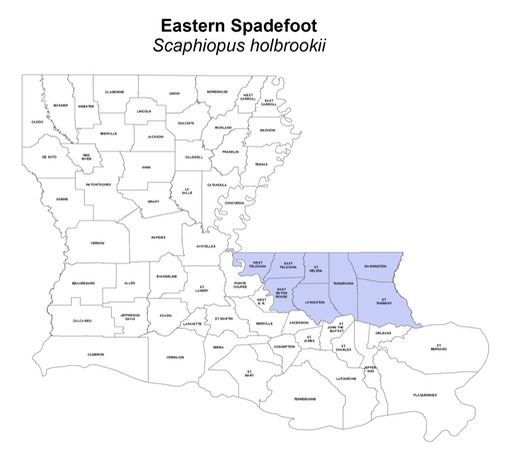
*The colored areas of the map above represent parishes with currently known records for the given species (Source: Jeff Boundy, LA Dept. of Wildlife and Fisheries). By no means does it represent the full range of the species in the state, nor does it necessarily mean that a species can be found throughout the parish with the record. This is provided as a guide to where you might be able to find these species in the state and to aid in identification. A descriptive explanation of the range of each species can be found in the text below.
Other Common Names:
Subspecies: No subspecies recognized.
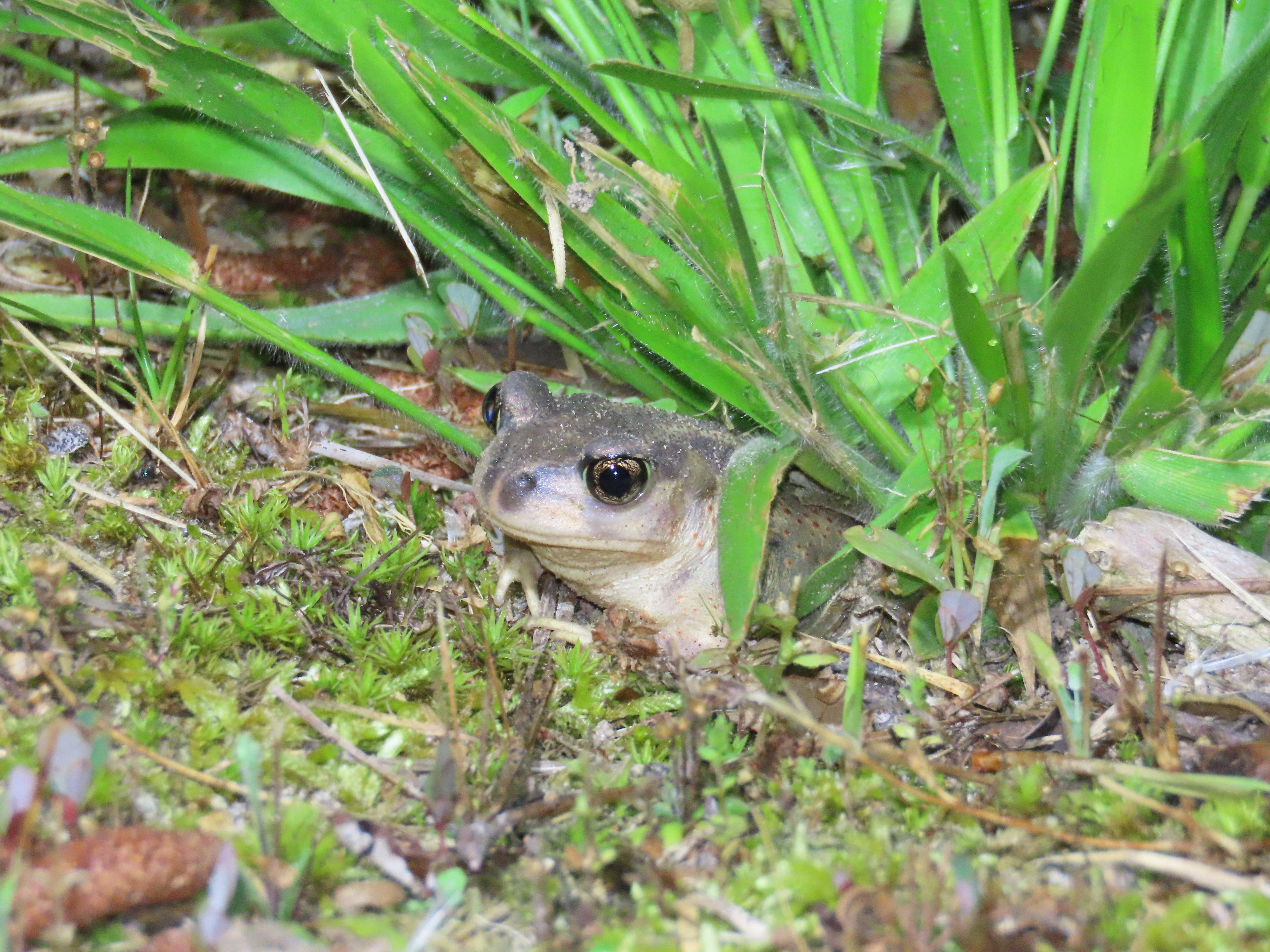
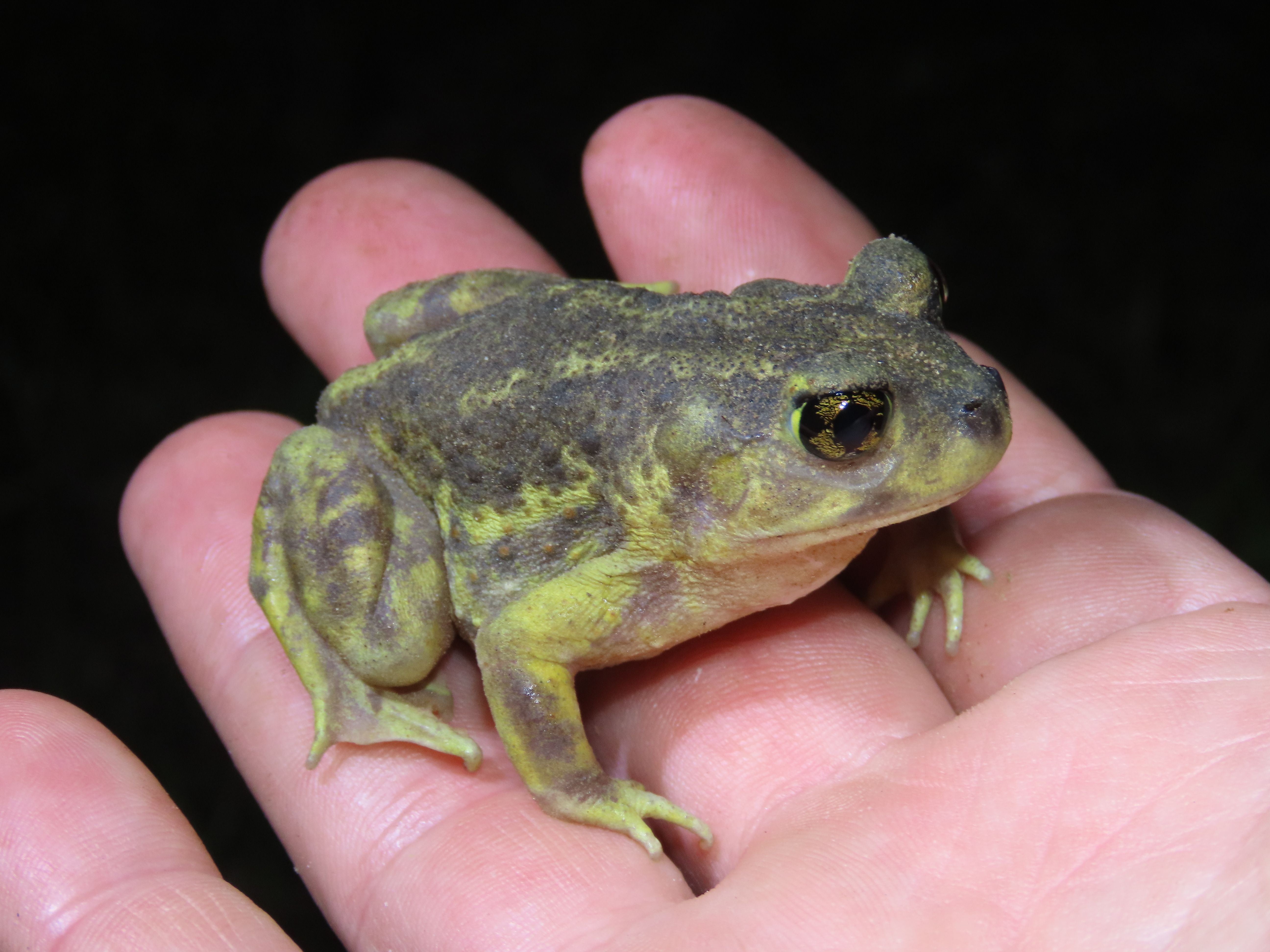
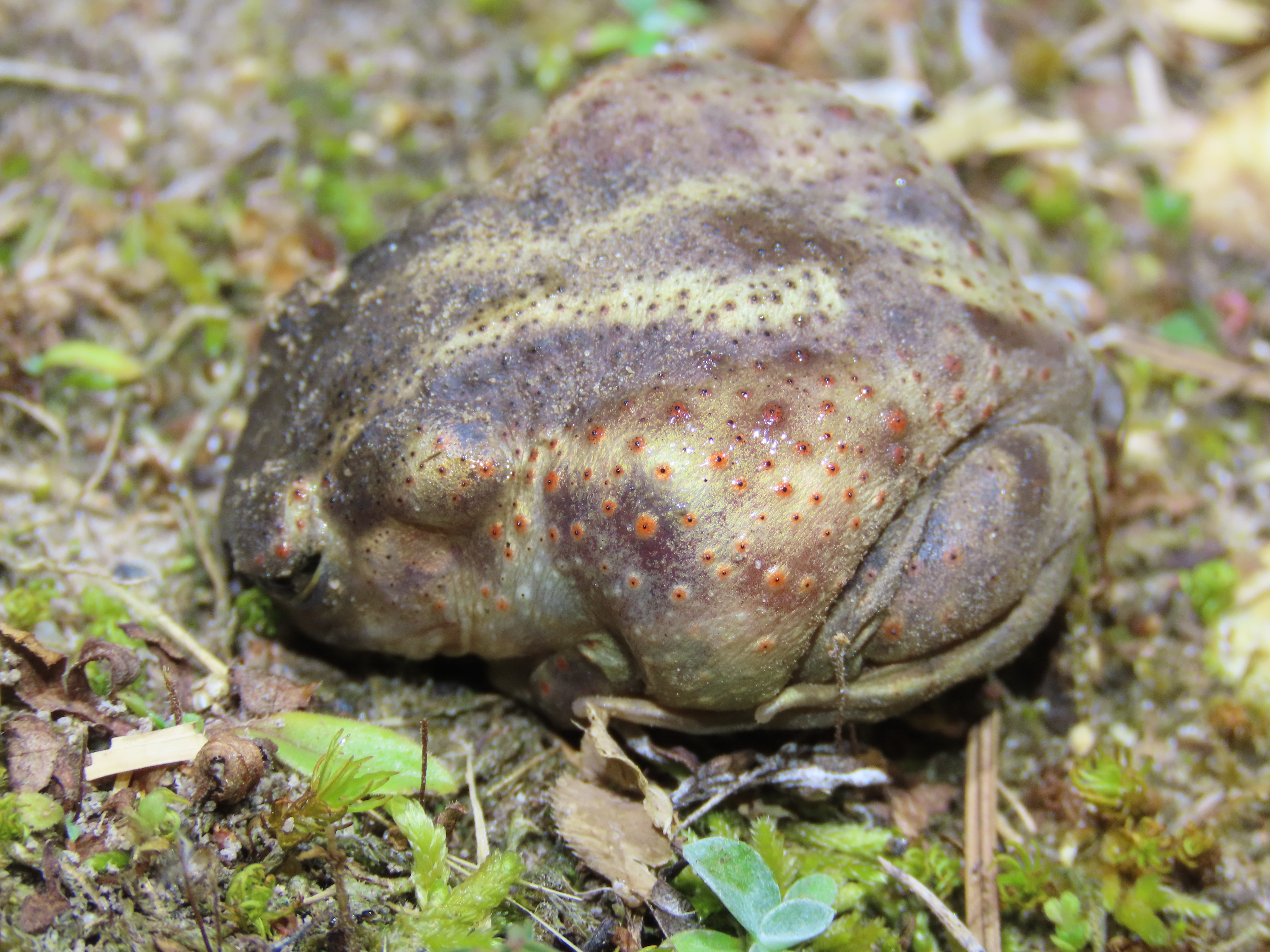
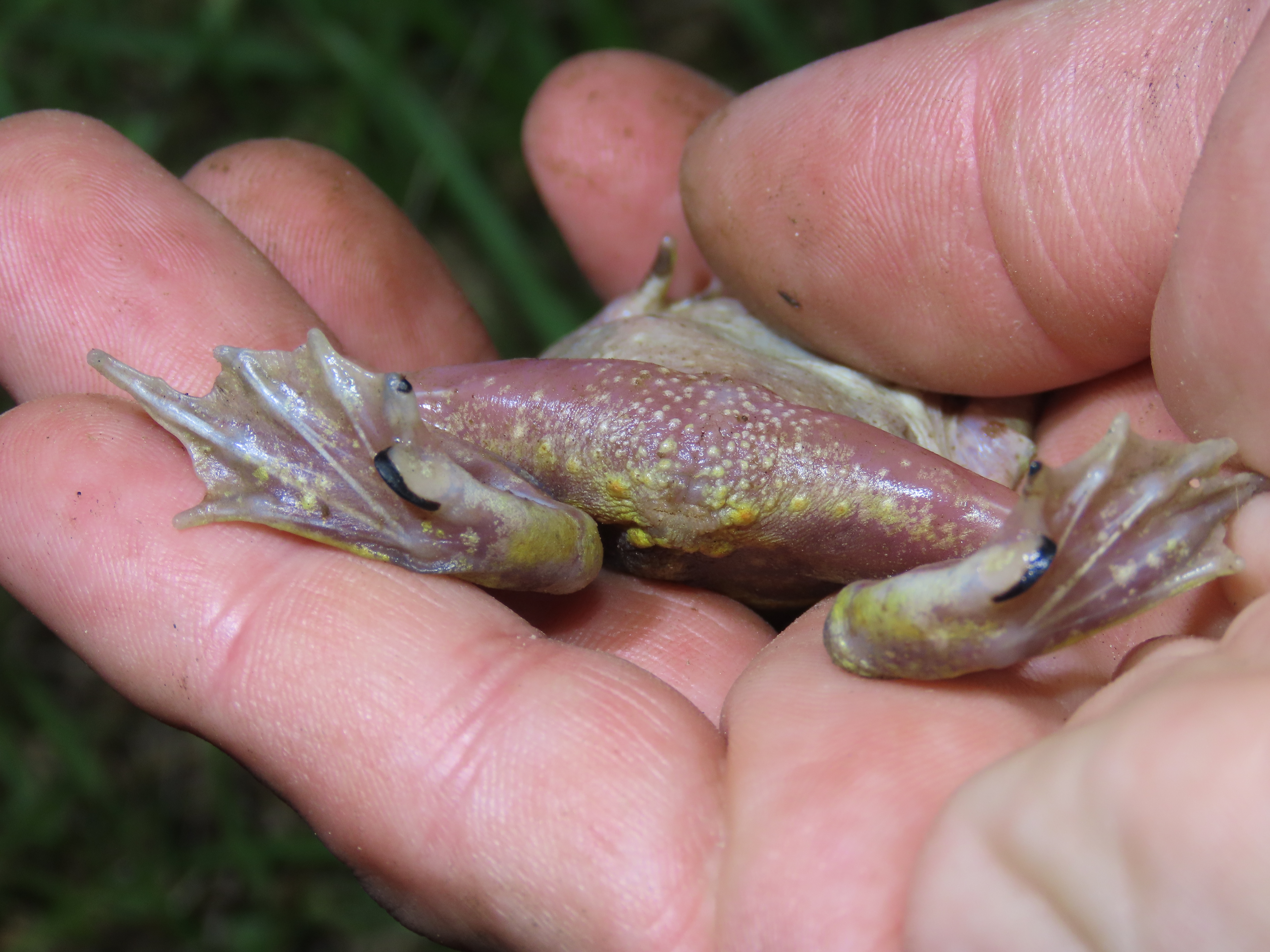
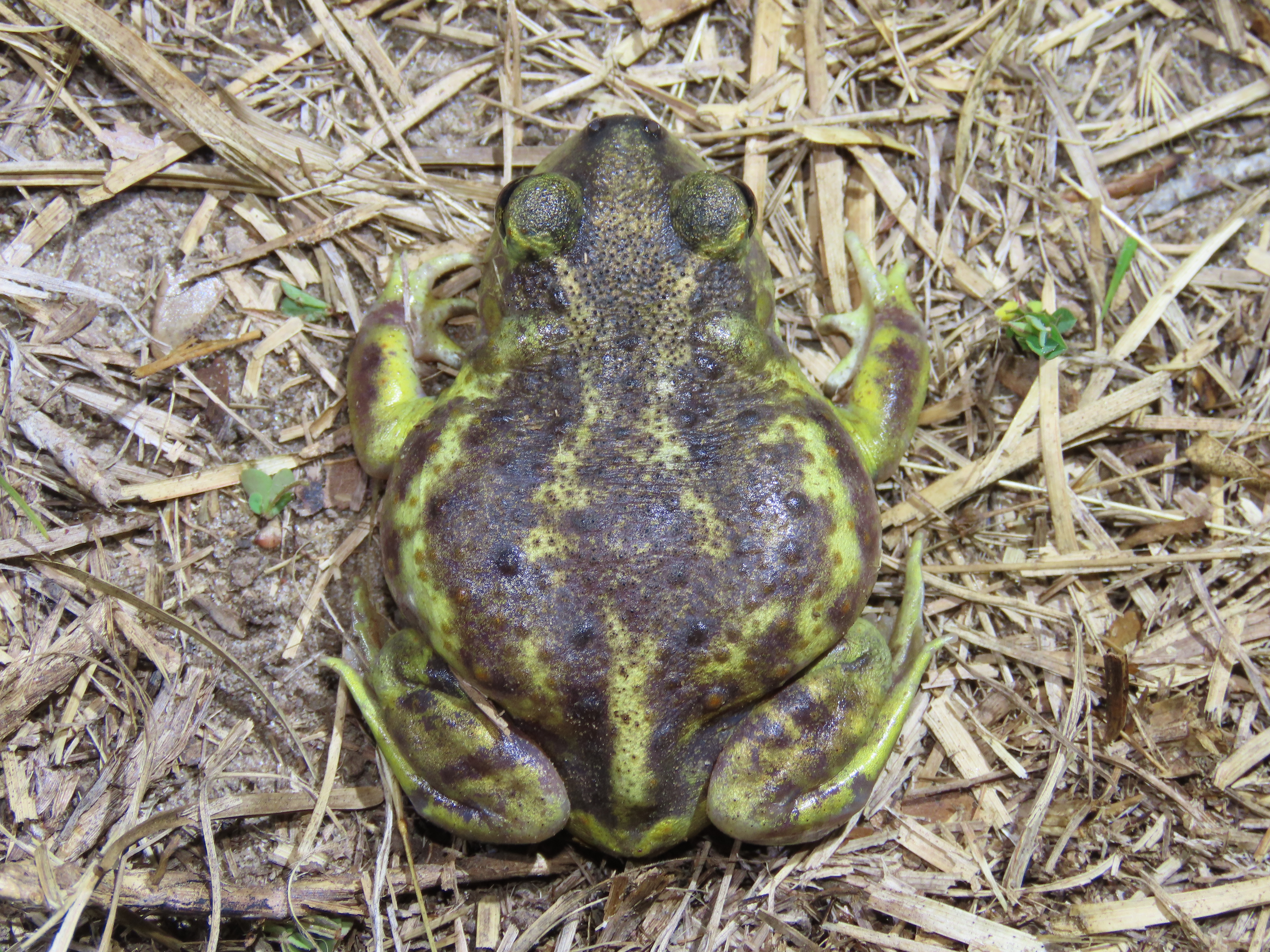
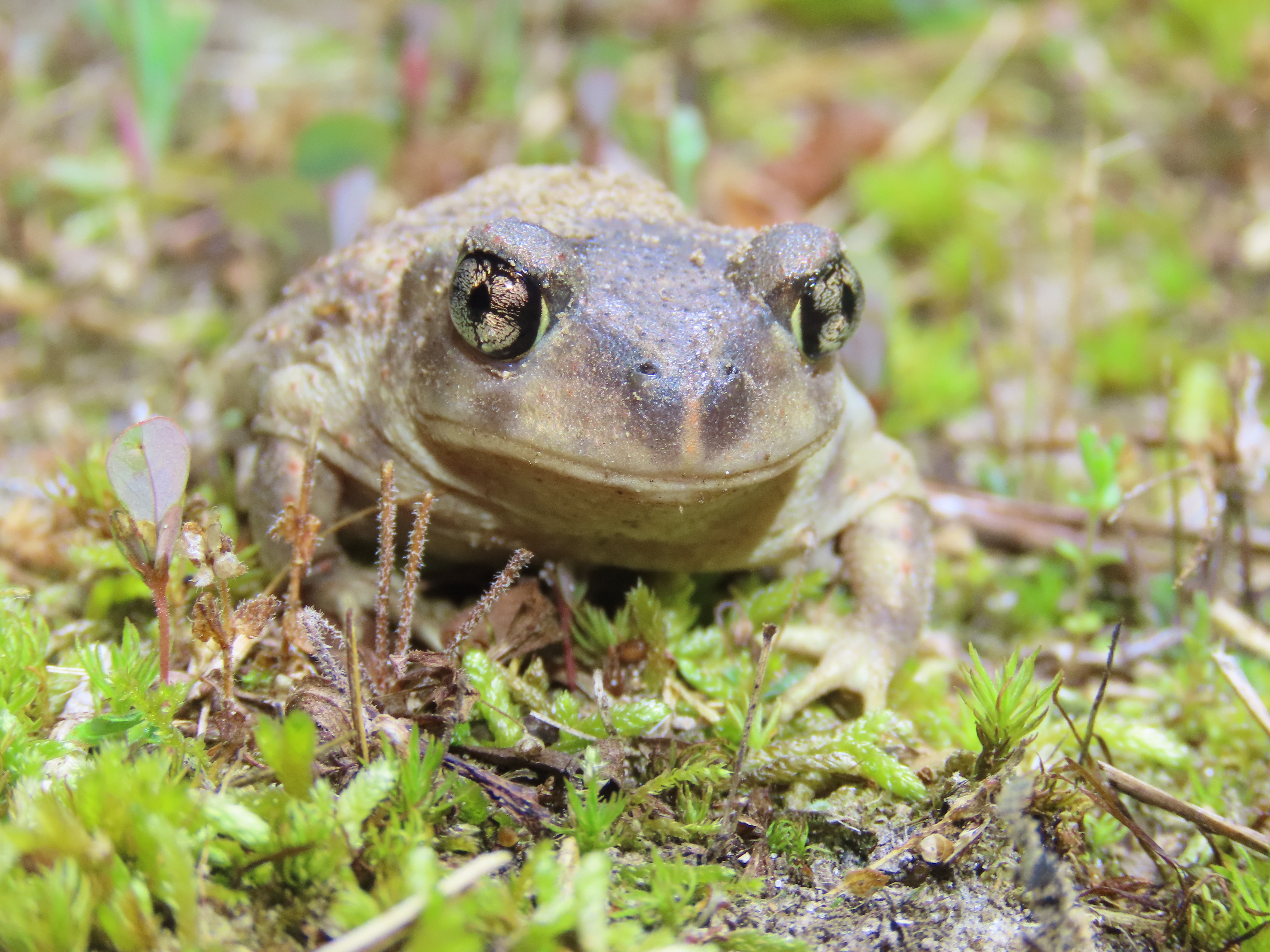
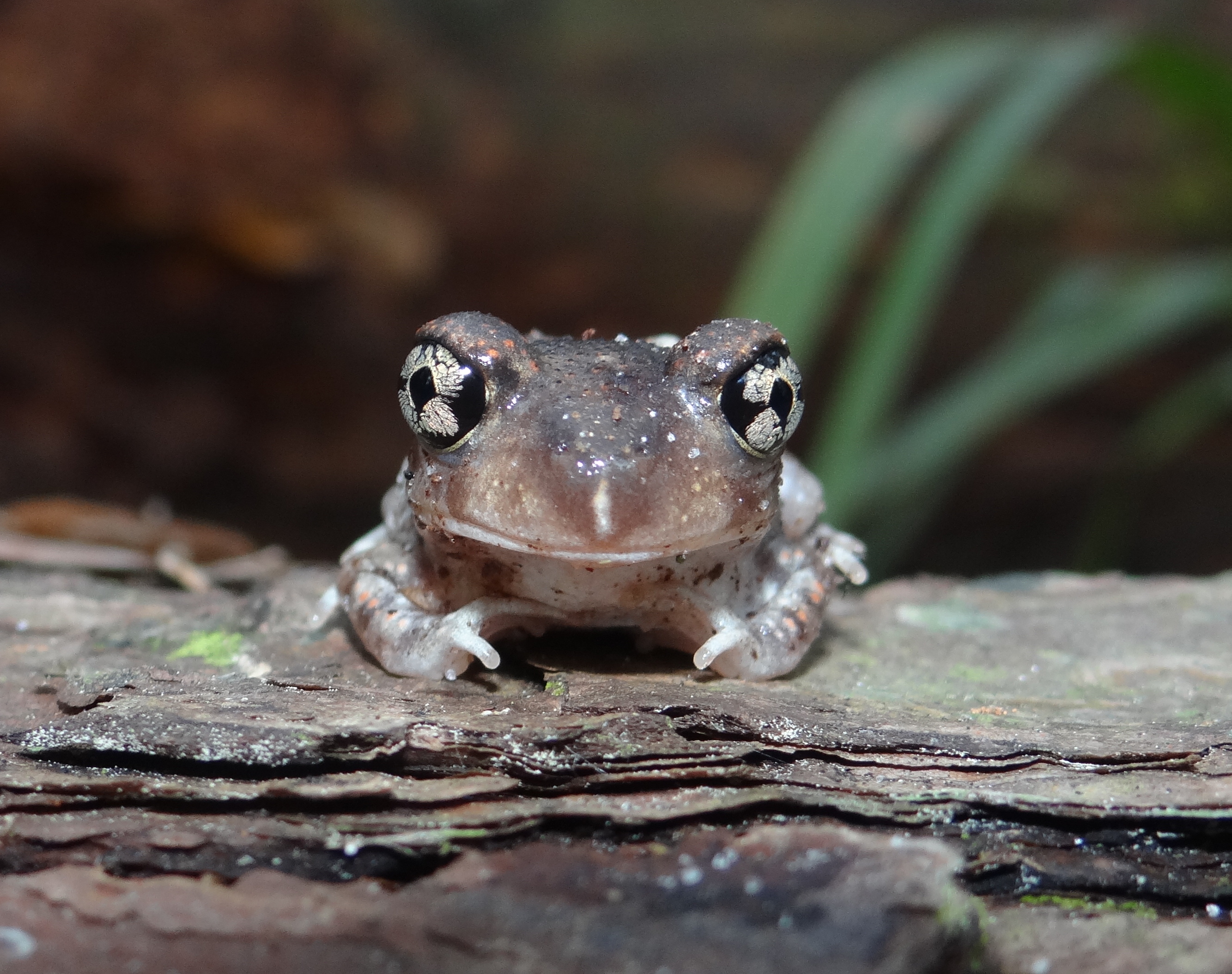
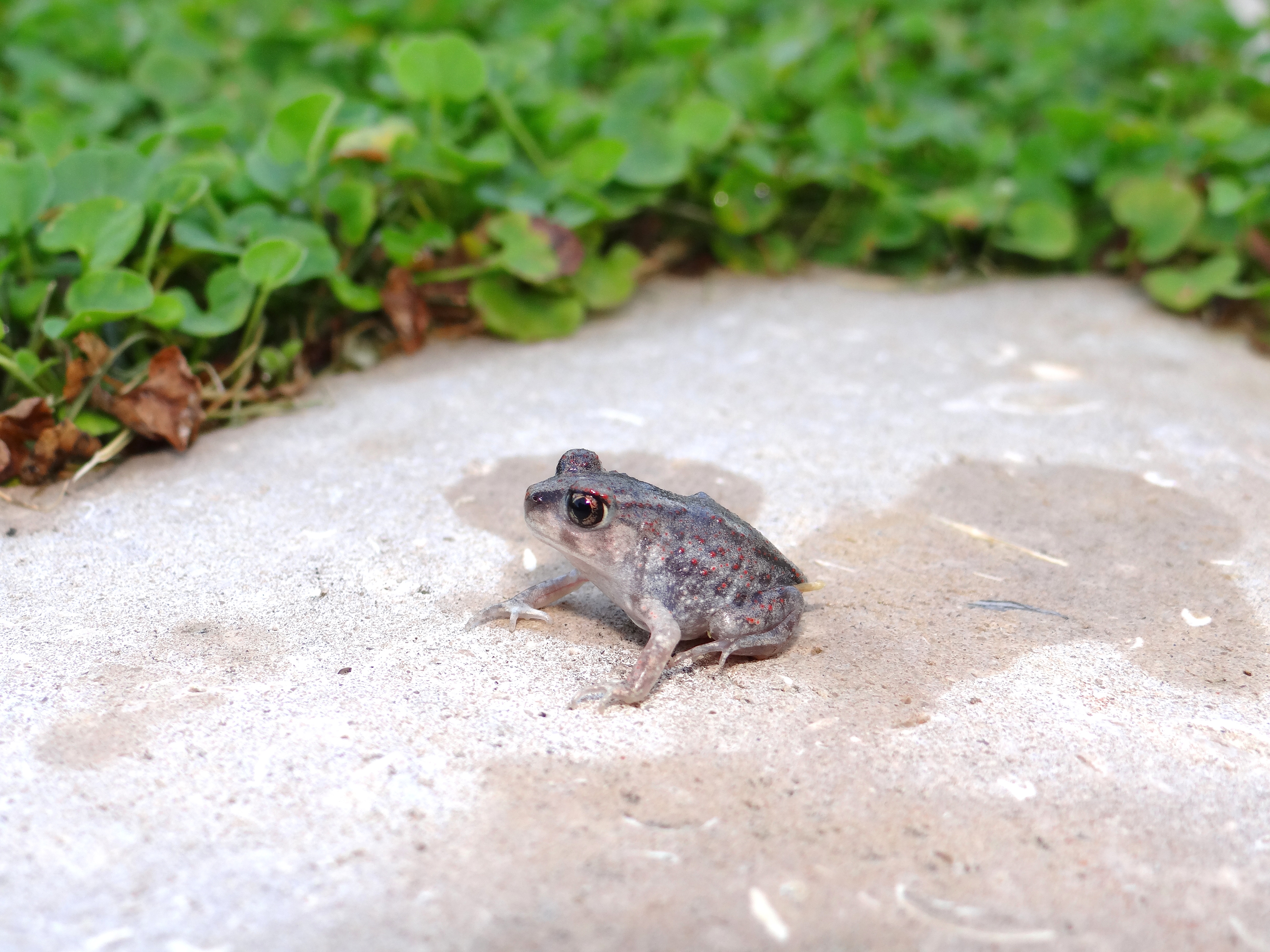
Adult Description: A medium-sized, stocky frog (maximum 2.9”) with a coloration that is generally brown, sometimes even appearing purplish. Red to dark brown warts scattered on back and sides. A short, blunt snout and large eyes with vertical pupils. Typically a dark patch below each eye. Pale to bright yellow lines in an hourglass shape on back. Poison glands circular. No cranial crests. Hindlimbs with black and sickle-shaped spades that are used for digging. Belly is gray with small white bumps and larger circular pectoral glands at the arms.
Similar Species:
Species Range: Massachusetts and southeastern New York south to the Florida Keys, west to eastern Louisiana, eastern Arkansas, and southeast Missouri. Absent from many higher elevations, especially in Appalachians.
Louisiana Range: Florida Parishes.
Adult Habitat: Pine flatwoods and mixed pine-hardwood forests with well-drained sandy soils, including riparian areas along sandy streams and rivers.
Natural History: Eastern Spadefoots are nocturnal. They eat various invertebrate prey that passes near their burrow where they forage. Other frogs, snakes, birds, and mammals are noted predators. They are explosive breeders that may breed any time after heavy rains so long as temperatures are mild to warm (>60° F). They typically use rain-filled ephemeral water bodies to breed. Females lay 800–5,500 eggs in easily broken strands attached to vegetation or woody debris. Eggs hatch in 1–15 days and tadpoles metamorphose in 12–60 days. Maturity may take 2–5 years. Wild longevity has been reported over 9 years. A captive lived for 12 years.
Call: A low-pitched, mournful, and down-slurred nasal ‘errrrrah’ that lasts less than 1 second and is repeated every 3–10 seconds.
Best Time and Place to Observe: Get out just after heavy warm rains during their explosive breeding events to find many individuals of this seldom-seen frog together in breeding aggregations. In non-breeding situations they can still be found with a keen eye and careful searching on warm, humid nights, as they peek out of or sit near their burrows looking for a meal.
Global Conservation Status: Eastern Spadefoots have a relatively wide distribution in the eastern United States and a presumed large population, and thus, are listed as Least Concern by the IUCN Red List. Their NatureServe Global Conservation Status Rank is G5 (Secure).
Federal Conservation Status: None.
Louisiana Conservation Status: Eastern Spadefoots have a ranking of S2 (imperiled because of rarity – 6-20 known extant populations) in Louisiana.
*** If you live in the range of this species in Louisiana and believe you may have observed this species please let me know (take a picture or audio recording if possible), as there may be more unknown populations in the state.***
Author's Remarks: I finally found this species in Louisiana in May 2022 at private property near Folsom. I have not herped much in their range in the Florida Parishes. I also have seen this species in the Florida Panhandle and the Gainesville area.
